The decision in brief
In conventional six-string guitar tab, the top line is string 1 and the bottom line is string 6. Read events from left to right. A number tells you the fret on that string; 0 means open. Vertically aligned numbers normally belong to one chord event; follow the edition’s performance instructions for that event. Check the stated tuning, capo and notation key, then find the rhythm in written durations or the accompanying score or recording. Plain spacing alone does not establish exact timing.
Locate the string before reading the number
A tab line represents a string, not a staff pitch or a finger. In E standard, the top-to-bottom lines are E, B, G, D, A, E, corresponding to strings 1 through 6. The two E strings occupy different registers. Attach a string number to the letter before playing.
| Line from top | String | Open note in E standard |
|---|---|---|
| 1 | 1 | E, high |
| 2 | 2 | B |
| 3 | 3 | G |
| 4 | 4 | D |
| 5 | 5 | A |
| 6 | 6 | E, low |
A 3 means fret 3 on the indicated string, not finger 3. A 0 means pluck that string without fretting it. Check the standard-tuning map if the starting pitches are uncertain. A tab for another tuning keeps its string lines but changes the resulting pitches.
Read an original six-note example
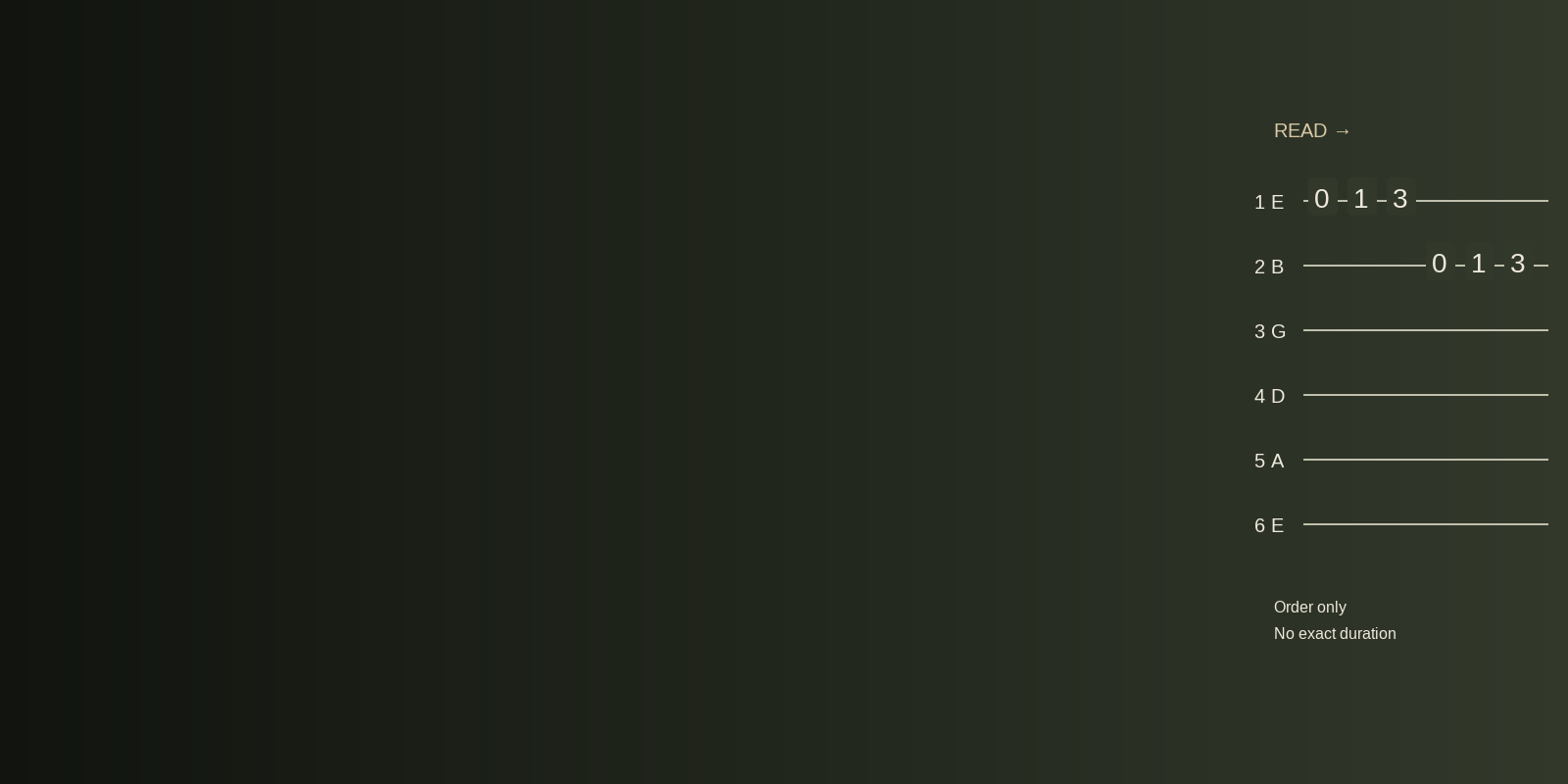
Use E standard with no capo. Play the following events in order, one event at a time. For this exercise only, assign one event to each steady pulse you choose; the fret numbers themselves do not encode that duration.
| Event | String | Fret | Sounding note |
|---|---|---|---|
| 1 | 1 | 0 | E4 |
| 2 | 1 | 1 | F4 |
| 3 | 1 | 3 | G4 |
| 4 | 2 | 0 | B3 |
| 5 | 2 | 1 | C4 |
| 6 | 2 | 3 | D4 |
Say the string and fret before plucking, then check whether the intended string sounded. Event 4 moves to string 2 and a lower pitch, even though it appears later in the sequence. The octave numbers describe sounding pitch, not the octave-transposed staff position used in conventional guitar notation. This is an original reading drill, not an excerpt from a song.
Resolve duration and symbols before adding technique
Some editions print rhythmic stems on the tab; others pair tab with standard notation. A plain-text tab may leave duration unclear. Find a reliable recording or the associated rhythm notation rather than counting every dash as a fixed note value. A chord column identifies the notes in an event. Check the edition’s instructions for how those notes are attacked.
Common shorthand includes h for a hammer-on, p for a pull-off and a slash for a slide. Their endpoints matter: 3h5 concerns frets 3 and 5 on the same string. An x can indicate an omitted string in a chord or a deliberately muted percussive event in a running tab. Read the edition’s legend before deciding whether to leave silence or make a sound. Unknown marks are a reason to check the source, not to invent a movement.
Sources: Alfred Music: tab symbols, chord diagrams and rhythm; Fender: common technique symbols and timing
Use a short reading check before the full passage
- Write down the string count, tuning and capo instruction. Use the publisher’s numbering convention; do not silently transfer our no-capo example to a capo arrangement.
- Read a small group of events as string/fret pairs. Separate simultaneous notes from successive events.
- Locate duration, rests and articulation information. Mark anything the tab does not actually specify.
- Play the group slowly enough to identify each intended note, then add the written rhythm. If the notes are right but the phrase is wrong, revisit timing and articulation before changing the guitar.
Keep one unresolved item for the next session: a symbol, a string crossing or a rhythm value. If a capo is specified, the capo guide covers its effect on sounding pitch; it does not replace the arrangement’s own tab instructions.
How this guide was prepared
We checked Fender’s tab-reading explanation and Alfred Music’s notation guide on November 10, 2026. The six-event example and reading checklist are original editorial exercises derived from six-string E standard, without a capo. We did not reproduce a song, assess a learner or test the exercise. Publisher notation keys take precedence over this introduction.
Documentation checked .