



Guitar Compressor Pedal: Ratio, Attack and a Useful Comparison
Understand compressor controls, work through a bounded ratio calculation and compare bypass with effect at a similar level before choosing your setting.
Read the guide
Reverb Pedal: Decay, Mix and Clear Note Attacks
Separate reverb amount, tail length and pre-delay. Use a short phrase with pauses to choose a setting, and check the exact pedal’s mono or stereo routing.
Read the guide
Guitar Bridge Pins: Seating, Fit and Replacement Checks
Identify how the ball end seats, compare maker-specific pin fit and choose a compatible replacement. Keep pin height separate from saddle height and action.
Read the guide
Delay Pedal Guide: Time, Feedback and Playing to the Beat
Set delay time, repeat decay and effect level separately. Calculate quarter and dotted-eighth timings, check tap divisions and practise a clear rhythmic part.
Read the guide
8-String Guitar Strings: Match Tuning, Gauges and Length
Choose eight-string guitar strings from the exact tuning, full gauge sequence and fitting path. Use a documented factory example without assuming all sets fit.
Read the guide
Guitar Cable Capacitance: Length, Loading and a Fair Comparison
Compare guitar cable capacitance per metre and total length. Trace the first buffer, calculate a useful example and make a controlled listening comparison.
Read the guide
Nylon Guitar Strings: Match Construction, Tension and Ends
Choose nylon guitar strings by the actual instrument, complete set, tension designation and bridge attachment. Understand metal-wound basses and compare changes.
Read the guide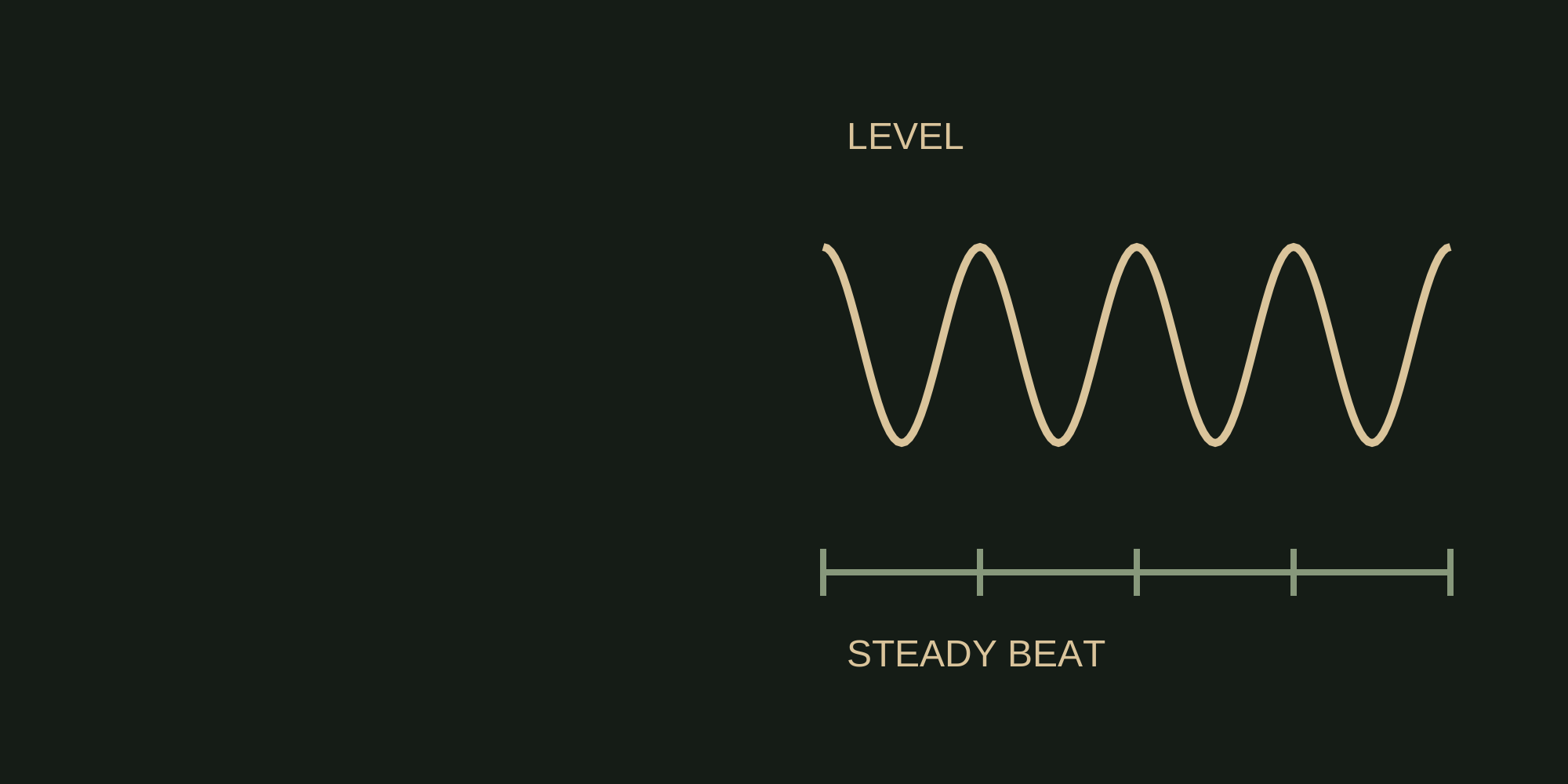
Tremolo Guitar Effect: Rate, Depth and Playing in Time
Understand tremolo as repeating volume change. Set rate, depth and shape, relate the pulse to a beat and compare placement around drive in your actual rig.
Read the guide
Fretless Electric Bass: Pitch, Practice and Buying Checks
Learn what changes on a fretless bass, how to practise pitch with a reference, and what to check about the fingerboard, strings, setup and electronics.
Read the guide
How to Restring a Guitar: Match the Method to the Hardware
Identify the bridge, tuners and string set before restringing. Follow a pinned-acoustic example, with separate routes for nylon and locking systems.
Read the guide
Acoustic Guitar Pickups: Choose a Compatible Amplified System
Compare magnetic, undersaddle, soundboard and microphone-blend routes. Check installation, preamp matching and the actual performance setting.
Read the guide
How to Use a Wah Pedal: Sweep, Timing and Bypass
Learn your wah pedal’s switching, find a usable sweep and practise its timing. Compare drive placement without assuming every model behaves alike.
Read the guide
How to Set an Overdrive Pedal: Drive, Level and Tone
Separate Drive, Level and Tone, compare a clean and driven amp, and record useful settings without assuming one knob position works for every rig.
Read the guide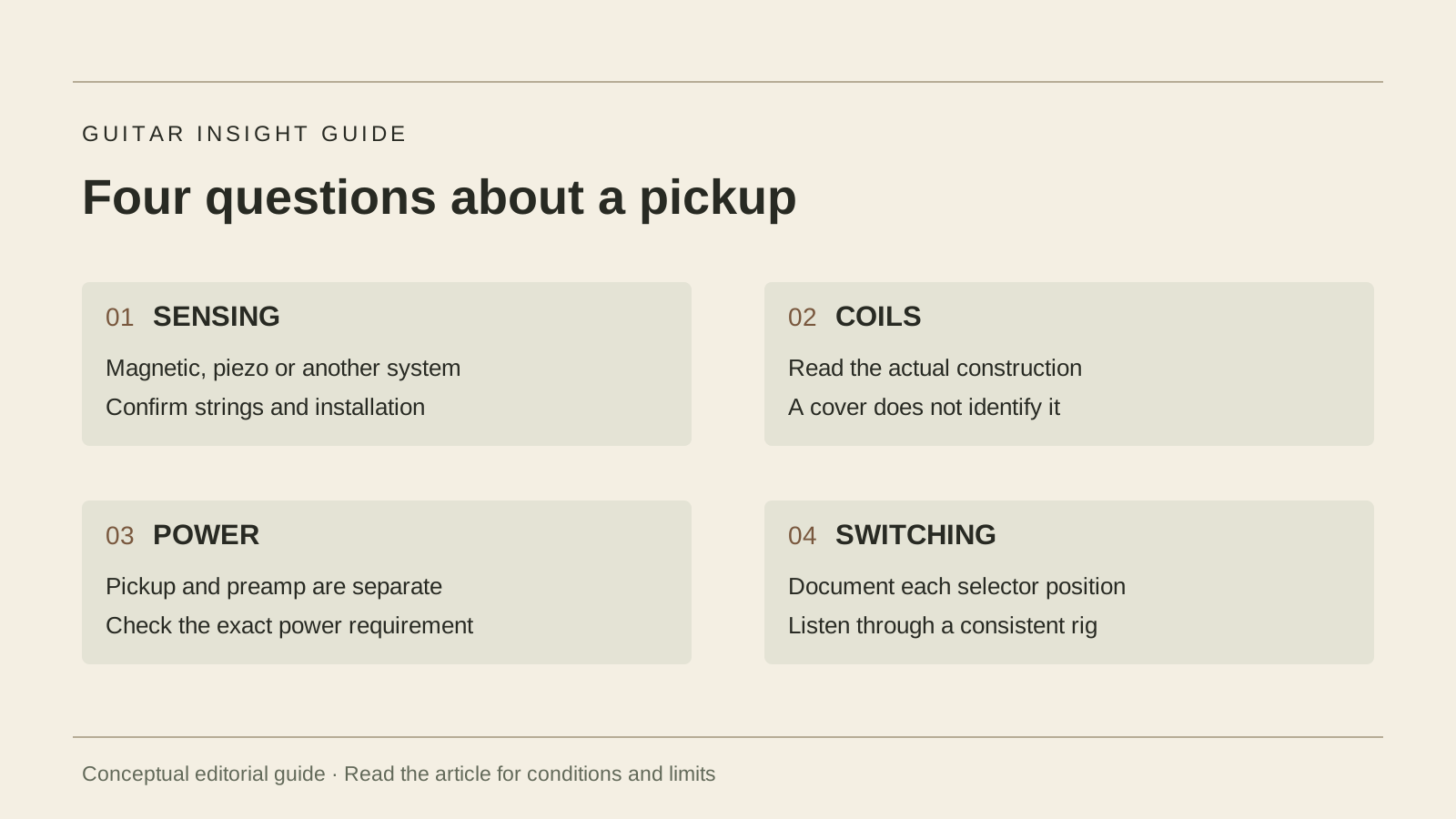
Guitar Pickups Explained: Read Type, Layout, Power and Switching
Identify what senses the strings, which coils are selected and where powered electronics enter the signal path.
Read the guide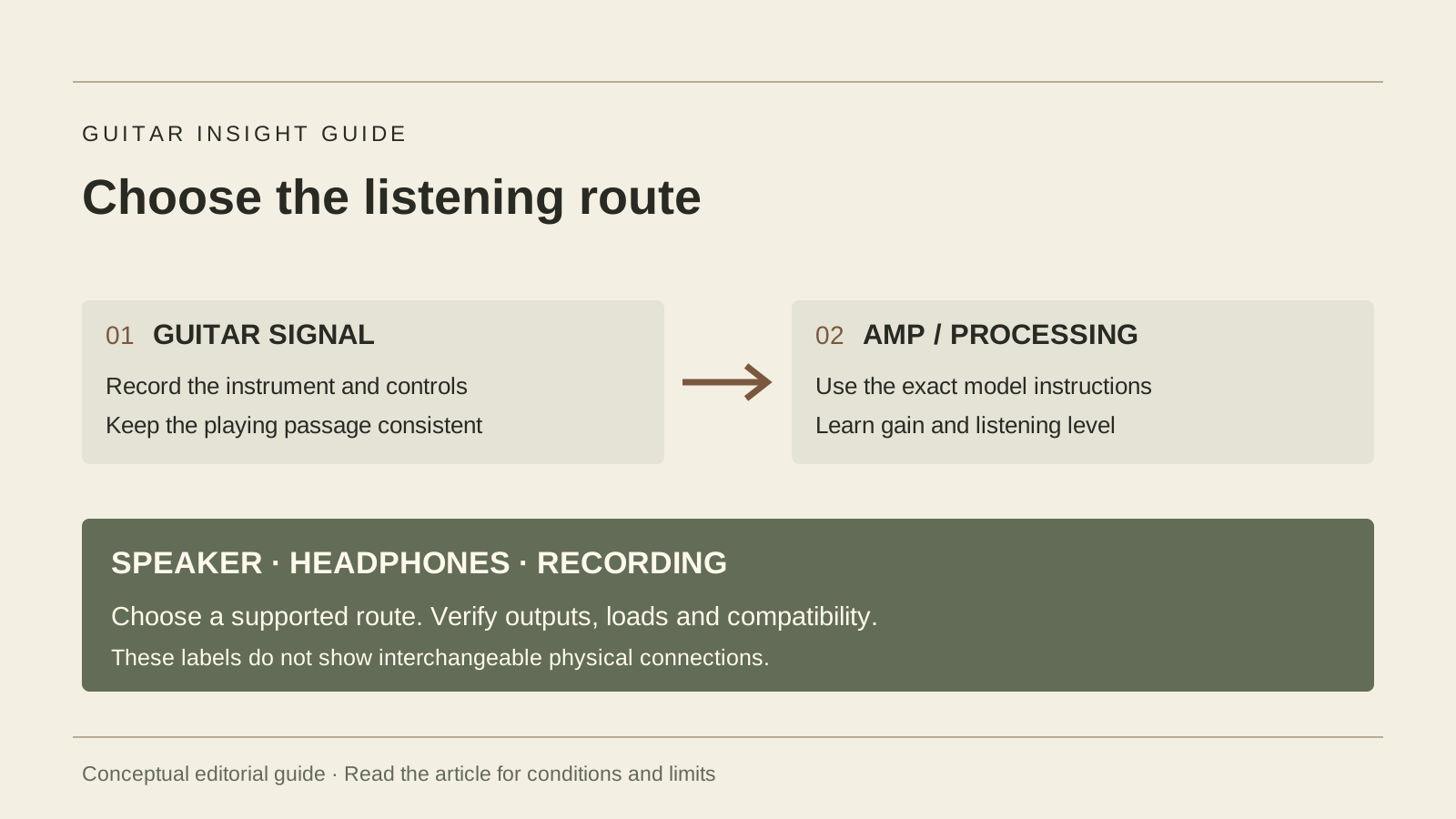
Guitar Amps Explained: Controls, Speakers and a Usable Practice Setup
Choose a complete route from the guitar to the speaker or headphones, then try it at the level you will use.
Read the guide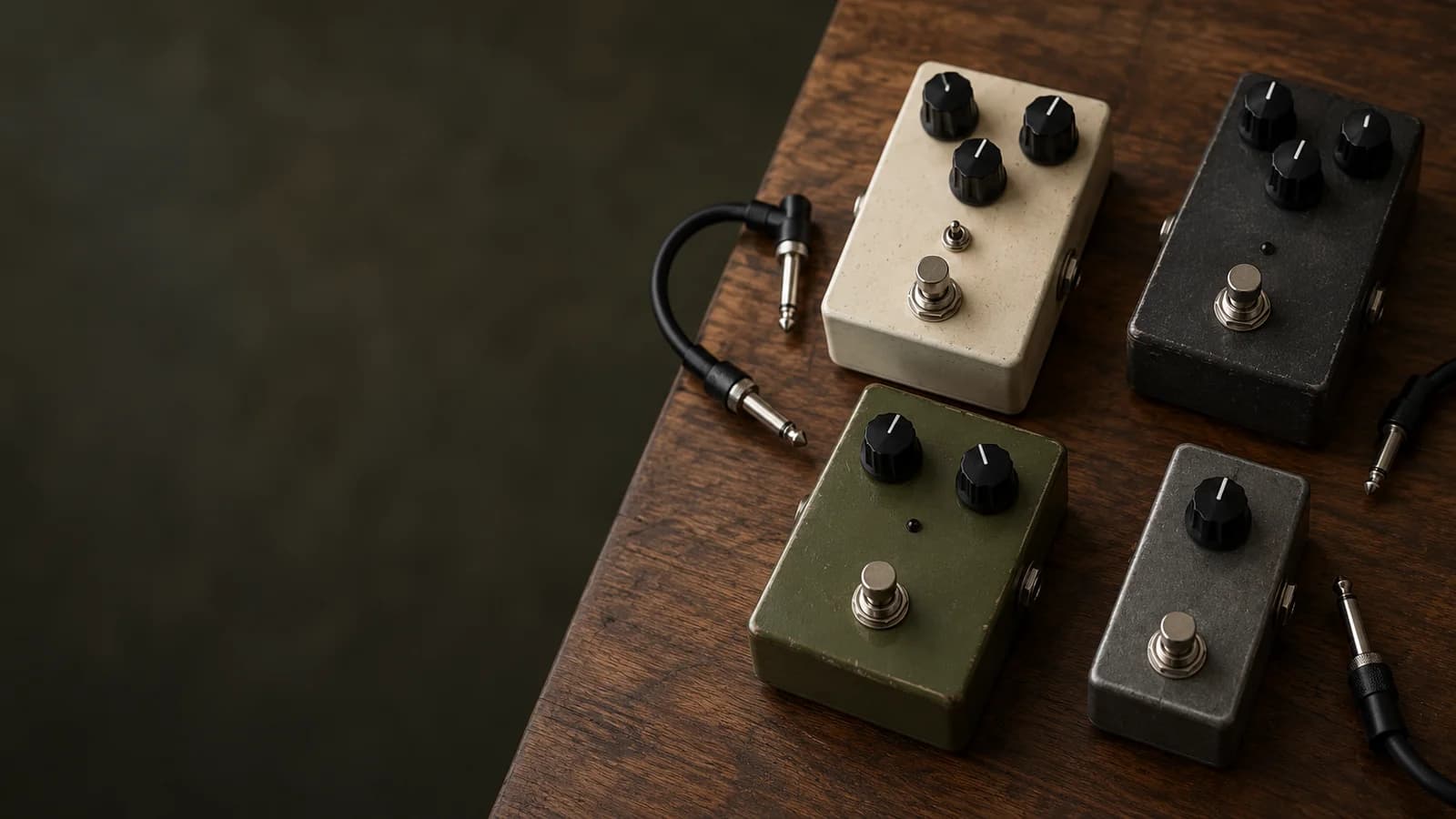
Guitar Effects Pedal Order
Build a signal chain around the sound you want, then compare one routing change at a time.
Read the guide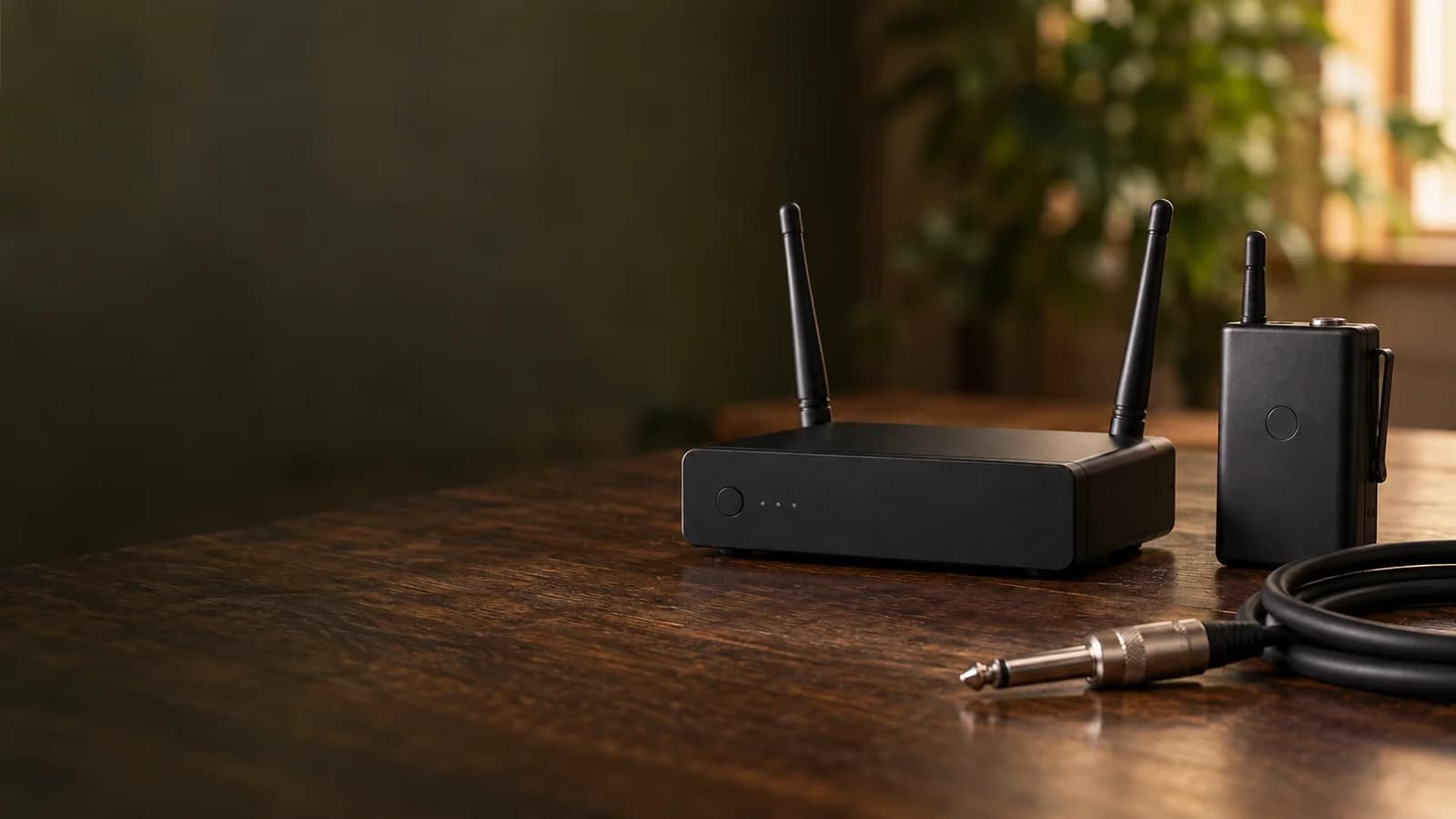
Guitar Wireless System Latency
Read mode-specific latency figures and account for the complete path to what you hear.
Read the guide
Guitar Bridge Explained
Follow the string to its support point, identify the surrounding hardware, and connect each part to what happens when you play.
Read the guide
12-String Electric Guitar
Understand the octave and unison pairs, then explore how they change a familiar chord, riff or accompaniment.
Read the guide
Short-Scale Bass Guitar
Test reduced fret spacing, whole-instrument reach, response and replacement string fit.
Read the guideBass Strings
Confirm winding length, bridge fit, tuning and the feel you want before selecting a replacement set.
Read the guideGuitar Setup Guide
Define strings and tuning, inspect the complete string path and prepare a useful service handover.
Read the guide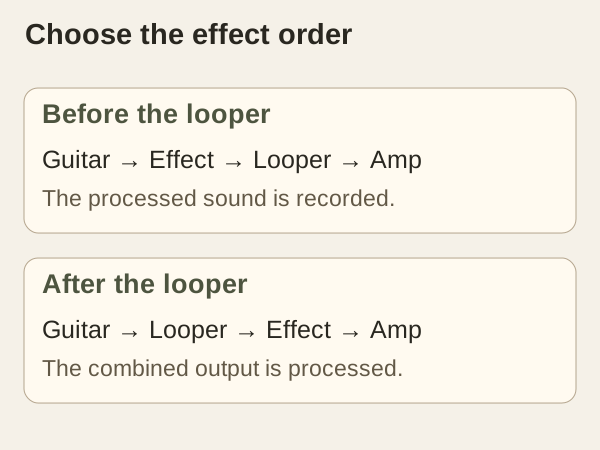
Looper Pedal Guide
Learn recording, overdubbing, timing and the effect order that suits your practice.
Read the guide
12-String Acoustic Guitar
Understand paired courses, common tuning, playing feel and a complete instrument check.
Read the guideAcoustic Guitar Strings
Choose a compatible steel-string acoustic set by gauge, alloy, coating and playing goal.
Read the guide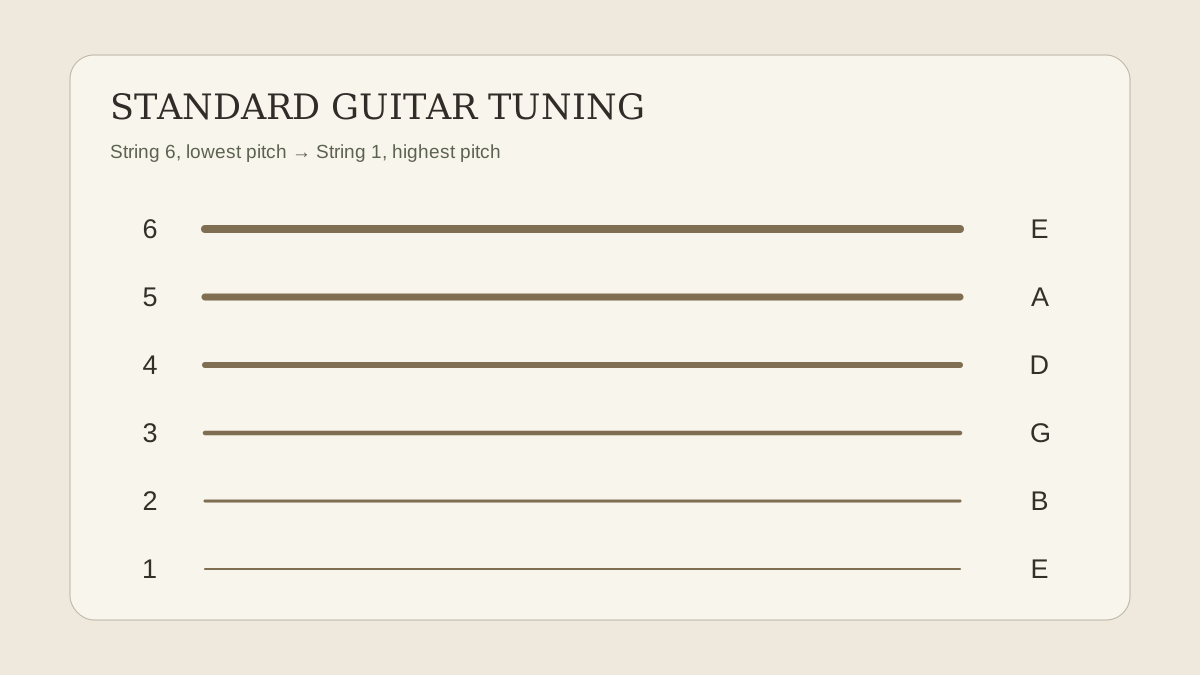
Standard Guitar Tuning
Read E–A–D–G–B–E from low to high and follow a reliable tuning routine.
Read the guide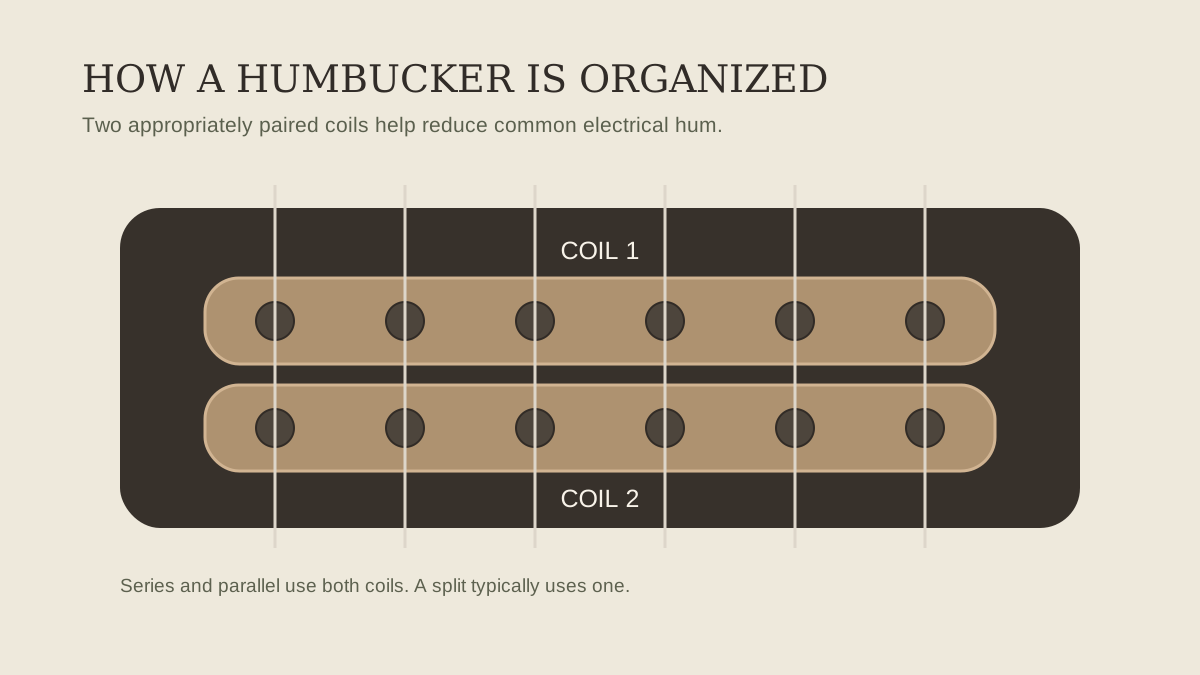
Humbucker Pickups Explained
Understand two-coil hum reduction, wiring modes and replacement fit.
Read the guideSteel-String Acoustic Guitar
Understand the connected string, top, bracing and body system, plus safe string compatibility and care.
Read the guide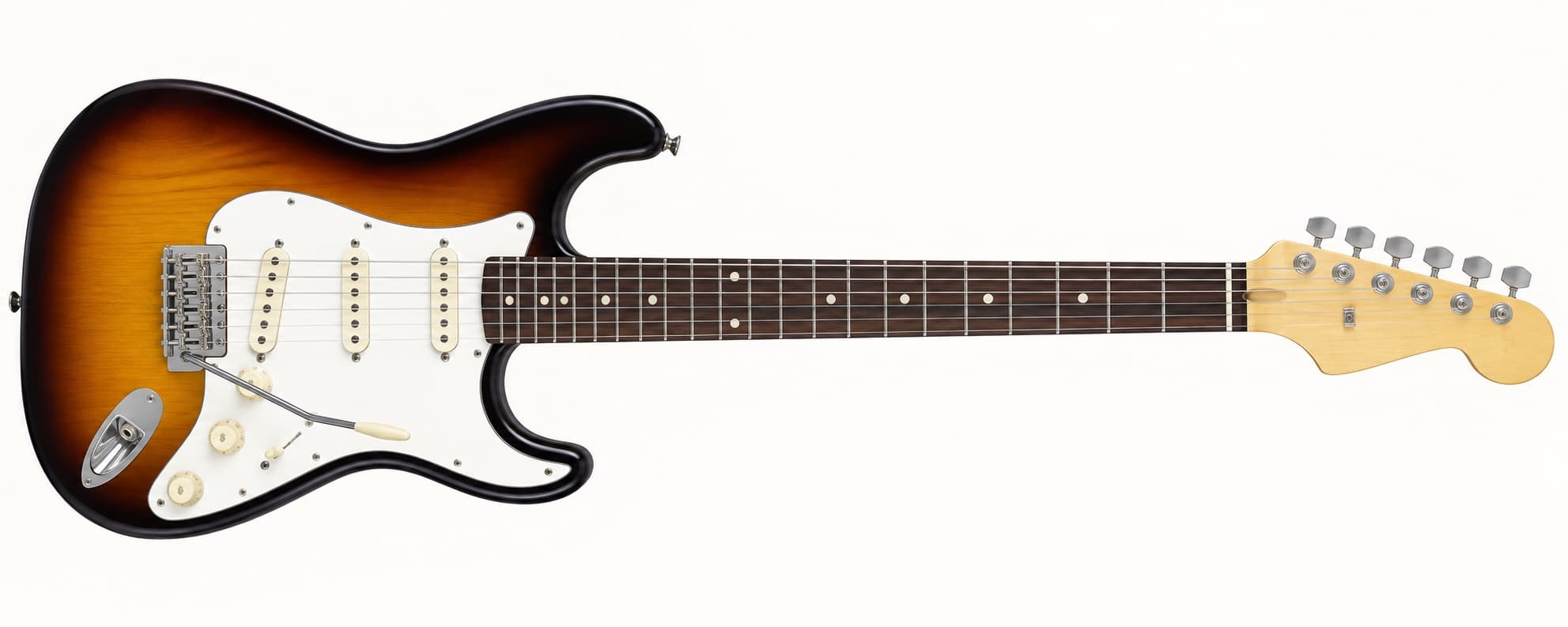
Truss Rod Adjustment
Measure neck relief and know when to stop before turning the adjuster.
Read the guide
Guitar Strings Explained
Choose the right string system, construction and care routine before changing gauge.
Read the guide
Guitar Capo Guide
Choose a capo that fits the neck, place it cleanly and keep chords in tune.
Read the guide

Wood Moisture & Humidity
Monitor environment, symptoms and stability without confusing RH and moisture content.
Read the guide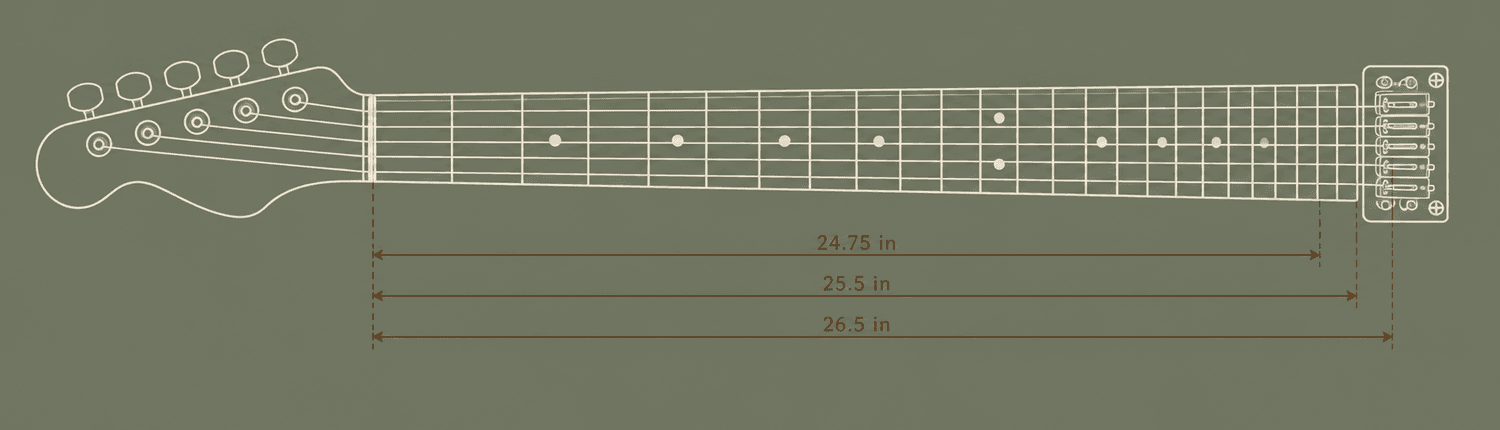
Scale Length Explained
Measure scale correctly and connect it with tension, reach, tuning and setup.
Read the guideNeck Profiles Explained
Compare C, V, U, depth, shoulders and hand fit without relying on labels alone.
Read the guide
Fingerboard Radius Explained
Understand radius, compound designs and how setup changes the playing feel.
Read the guide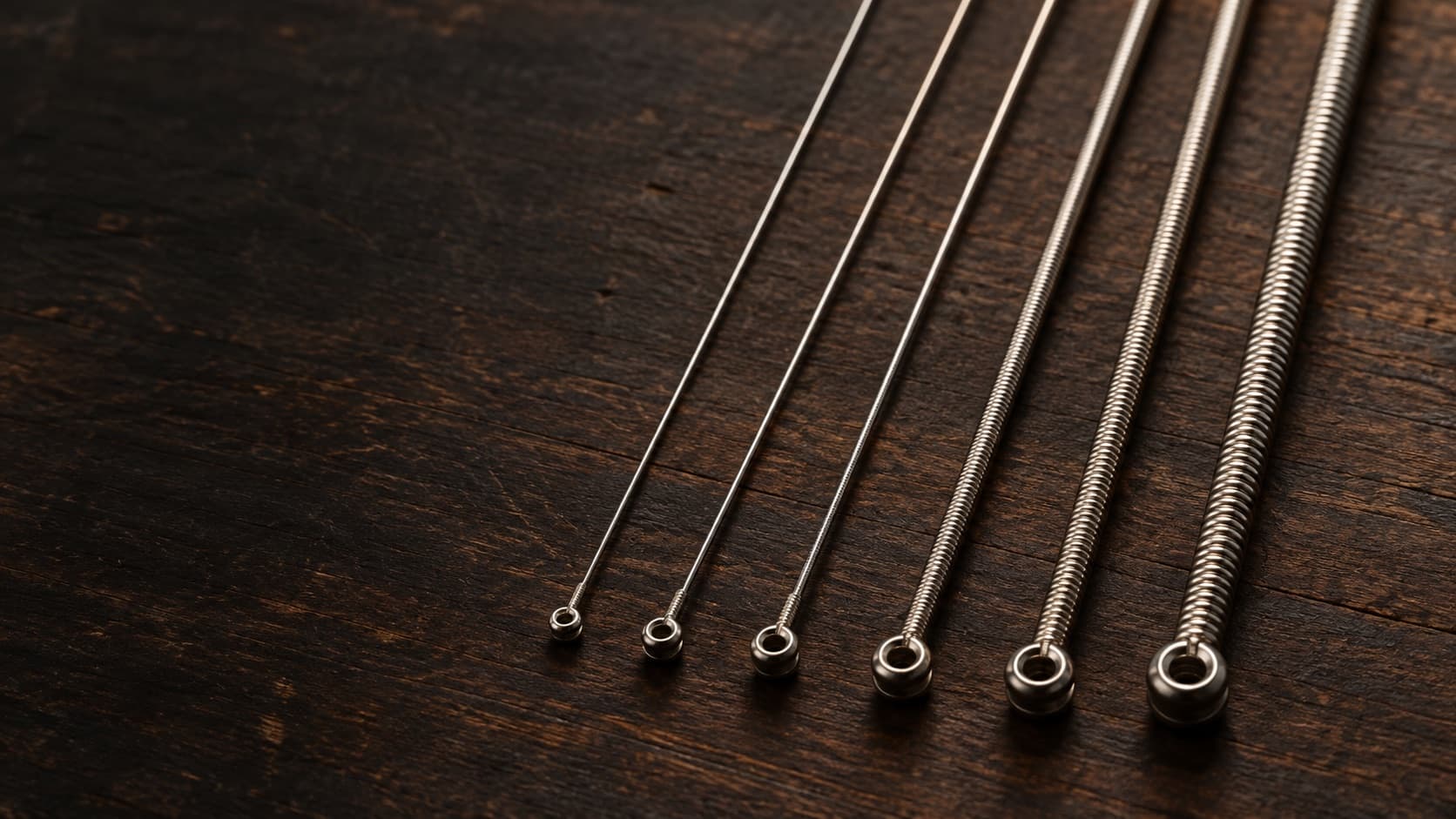

Guitar Action Explained
Measure string height consistently and connect the number with relief, frets, nut, bridge and playing style.
Read the guide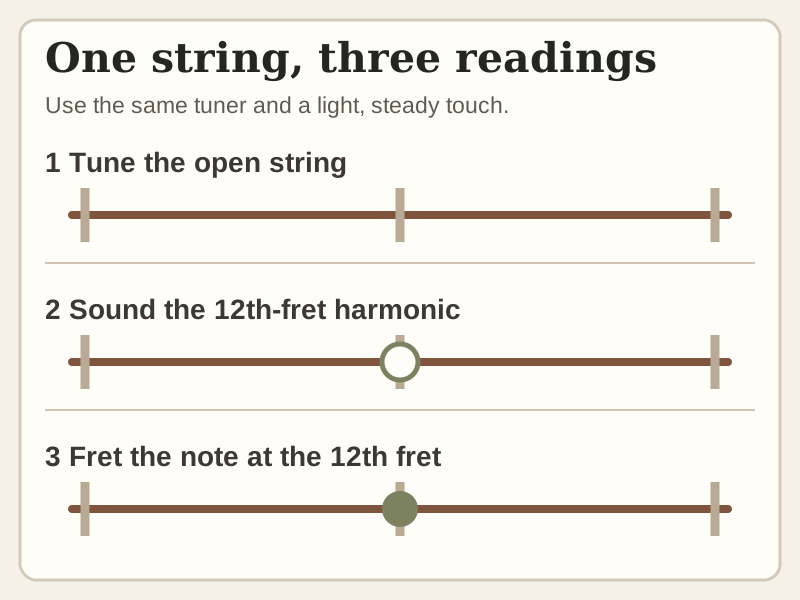
Guitar Intonation Explained
Check why fretted notes sound sharp or flat, then choose the right setup step.
Read the guide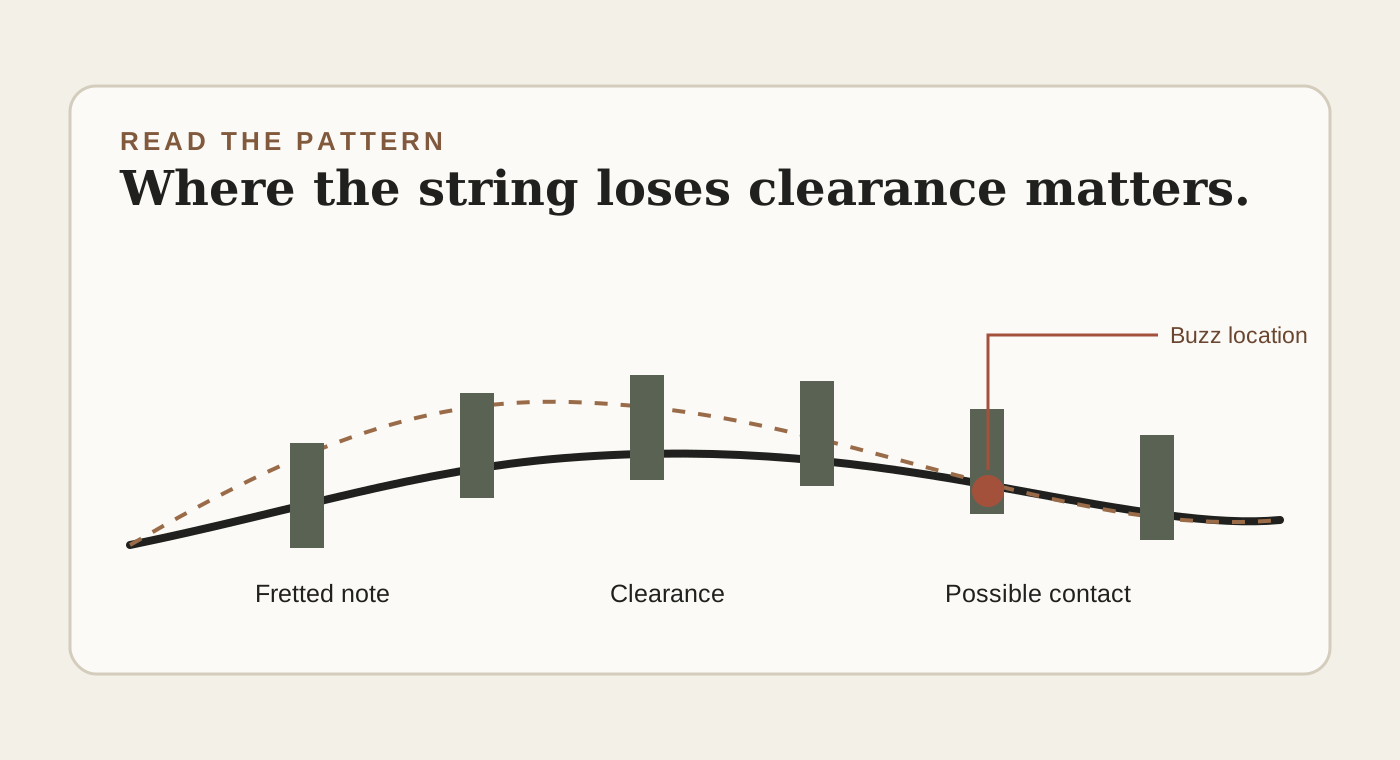
Guitar Fret Buzz Explained
Map where the buzz occurs before changing strings, relief, action, nut or frets.
Read the guide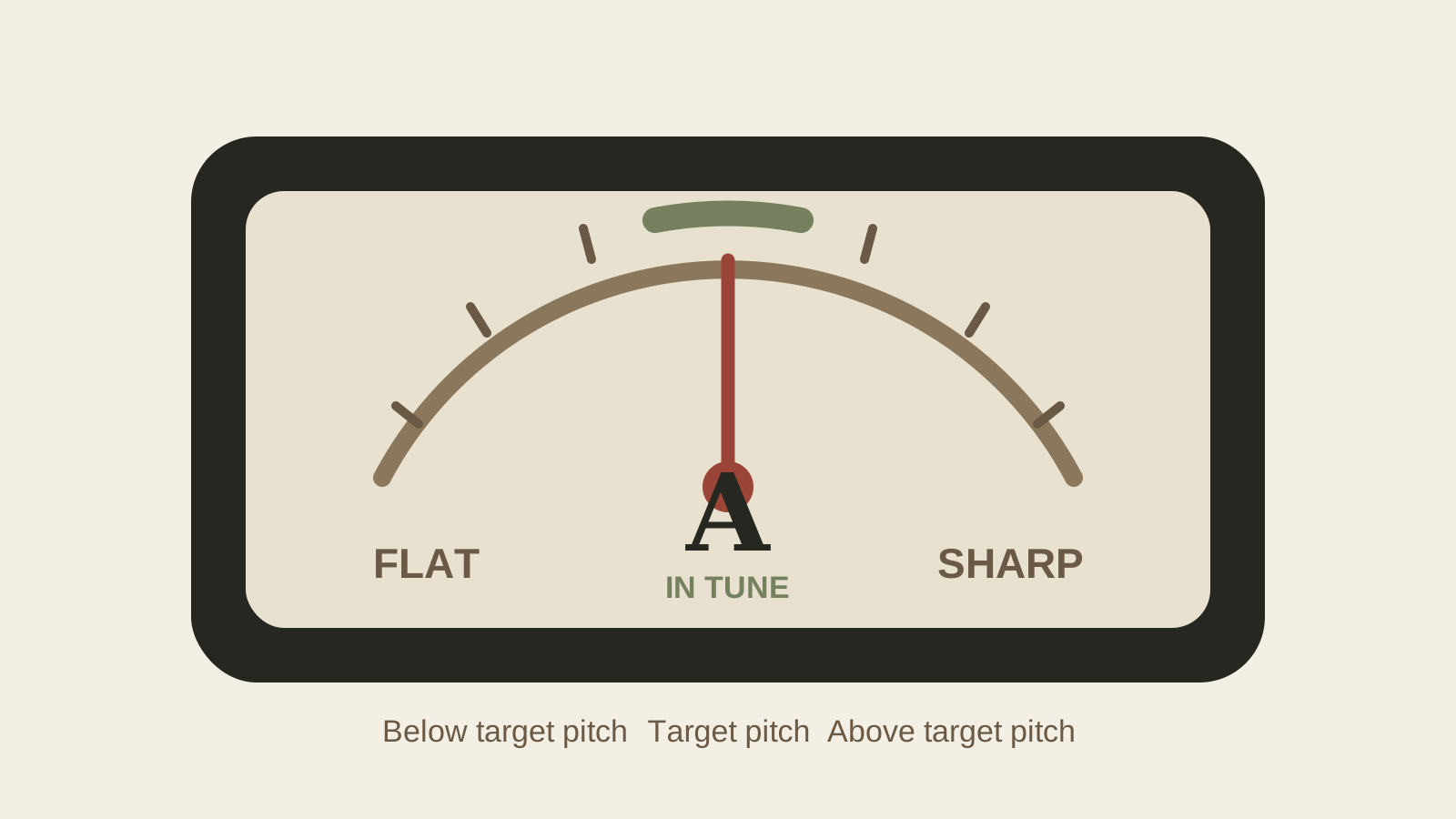
Guitar Tuners Explained
Choose a clip-on, pedal, app or strobe tuner and get a stable, repeatable reading.
Read the guide