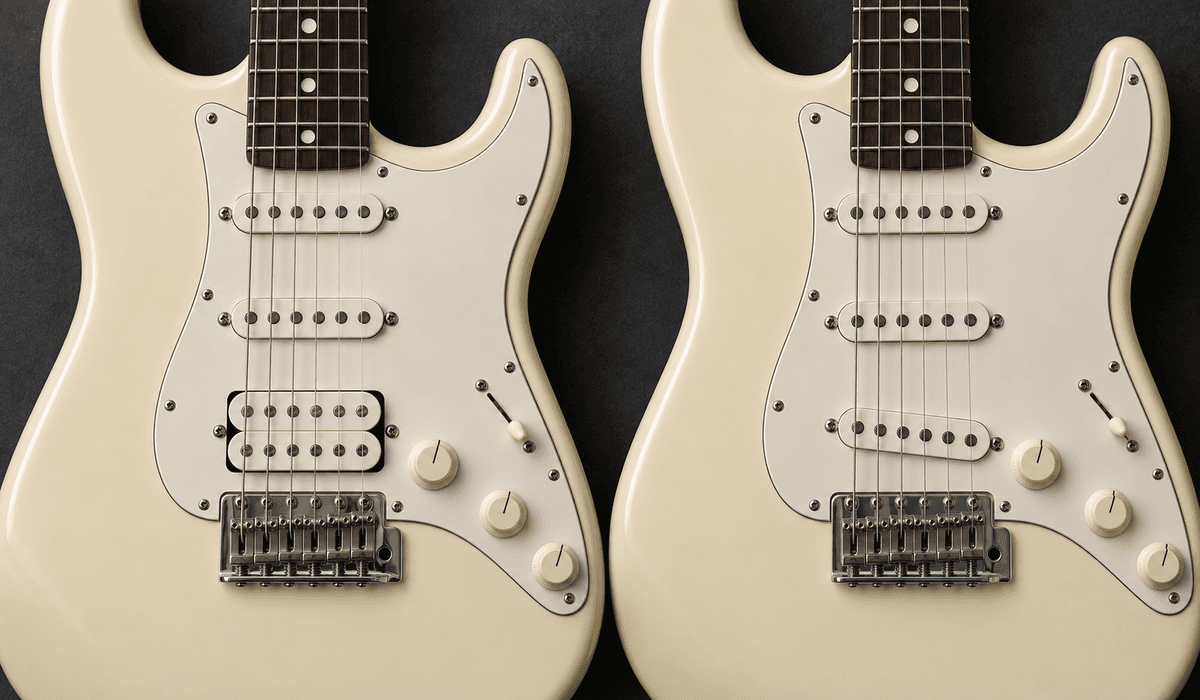
The decision in brief
Alnico and ceramic identify magnet families, not sound or quality rankings. Alnico grades differ in composition and magnetic properties; ceramic pickup magnets are ferrite. Compare the complete pickup, position, coil construction, height and circuit. Keep amplifier input settings fixed to compare drive, then listen to recordings at similar playback volume for preference. A result from two models does not isolate magnet material.
Define alnico and ceramic before describing their sound
Alnico is an iron-based permanent-magnet alloy family named from aluminium, nickel and cobalt. The grade specifies a formulation rather than a tone score. Composition varies: Arnold’s material reference lists Alnico 3 with no cobalt. Do not assume every grade contains the same ingredients or follows a simple number-to-strength order.
Ceramic pickup magnets are ferrite materials, rather than metallic alnico alloys. Grade, dimensions, magnetisation and the assembled magnetic circuit matter. Both families can appear in different pickup formats; neither identifies coil count or guarantees output.
Sources: Arnold Magnetic Technologies: alnico grades; Arnold Magnetic Technologies: ferrite materials
The complete pickup design shapes the result
Seymour Duncan identifies magnet type, wire gauge, bobbin shape, turns and pole pieces as design variables. A ceramic bar acting through steel poles and alnico rod magnets change geometry as well as material. Comparing those pickups does not isolate magnet chemistry.
DC resistance measures the resistance of the coil wire. Wire gauge, wire length and coil dimensions affect that reading, so it cannot rank output or tone by itself. Record the exact model, position, wiring and connected controls; request specifications with a stated method rather than comparing unexplained numbers from different makers.
Sources: Seymour Duncan: pickup design variables; Seymour Duncan: DC resistance and output limits
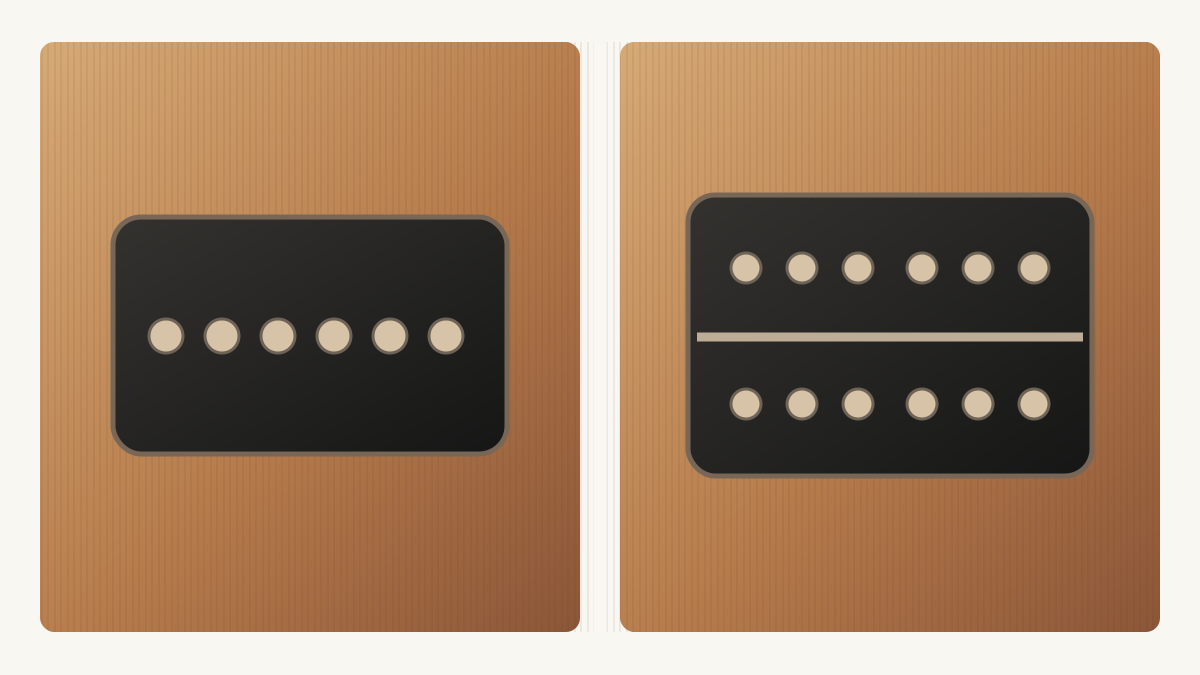
Use common tendencies carefully
| Check | Alnico pickup | Ceramic pickup |
|---|---|---|
| Verified material | Exact grade if documented | Exact ferrite grade if documented |
| Sound claim | Maker description of a complete model | Maker description of a complete model |
| Output/noise | Coils, position, height, load and circuit still matter | Coils, position, height, load and circuit still matter |
| What the label cannot prove | Quality, price value or a preferred sound | Quality, price value or a preferred sound |
Fender describes particular alnico grades in sound terms while also identifying winding and wire as contributors. Treat “warm”, “focused” or “aggressive” as prompts for listening to that design. They are not material-only response measurements, genre rules or proof that ceramic is harsher. A material-property table cannot supply a guitar-tone ranking.
Magnet material is not a quality or price hierarchy
Judge the complete pickup and the job it must do. A material name cannot prove workmanship or value. For a replacement, check dimensions, mounting, string-to-pole alignment, controls and switching against the exact drawing and wiring sheet. An exterior photograph cannot verify the hidden magnet.
A player can inspect control function and mounting condition without claiming to verify internal coil quality or magnet grade. If originality or reversibility matters, document the existing parts and ask a technician about any permanent work. This guide provides no current price comparison.
Run a listening comparison that controls the obvious variables
Define a complaint first, such as low-string chords losing separation at your normal gain. Record guitar, pickup model and position, strings, tuning, height and the maker’s height-measurement method. Keep cable, amplifier and recording path consistent. Follow each model’s clearance guidance; identical gaps do not create an identical magnetic field.
- Keep amplifier input settings fixed. Compare the same clean and driven passages; note level, clipping and control behavior.
- Compare recordings at similar playback volume afterward for tone preference. Changing guitar volume or preamp gain changes the drive condition and must be recorded separately.
- Record pauses, string balance and combined positions. Repeat any height adjustment as a separate, reversible condition.
| Record | Your notes for A and B |
|---|---|
| Models and setup | Exact pickup, position, coil mode, documented magnet and clearance method |
| Fixed-input pass | Amp input settings, passages and switching balance |
| Similar-volume playback | Recording playback adjustment and musical preference |
| Limit of inference | Other changed construction/controls; questions still open |
This proposed record contains no performed test results. One ceramic model versus one alnico model supports a decision about those installations, not a rule for the materials. Even a magnet swap needs charge, geometry and other conditions controlled before a narrow causal claim.
Choose by application and complete specification
Compare the behavior you need: chord definition, switching balance, quieter pauses or a usable volume-control sweep. Specify that goal before selecting a magnet label. A conventional single-coil’s hum problem is not solved merely by choosing a different magnet family.
For a new guitar, choose the complete instrument that supplies the required sounds and feels comfortable. For a replacement, check physical and electrical fit and recheck combined positions after installation. Powered electronics add another variable; use the active versus passive guide for that separate question.
Explain magnet specifications without repeating myths
Read a specification as an owner: identify the exact pickup and position, then the documented magnet grade, coil construction and switching. A source tied to the correct revision is stronger material evidence than a photograph of its cover.
If a specification is vague, ask what is documented and keep that uncertainty in your notes. A maker’s demo can suggest a comparison, but different guitars, gain or playback levels prevent it from proving the magnet caused the result. Use the two-pass routine on the guitar you are considering.
When this advice changes
This page concerns magnetic pickups. Piezo, optical and microphone systems need different explanations. Powered or multi-voice electronics can deliberately alter response, so a material-only comparison is incomplete.
Vintage originality, installation fit and noise can outweigh a tone preference. Keep original parts when preservation matters. Unusual tuning, string sets or very low action also require model-specific clearance checks; a universal pickup gap is unsuitable.
Conclusion: compare pickups, not magnet stereotypes
Use the magnet specification to understand a complete design. Grade, charge, coil, poles, position, height and the connected circuit remain part of the result. Define a playing goal, check the exact documentation, compare drive with amplifier input settings fixed and preference from recordings at similar playback volume. Keep the conclusion specific to the models and conditions.
Frequently asked questions
Are alnico pickups better than ceramic pickups?
Neither family is automatically better. Exact model, grade, position, coils, circuit and playing need matter. Alnico 3 is a composition exception with no cobalt in the checked material reference.
Are ceramic pickups always high output?
No. Ceramic magnets can support strong designs, but output also depends on coil turns, geometry, magnet dimensions, charge, loading and active electronics where used.
Do all alnico pickups sound warm?
No. Alnico includes several grades and can be used in many coil and magnetic-circuit designs. Some alnico pickups are bright, focused or high-output.
Can pickup height change the comparison?
Yes. Height affects output, balance and magnetic interaction with the strings. Use each maker's starting guidance and record height before comparing.
Does DC resistance tell me which pickup is louder?
No. DC resistance is a wire-resistance reading, not an output ranking. Compare drive with amplifier input settings fixed, then recordings at similar playback volume for tone preference.
Can I replace ceramic pickups with alnico pickups directly?
Sometimes, but verify dimensions, mounting, string spacing, wiring, phase and control values. A technician can protect valuable or unfamiliar circuits.
How this guide was prepared
We checked Arnold’s alnico grade and ferrite material documentation, Fender’s alnico explanation, and Seymour Duncan’s design-variable, DC-resistance and pickup-height guidance. Material properties and maker sound descriptions are kept separate; no material-only tone ranking is inferred. The two-pass record is a proposed owner method. We performed no magnet swap, listening trial, field or electrical measurement, installation or human expert review. AI assistance was used for source comparison and language checks. The images are exterior illustrations, not material evidence.
Documentation checked .
Corrects the Alnico3 composition exception, removes material-based tone and price rankings, replaces retail advice with owner checks, and adds a controlled comparison record.