Direct answer
The decision in brief
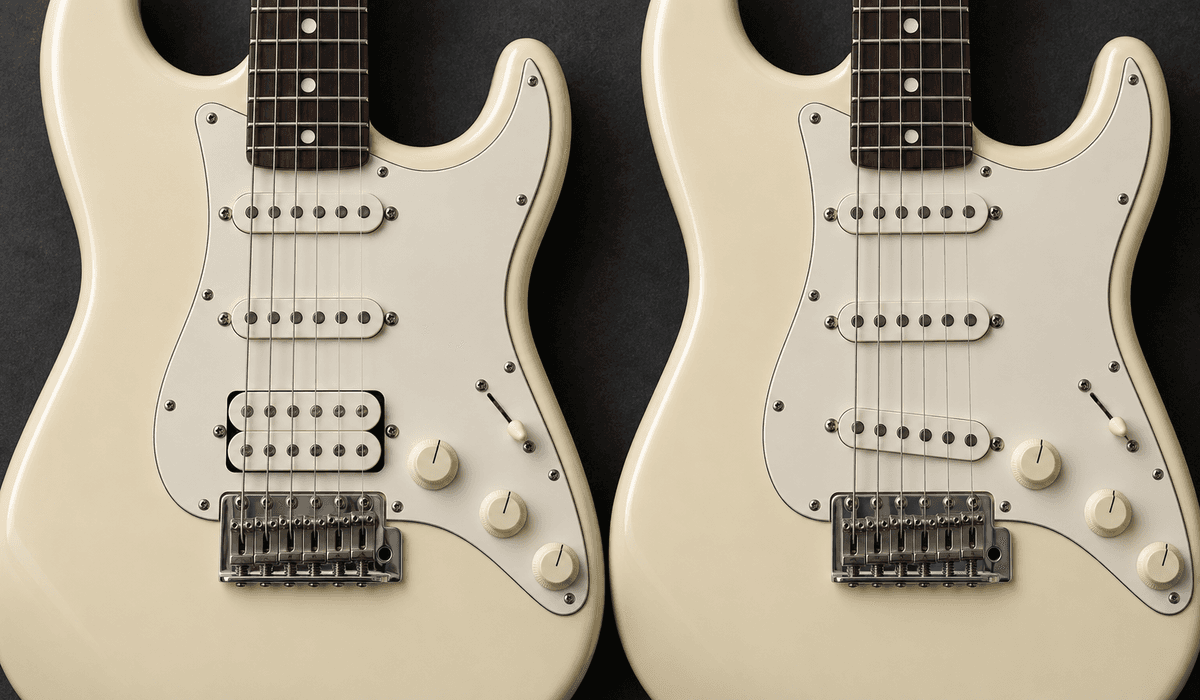
Stock HSS when the range needs a stronger, fuller bridge option alongside two single-coil positions. Stock SSS when the customer and category value a consistent three-single-coil layout, clear attack and traditional switching behavior. Neither layout is universally more versatile: pickup design, wiring, amplifier, setup and the player all affect the result, so verify the exact model rather than buying from the acronym alone.
What HSS and SSS actually describe
Pickup codes are normally read from bridge to neck. Fender's published explanation uses H for humbucker and S for single-coil. HSS therefore describes a bridge humbucker followed by middle and neck single-coils. SSS describes three single-coils. The code is a useful map, but it is not a complete electrical specification.
Two HSS guitars may use different magnets, coil resistance, pickup height, switching and volume-pot values. One may split the bridge humbucker in an intermediate position; another may not. Two SSS guitars can also differ substantially in output, noise behavior and frequency balance. Record the exact switching diagram and control functions for the model under review.
Confirm the image and the instrument
Product photography, written specification and received sample should agree. Count the visible coils, follow the selector positions and test each position through a known signal path. If the marketing image is generic, do not use it as evidence for the model configuration. This simple identity check prevents a category page from promising sounds the delivered instrument cannot produce.
Compare the practical differences customers can use
| Decision factor | HSS | SSS |
|---|---|---|
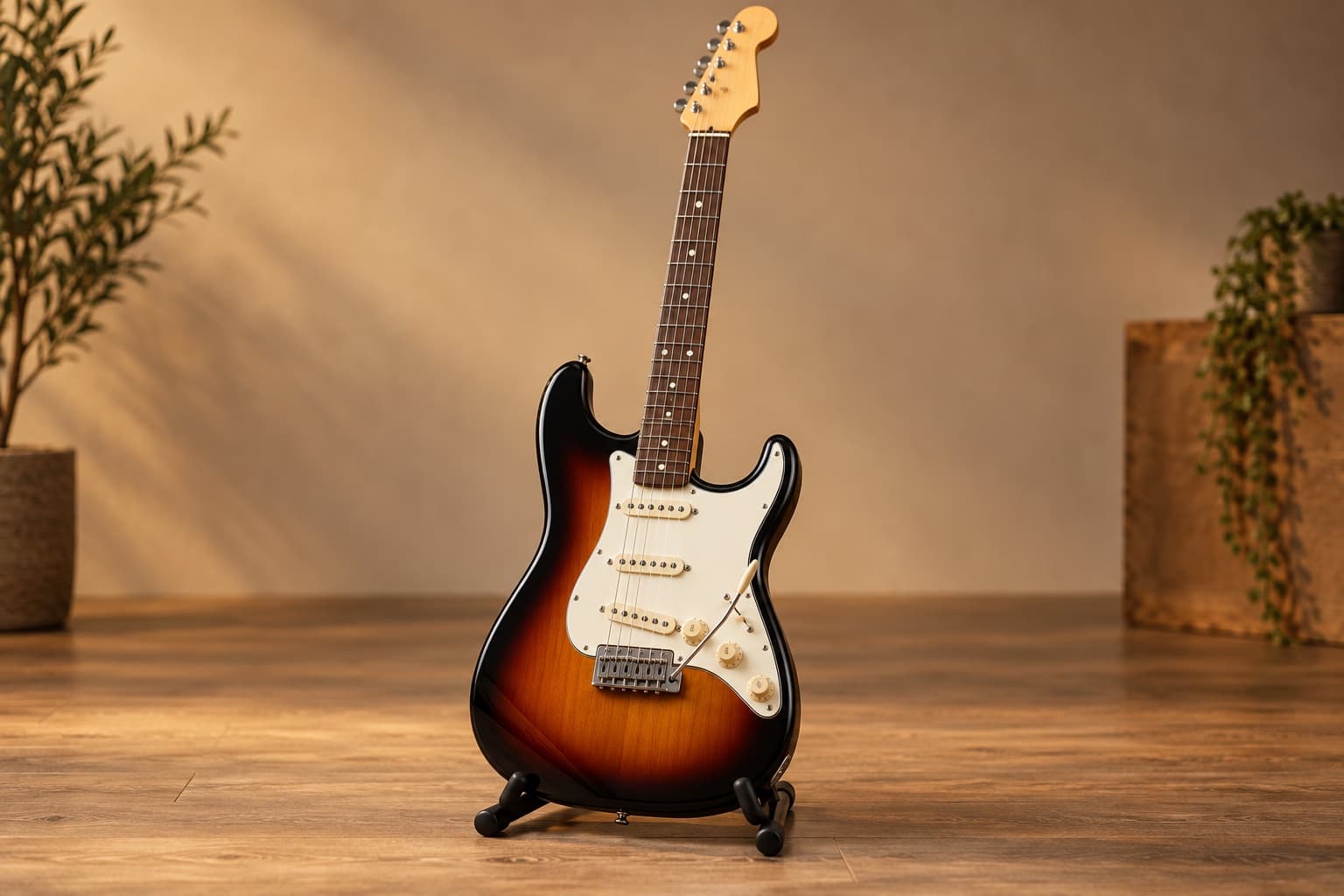
| Bridge position | Usually fuller and higher-output, subject to exact pickup | Usually clearer and more focused, subject to exact pickup |
| Layout consistency | Combines two pickup families | Uses one pickup family across all positions |
| Common retail role | Broad modern access or core electric | Traditional single-coil access or specialist choice |
| Demonstration priority | Output balance and intermediate switching | Position contrast and noise context |
| Verification | Coil split, pot values and pickup height | Pickup construction, wiring and pickup height |
A humbucker commonly uses two coils arranged to reduce the hum associated with a single coil. It can also deliver more output and a broader response, but those are tendencies rather than a guarantee for every unit. Single-coils commonly offer a clear attack and distinct position changes while being more exposed to electromagnetic noise in some environments.
The amplifier, gain level, cable, room power and player technique can make the difference appear larger or smaller. Compare at matched perceived volume where possible. A louder pickup often sounds more impressive in a quick trial, even when loudness is the main difference. Record settings so staff can repeat the demonstration.
Match each layout to a customer job
HSS often fits a player who wants single-coil neck and middle sounds but expects a denser bridge response for higher-gain rhythm or lead work. It can be a useful access or core model when wall space is limited. The buyer should still check whether the bridge pickup overpowers the other positions and whether the intermediate switching remains musically useful.
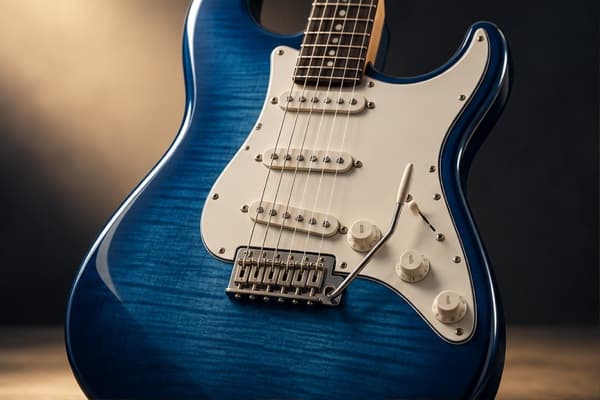
SSS often fits a player who values a consistent single-coil character across the guitar, pronounced attack and familiar in-between positions. It may support blues, funk, clean rhythm and traditional electric-guitar expectations. Genre labels are only starting points: players routinely use both layouts outside their stereotypical genres.
Ask the customer question first: “Which sounds must this guitar cover, and which control behavior can the player understand?” A beginner may benefit from a simple, well-explained SSS choice. Another beginner may prefer an HSS model because the bridge sound matches the music that motivated the purchase. Experience level alone does not determine the layout.
Demonstrate HSS and SSS with a controlled method
Use two guitars with similar scale length, string condition, action and amplifier settings when the purpose is to compare pickup layouts. Start clean and move to moderate gain. Play the same short passages in every selector position: open chords, muted rhythm, single-note lines and sustained bends. Adjust perceived volume when comparing the bridge pickups.
For HSS, listen for the bridge-to-middle transition, output balance and any coil-split behavior. For SSS, demonstrate the three direct positions and intermediate combinations, then explain that environmental noise varies. Do not claim that one configuration is noiseless without checking the exact wiring and test environment.
Shipment inspection should verify each selector position, control sweep, jack stability and intermittent behavior while the cable is moved normally. Record the amplifier, cable and electrical setting when noise is reported. Factory testing documentation is most useful when it states the function tested and acceptance rule; “electronics passed” alone does not explain the method.
Use the layouts to create range separation
A store does not need equal quantities of HSS and SSS. It needs clear coverage. Map existing electrics by price role, pickup layout, bridge type, neck feel and customer use. If two HSS models share the same role and offer no demonstrable difference, adding another finish may deepen overlap rather than choice.
One compact starting architecture might use an approachable SSS model for traditional single-coil demand, an HSS model for broader bridge coverage and an HH model only when a distinct heavier or dual-humbucker request exists. That is a hypothesis, not a universal formula. Local lesson styles, popular music, staff expertise and actual lost-sale requests should determine depth.
Give staff one accurate sentence for each model. For example: “This SSS model keeps a single-coil response in all three positions.” Or: “This HSS model adds a bridge humbucker while retaining single-coils in the middle and neck.” Then let the playing demonstration establish preference without attaching absolute value words such as better, professional or premium to the acronym.
A worked HSS vs SSS retail decision
Suppose a store already carries an entry SSS electric and a core HH electric. Customers frequently ask for one guitar that keeps familiar neck single-coil sounds but provides a fuller bridge response. That evidence defines a gap an HSS model may fill. The buyer selects a sample whose scale, neck and bridge are close enough to existing models that the pickup system can be compared without too many variables.
The review confirms the exact selector logic, measures received setup, records pickup height and plays every position through the same clean and moderate-gain settings. Staff find that the bridge humbucker supplies a useful contrast while the neck and middle positions remain easy to explain. The model therefore receives a clear role: a core all-round electric between the SSS access model and HH option.
In another market, enquiries may center on traditional clean and in-between sounds, while the existing HH model already satisfies higher-output demand. Adding a second SSS model with a distinct neck feel or step-up build could create better separation than HSS. The letters do not determine the answer; the range gap and tested product do.
For the first order, the store can keep quantities conservative, tag every enquiry by layout and review demonstration-to-sale evidence. If buyers consistently prefer the bridge humbucker, reorder depth can increase. If customers rarely use the difference, the buyer should reconsider the role rather than invent stronger marketing language.
Present the layouts accurately online and in store
Use a close product image where the bridge, middle and neck positions are visible. The caption should name the layout without promising a genre or quality level. Product filters may use HSS and SSS, but the category introduction should spell out the terms for visitors who do not know the code.
A comparison card can show bridge pickup type, other pickups, selector positions, coil-split behavior, bridge system and customer role. Keep output descriptions conditional unless measured on the exact products. Avoid generic phrases such as “ultimate versatility” and explain the specific additional choice instead.
Link the product or model example to this comparison, the electric-guitar type hub and the retail specification guide. Internal links should help a visitor move from definition to decision to a real verified example. If a photographed guitar does not match the layout, replace the image rather than relying on ALT text to repair the contradiction.
Review what happens after the models reach the floor
Track which selector positions staff demonstrate, which sounds customers request, what products are compared, and why a sale is lost. Use simple reason codes and anonymous counts. A high number of HSS demonstrations with low conversion may indicate the model's feel, price, setup or explanation is wrong; it does not prove the layout is unwanted.
Record electronic faults and adjustments by model and shipment. Pickup-height correction, loose jacks and switching issues should be separated from customer preference. This operational evidence affects reorder decisions and helps the supplier respond to a precise issue.
Refresh the article when a model example, wiring option or authoritative source changes. Keep the general explanation stable, but date model-specific observations. That distinction helps readers and answer systems understand which statements are definitions and which depend on a particular sample.
Answer common customer questions without oversimplifying
When a customer asks which layout is better, staff should ask what the bridge pickup needs to do, which clean sounds matter, how much gain is used and whether the customer already has another electric. These questions reveal the missing sound or feel. They also prevent the answer from becoming a genre stereotype.
If a customer asks whether HSS is louder, explain that a bridge humbucker commonly produces a stronger output than a traditional bridge single-coil, but the exact pickups and their height determine the comparison. Demonstrate at a matched listening level first, then show what the additional output does when the amplifier settings stay fixed.
If the question is about noise, use a clean signal and a known electrical environment. Explain that traditional single-coils can respond to electromagnetic interference and that some combined positions or specialized designs may reduce it. Do not promise silent operation from the acronym. Check the exact selector and wiring.
For recording customers, demonstrate how the layouts sit under the same amp or interface input conditions. For live players, include selector access, control changes and output jumps. For beginners, keep the first demonstration short: one neck sound, one bridge sound and one clear reason to choose each guitar. More options are useful only when the player understands them.
Record unanswered questions. If staff repeatedly need information about coil splitting, magnets, pot values or pickup height, improve the specification record and editorial page. If customers choose mainly by neck feel or weight, revise the range explanation so pickup layout is not presented as the only decision. Trustworthy guidance helps the customer compare the complete guitar while still answering the original HSS-versus-SSS question directly.
HSS vs SSS buying checklist
- Confirm the bridge-to-neck pickup code on the current specification.
- Match photography, switching diagram and physical sample.
- Record every selector position and control function.
- Check whether the HSS bridge humbucker splits, and in which positions.
- Compare output at matched perceived volume.
- Document pickup height before changing it.
- Test noise in a known electrical environment.
- Define the customer and range role for each model.
- Inspect electronics again on shipment samples.
- Train staff to explain the layout without unsupported tone promises.
The decision is complete when the store can state who each layout serves, demonstrate the useful differences and verify that the received product matches the published description. If the only distinction is an acronym on a supplier sheet, more evidence is needed.
Conclusion: choose the range role before the pickup code
HSS and SSS identify useful pickup layouts, but neither code determines quality or suitability by itself. HSS commonly adds a fuller bridge option to two single-coil positions. SSS keeps a three-single-coil structure with its own familiar position changes. Exact pickup design, wiring, setup, amplifier and player remain part of the result.
For stocking decisions, define the missing customer job, verify the exact switching and demonstrate comparable guitars under repeatable conditions. Use local questions and post-launch evidence to decide quantity. If the store cannot explain why both models exist, another layout may deepen overlap rather than improve choice.
Accurate photographs, specification fields, comparison tables and staff demonstrations should all show the same configuration. This gives customers a direct answer while preserving the nuance needed for a trustworthy purchase decision.
Frequently asked questions
Questions buyers commonly ask
Is HSS more versatile than SSS?
HSS can cover a wider contrast between a humbucker bridge and single-coil middle and neck positions, but versatility depends on the exact pickups, switching and the sounds the player needs. SSS may be more suitable when consistent single-coil behavior is the priority.
Is HSS better for beginners?
Not automatically. A beginner benefits most from a reliable guitar whose feel, controls and sounds match the intended music. HSS may cover more bridge gain; SSS may offer a simpler, consistent pickup family.
Does an HSS guitar always have higher output?
The bridge humbucker often has higher output than a typical bridge single-coil, but pickup design and height vary. Compare the exact models at matched perceived volume.
Are SSS guitars always noisy?
Traditional single-coils can pick up electromagnetic hum, but the level depends on pickup construction, wiring, selector position and environment. Some designs use noise-reducing methods, so verify the actual guitar.
How should a retailer choose stock quantities for HSS and SSS?
Use local sales, enquiries, demonstrations and lost-sale reasons. Give each layout a distinct customer and range role, start with cautious depth, and adjust reorders from evidence.
How this guide was prepared
This guide organizes model-selection questions into a repeatable retail decision framework. Manufacturer references support definitions and measurement context. They are not treated as universal acceptance limits. Guitar specifications, setup tolerances and audible results remain model-specific and should be verified against the current supplier specification sheet and a physical sample.