The decision in brief
Try conventional single-coils when a clear attack and bright response suit your playing. Try humbuckers when reducing mains hum is a priority and the available model gives the sound you need. These are starting points: two coils do not guarantee higher output, more compression or a better sound. Compare the exact guitar, pickup position, wiring and rig, first with fixed amplifier settings and then at similar playback volume.
What matters most
- Hum cancellation addresses particular interference; a humbucker does not make an entire rig silent.
- Keep amplifier input settings fixed to compare drive, then match playback volume to compare preference.
- Record the complete guitar and switching. DC resistance, cover shape and coil count cannot rank tone or output.
Start with what the two pickup designs actually are
A traditional single-coil has one sensing coil. A conventional humbucker pairs two coils with opposing magnetic polarity and a suitable electrical connection. The wanted string signals add while interference picked up similarly by the coils opposes. Seymour Duncan describes how reversing a coil's electrical connections can achieve the required relationship; the physical winding direction alone is not the whole explanation.
A single-coil-shaped housing can contain a hum-cancelling design, and a cover can hide the coils. Read the actual model specification. This comparison concerns conventional magnetic single-coils and humbuckers; active or passive electronics are a separate choice.
Read layout codes in bridge-to-neck order
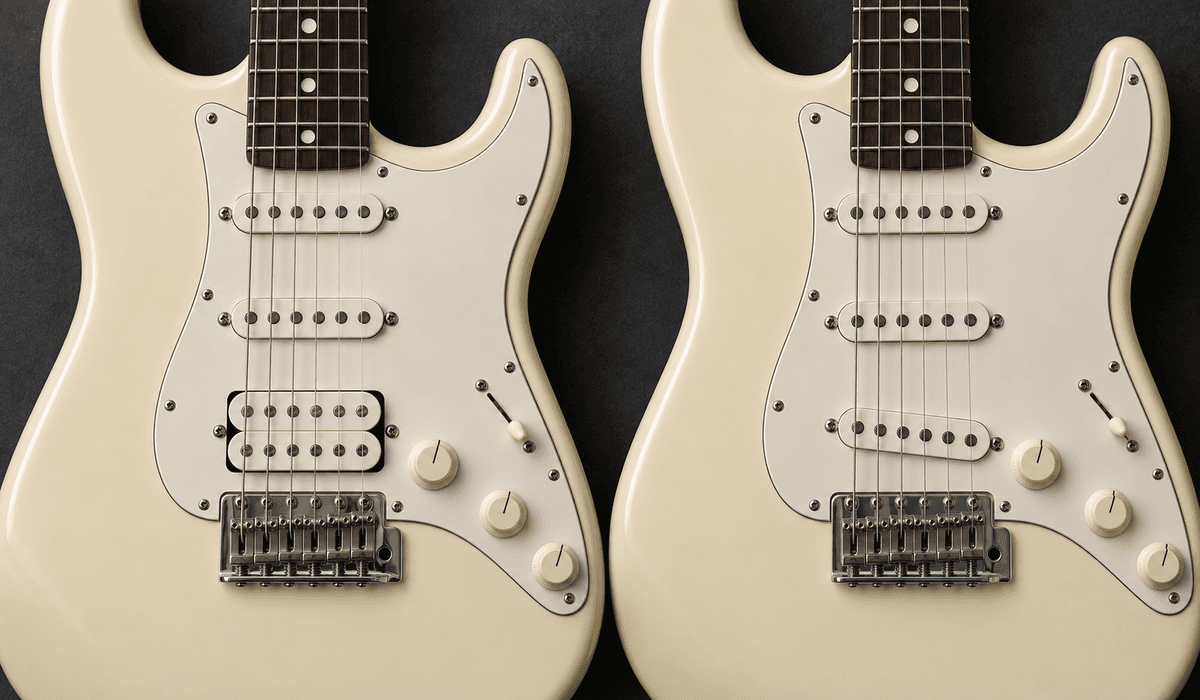
Fender uses S for single-coil and H for humbucker, read from bridge to neck. HSS has a bridge humbucker and middle and neck single-coils; SSS has three single-coils. The code does not state the output or switching. For the complete arrangement, use our HSS vs SSS guide.
Sources: Seymour Duncan: Humbucker internals and coil connections; Fender: Decoding standard pickup arrangements
Compare output, noise, attack and frequency balance
| Factor | Conventional single-coil | Conventional humbucker | What to check |
|---|---|---|---|
| Mains hum | One coil is more exposed to this interference | Paired coils are designed to reduce it | Exact selector position and room |
| Sound description | Often described as bright with clear attack | Often described as fuller or thicker | Exact model at similar listening volume |
| Output | Model and setup dependent | Model and setup dependent | Clean level and how it drives your amp |
| Combined positions | Suitable paired pickups can reduce hum | Split and combined modes need checking | Wiring diagram and all switch positions |
Fender's broad sound descriptions are useful listening prompts, not performance guarantees. DiMarzio explicitly says DC resistance is not a direct indication of output or tone. Its output figures compare its own pickups; do not assume measurements from different makers share a test method.
A suitably matched reverse-wound/reverse-polarity (RWRP) pair can reduce hum when both single-coils are selected. That does not make either pickup alone hum-cancelling. Humbuckers also leave some other noise audible: DiMarzio distinguishes mains hum from higher-frequency interference that may change when a hand touches grounded strings. Touching the strings is not a complete grounding diagnosis.
Sources: Seymour Duncan: Pickup polarity and phase; DiMarzio FAQ: output, noise, controls and installation; Fender: How to pick your pickup
Treat pickup, controls and amplifier as one system
The controls affect the response you hear. DiMarzio's guidance says higher potentiometer resistance generally retains more treble; 250 kΩ and 500 kΩ are common choices rather than mandatory single-coil and humbucker rules. Follow the exact pickup and circuit guidance before buying replacement controls.
Pickup height affects output and balance. Strong magnetic pull when a pickup is too close can disturb string vibration. Seymour Duncan's height guide gives model-dependent starting points. Use the maker's measurement method, including which fret to hold and where to measure, rather than applying one gap to every pickup. Record a reversible starting setting and compare small adjustments.
Keep the cable and amplifier settings consistent during a trial. A stronger pickup signal may drive the amplifier differently; distortion and compression in the rig can change the apparent attack and dynamics. Do not treat a compressed sound as proof that every humbucker compresses more than every single-coil.
Sources: DiMarzio FAQ: output, noise, controls and installation; Seymour Duncan: Adjusting pickup height
Choose by the part the guitar must play
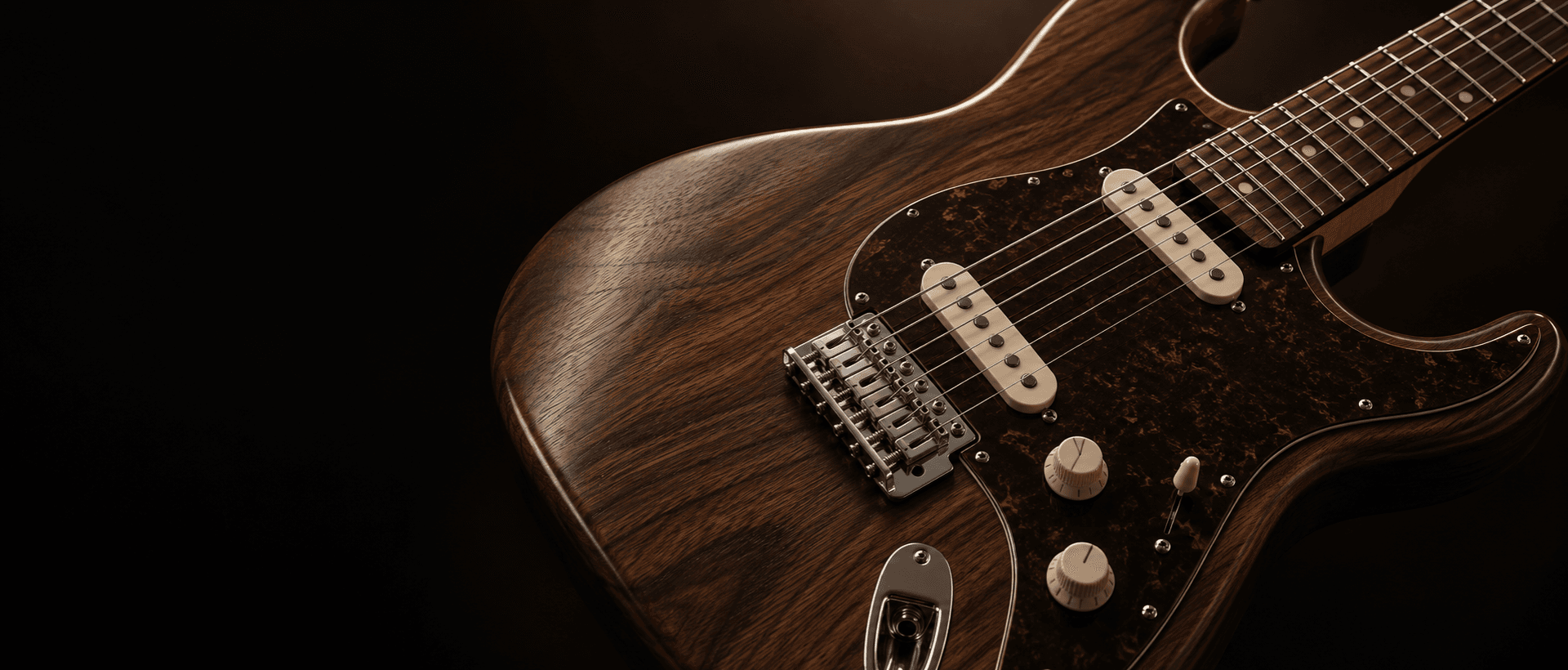
Write down the sounds you need: clean chord attack, a bridge rhythm sound with gain, a rounded neck lead, or a usable change between them. Then try the exact positions that supply those sounds. Single-coils are worth trying for bright articulation; humbuckers are worth trying when mains hum interrupts the passage. Neither family determines a genre.
If you already have a guitar, identify its actual limitation before replacing anything. An unused neck sound may need a different amplifier setting or pickup-height balance. An unwanted noisy pause may require checking the room and signal chain. A working pickup that already gives the required response has no obligation to match a different category label.
For a first guitar, also compare neck comfort, weight, control access and setup. A pickup choice cannot fix uncomfortable fretting or a faulty selector. For more detail about the humbucker itself, read humbucker construction and wiring.
Run a fair pickup comparison
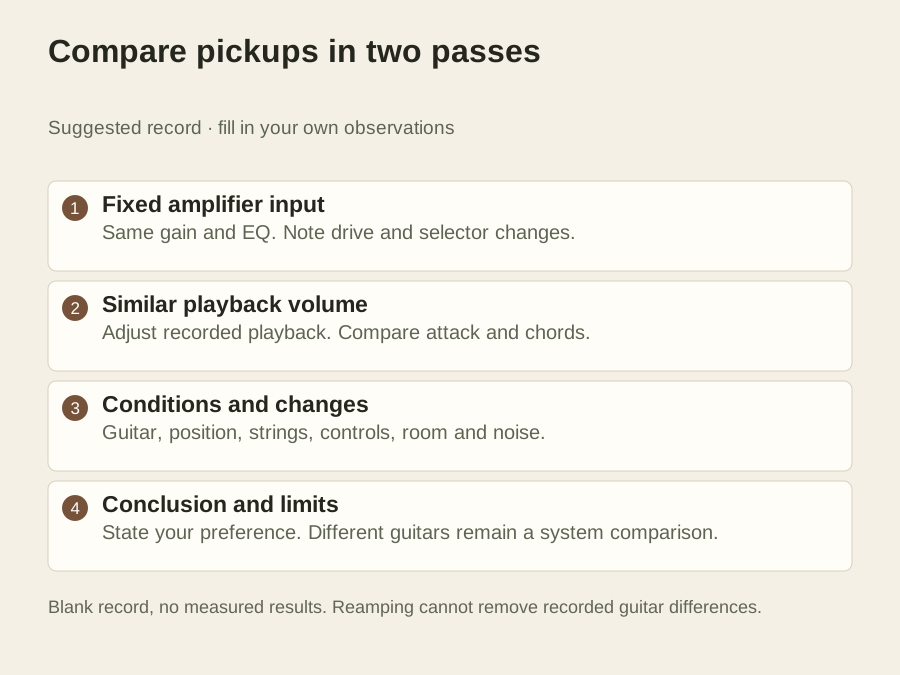
Use this suggested routine at home or in a shop. It creates repeatable observations; it is not a laboratory method or a report of tests performed for this article.
- Record each guitar, pickup model if known, selector position, control settings, strings, tuning and pickup height. Keep the cable, amplifier channel, gain, EQ and speaker path the same.
- First leave the amplifier input settings fixed. Play the same clean passage, then your usual gain setting. Note how each guitar drives the rig and whether a selector change is useful.
- Make short recordings if possible. Adjust playback level after recording so the louder take does not dominate the preference comparison. Changing guitar volume before a distorted amp also changes its drive, so record that as a different condition.
- Compare chord separation, note attack and the response to soft and firm picking. Check every position you would actually use, including any split.
- Record quiet pauses at the same gain. Note room orientation and hand position. Compare a known-working cable and signal path if a noise seems unexpected; a hands-on/hands-off result alone cannot identify a fault.
| Record | Your notes for A and B |
|---|---|
| Guitar and pickup position | Model, switching mode, controls and setup |
| Fixed-input pass | Gain/EQ, clean passage, driven passage, selector transitions |
| Similar-volume playback | Level adjustment, attack, chord separation, preference |
| Noise and limits | Room orientation, pauses, changed conditions, what remains untested |
If A and B are different guitars, the result describes those complete instruments. Reamping sends an already-recorded signal through amplification; it cannot remove pickup, string or guitar differences already captured in that signal. A stronger pickup-specific inference needs a carefully controlled comparison of the pickup installation, position, height, load and playing input, with remaining limits recorded.
Sources: DiMarzio FAQ: output, noise, controls and installation; Radial Engineering: Reamp basics and recording order
Check compatibility before replacing pickups
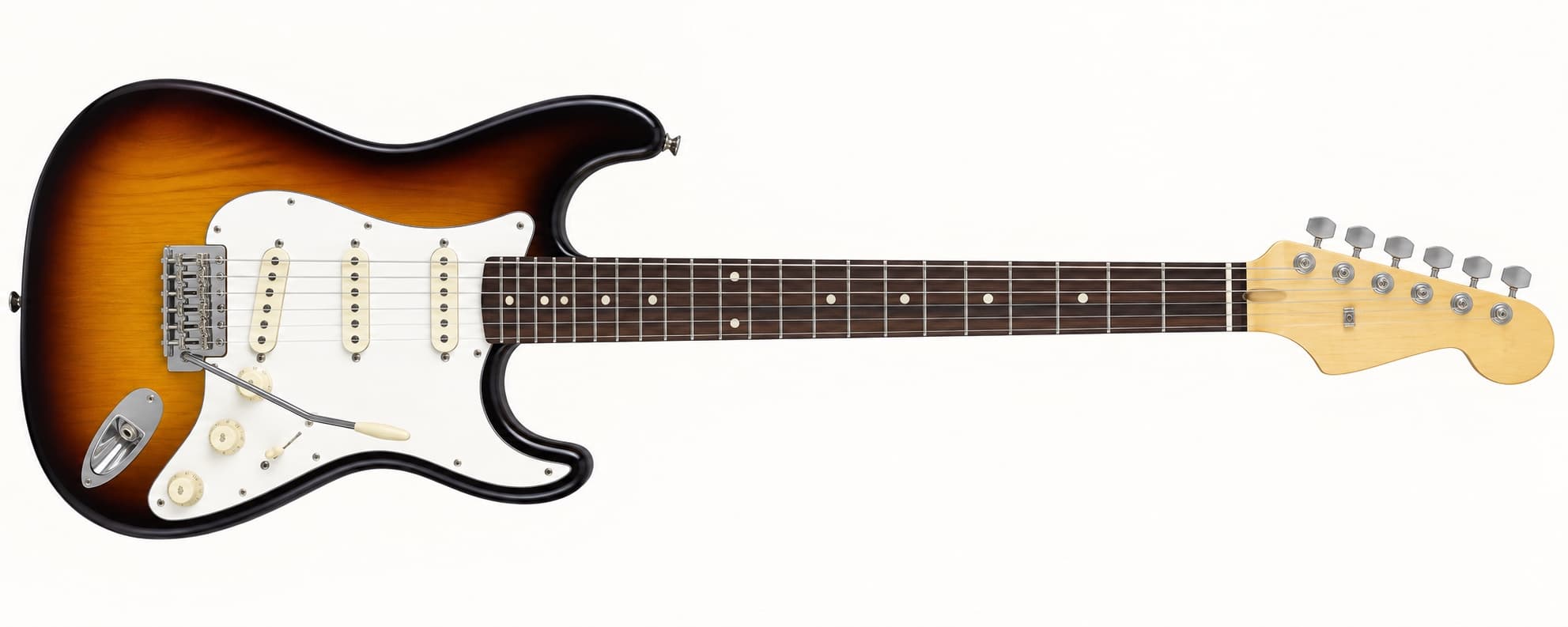
Before replacing a pickup, verify cavity and mounting dimensions, string-to-pole alignment, height clearance, lead type and required switching. Check the actual drawing and wiring diagram. A narrow hum-cancelling replacement may fit a single-coil opening, but its response still depends on the model.
Four-conductor humbuckers expose coil connections for additional wiring options. Wire colours differ between manufacturers: Seymour Duncan and DiMarzio documents use different assignments. Do not transfer a colour-only recipe to a different make. A two-conductor lead may not offer the same switching access.
Photograph the original wiring and retain the parts if reversibility matters. Routing, unfamiliar soldering and persistent noise faults are reasons to consult a guitar technician. If powered electronics are involved, verify the full manual; our active vs passive guide covers that separate system choice.
Sources: Seymour Duncan: Humbucker internals and coil connections; DiMarzio FAQ: output, noise, controls and installation
Use a seven-question decision framework
- Which clean and driven sounds do you actually need?
- Which pickup positions provide them?
- Is mains hum a problem in your usual room and rig?
- How does the guitar respond to soft and firm picking?
- Will you use split or series/parallel options, and are they documented?
- Does a replacement fit the guitar and circuit without unwanted permanent work?
- Does your preference remain after comparing at similar playback volume?
Keep the answers with your listening notes. If you want single-coil neck sounds and a different bridge option, try HSS and check the balance when switching. If the existing guitar already covers your parts, adjustment or keeping it unchanged may be the useful decision.
Avoid common pickup comparison errors
A coil split typically leaves one humbucker coil active. Full hum cancellation is generally lost when that coil is used alone, although a suitable combination with another coil may reduce hum. A split is not guaranteed to reproduce a dedicated single-coil pickup. Fender distinguishes splitting from tapping: a tap takes a connection partway through a winding. Parallel humbucker wiring uses both coils and is another separate mode.
Avoid ranking pickups by DC resistance, attributing every difference between guitars to coil count, or changing gain while claiming a level-only comparison. Also separate personal preference from a recorded result: “I prefer this guitar at these settings” is a useful observation without declaring an entire family better.
Sources: Seymour Duncan: Humbucker internals and coil connections; Fender: Coil splitting and coil tapping
Conclusion: select the pickup for the signal path and musical job
Begin with the part you want to play and the noise you can accept. Coil construction explains a real hum-reduction difference, while output and sound still need checking on the exact model. Use fixed input settings to hear amplifier drive, similar playback volume to judge preference, and notes that name the guitar and conditions.
Before a replacement, verify the dimensions, controls and wiring. Choose a guitar or pickup change only when it solves an identifiable playing problem.
Frequently asked questions
Are humbuckers always louder than single-coils?
No. Output depends on the exact design, height, wiring and connected circuit. DC resistance is not an output ranking. Compare the actual guitar with fixed amplifier input settings, then at similar playback volume.
Do humbuckers remove all guitar noise?
No. Paired coils reduce particular interference, especially mains hum. Other noise from the environment, signal chain or a fault can remain.
Can a split humbucker sound exactly like a single-coil?
Do not assume so. A split usually leaves one coil active, but its construction, position and circuit can differ from a dedicated single-coil. Check the sound and noise of the actual split mode.
Which pickup is better for beginners?
Choose a comfortable, functioning guitar that supplies the sounds you want. Try the selector and controls in your practice rig; neither pickup family is universally better for beginners.
What does HSS mean?
In the usual bridge-to-neck convention, HSS means a bridge humbucker followed by middle and neck single-coils. Verify the model specification and switching; the code does not promise a coil split.
How this guide was prepared
This guide checks manufacturer explanations from Seymour Duncan, DiMarzio and Fender for coil connections, hum rejection, output interpretation, control loading, pickup height and split/tap terminology. Sound descriptions are manufacturer tendencies, not measurements of every pickup. The two-pass listening routine and blank record are editorial suggestions, not a completed test. No guitars were played, pickups installed, noise measured or human technical review performed for this revision. Comparisons between different guitars cannot isolate pickup construction. Radial Engineering supports the record-first, amplify-later definition; the limit on isolating pickups is an editorial inference from that signal path. This revision used AI-assisted source comparison and language checks.
Documentation checked .
Corrected the reamping claim and noise-diagnosis limits, removed retail-range advice, added a two-pass listening record, checked model-specific electronics guidance and corrected illustration descriptions.
Sources and further reading
- Seymour Duncan: Humbucker internals and coil connections
- Seymour Duncan: Pickup polarity and phase
- DiMarzio FAQ: output, noise, controls and installation
- Seymour Duncan: Adjusting pickup height
- Fender: How to pick your pickup
- Fender: Decoding standard pickup arrangements
- Fender: Coil splitting and coil tapping
- Radial Engineering: Reamp basics and recording order