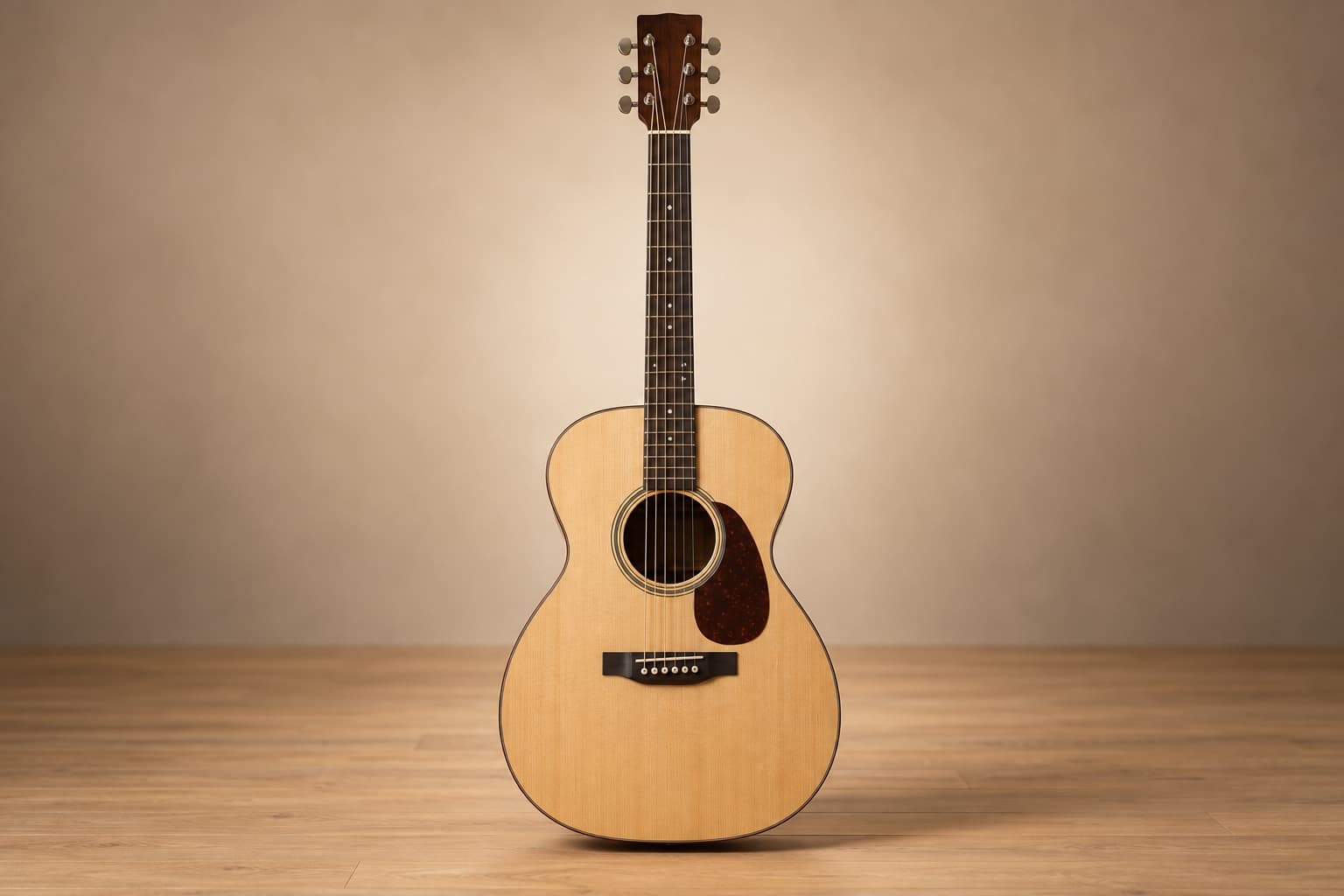
The decision in brief
Start with a dreadnought when a broad lower bout, strong fundamental response and robust strumming role fit the player. Start with a Grand Auditorium when a shaped waist and balanced all-purpose format are priorities. Start with an OM when a compact mid-size body and articulate fingerstyle or mixed-technique response appeal. These are tendencies, not guarantees: dimensions, scale length, bracing, top construction and maker terminology vary, so compare the exact guitars for comfort and sound.
What matters most
- Maker's exact body-shape name and model revision.
- Body length, lower-bout width, waist and maximum depth.
- Scale length, nut width and neck profile description.
Body-shape names are starting points, not universal dimensions
Dreadnought, Grand Auditorium and OM are useful families, but they are not a global dimensional standard. A maker may adjust body length, lower-bout width, depth, waist, scale length and neck joint while retaining a familiar name. Martin explains that its 000 and OM models can share a body shape while differing in scale length and other specifications. Taylor's Grand Auditorium belongs to Taylor's own shape system.
Compare drawings or current specifications from the same maker when possible. Record lower-bout width, body depth, scale length and nut width separately. A photograph can reveal proportion, but it cannot supply a reliable measurement unless it was made for that purpose.
Why this matters
A shopper who finds one dreadnought uncomfortable should not assume every dreadnought has identical depth or edge shape. Likewise, one comfortable OM does not prove another maker's OM will sit the same way. Use the name to choose a starting aisle, then use the actual guitar to decide.
The shared name needs a maker attached to it. Martin’s guide calls its 0000/M family Grand Auditorium, while Taylor’s shape guide uses Grand Auditorium for its GA design. A comparison between those names must still identify the actual body dimensions, scale and model. Likewise, Martin’s description of shared 000/OM outlines does not establish one scale length across every manufacturer.
Sources: Martin body-size definitions; Taylor body-shape definitions
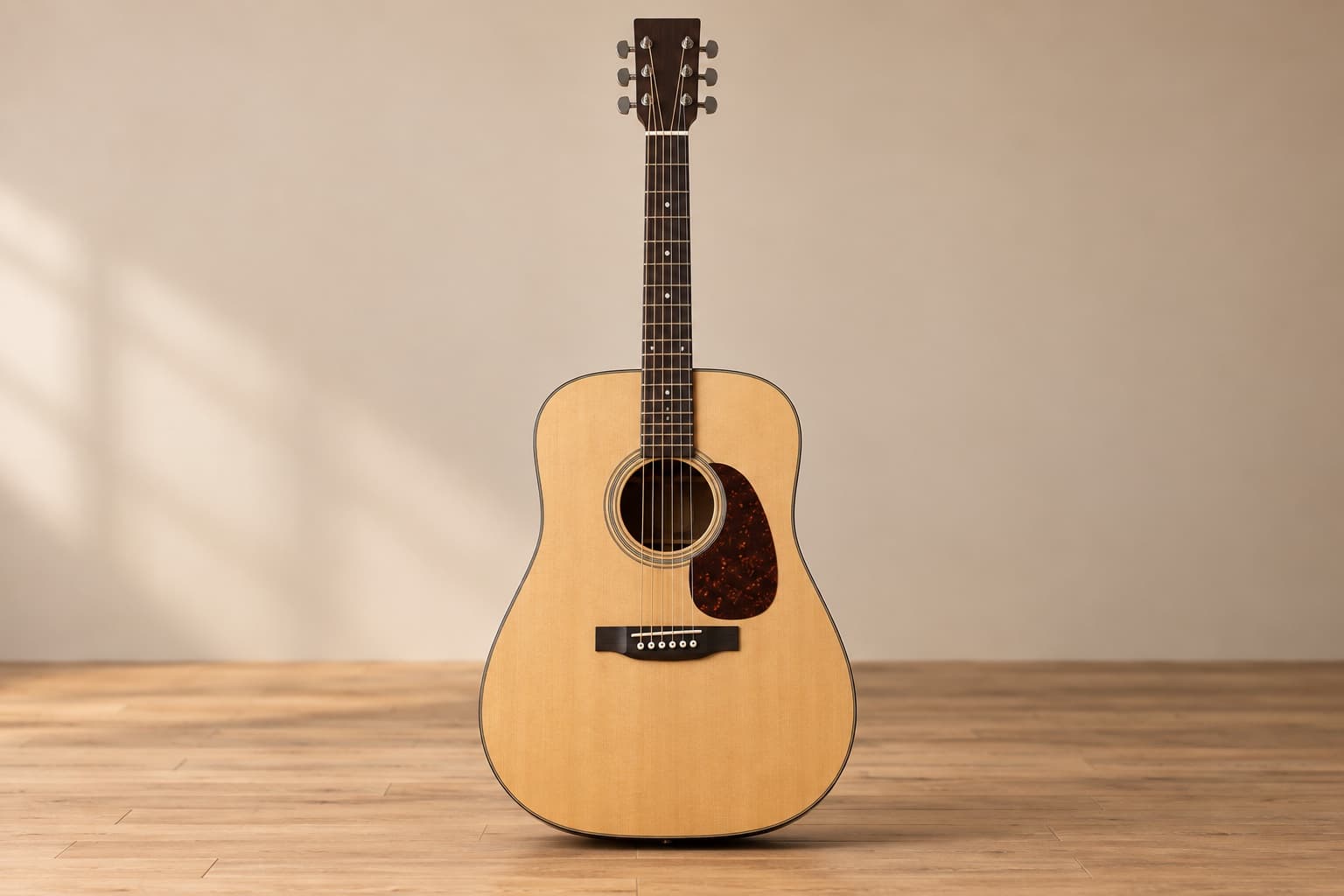
How the three formats usually differ
| Factor | Dreadnought | Grand Auditorium | OM |
|---|---|---|---|
| General outline | Broad shoulders and lower bout | Defined waist, medium-to-large body | Compact mid-size, narrower waist |
| Common strength | Strong fundamental and strumming headroom | Balanced all-purpose response | Articulation and controlled low end |
| Comfort question | Can the arm clear the body comfortably? | Does the waist locate the guitar well? | Does the smaller format improve reach? |
| Best verification | Depth, lower bout and dynamic range | Balance across techniques | Scale, neck joint and note separation |
The descriptions are common tendencies, not acoustic promises. A small change in bracing, top thickness or scale can move the result. Cutaways, electronics and finish also create variations within each family.
Sources: Taylor body-shape tendencies; Martin body-family context
Measure the body-player interface
Acoustic comfort begins where the lower bout meets the picking arm and where the waist rests on the leg. Body depth affects how far the fretting shoulder and picking arm move forward. Lower-bout width changes reach around the instrument. Edge shape and binding can make similar dimensions feel different.
Play seated in the position normally used, then stand with a strap if performance is part of the plan. Keep both shoulders relaxed. If the picking arm must lift or the fretting wrist changes because the body shifts, compare another depth or waist. Do not interpret short showroom familiarity as long-session comfort.
Scale length and neck dimensions remain separate. An OM can feel compact at the body while using a scale that feels familiar or relatively firm. A Grand Auditorium can pair with different nut widths. Record body fit and neck fit as two decisions.
Sources: Taylor body fit and waist context
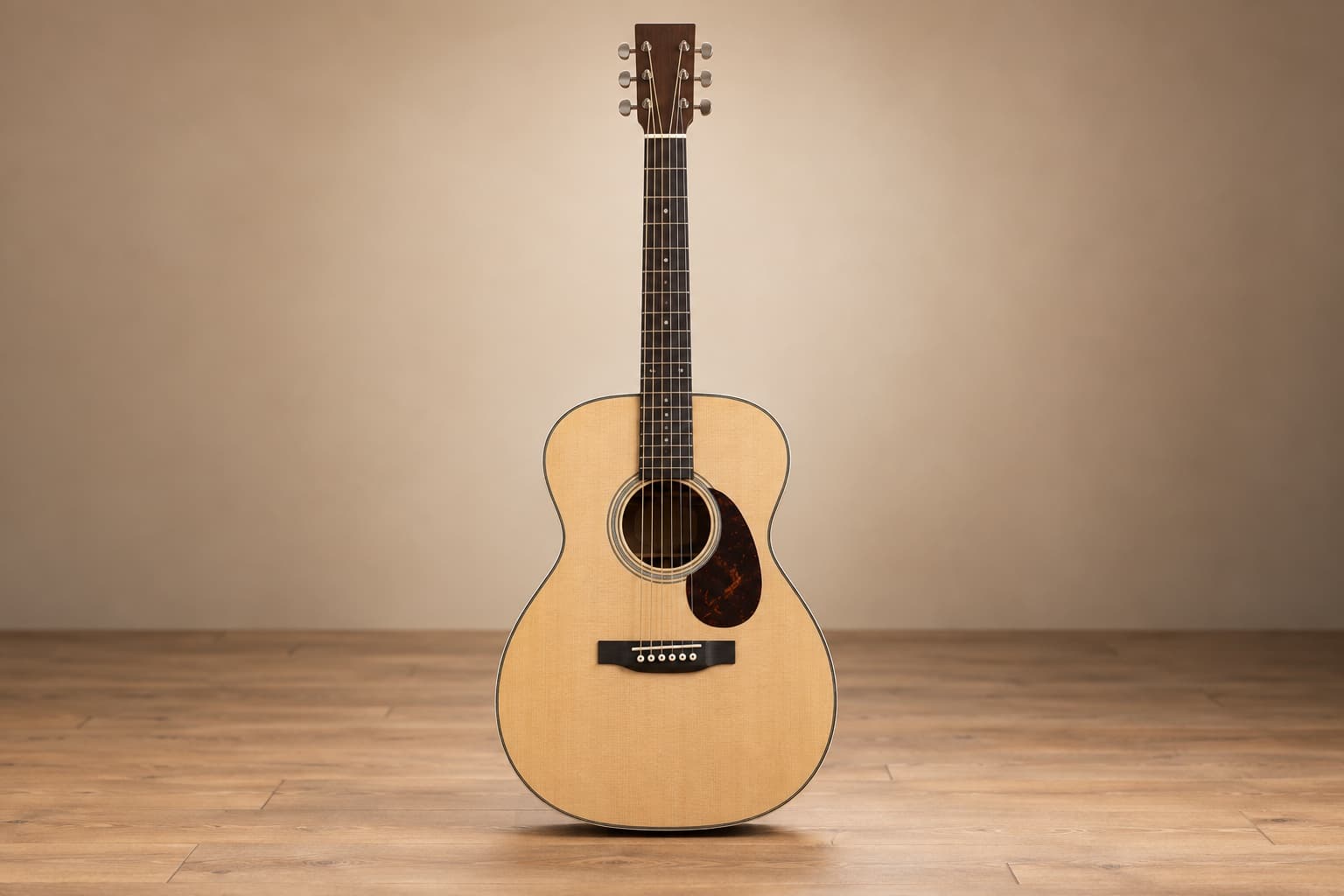
Match response to playing technique without using stereotypes
Dreadnoughts are often selected for flatpicking and strumming because their broad bodies can support a strong fundamental and useful dynamic capacity. Grand Auditoriums are commonly described as versatile because their shape can balance strumming and fingerstyle roles. OMs are often valued for note separation and an intimate physical format.
Those patterns help organize a test, but the guitar decides. Play light fingerstyle, open-position rhythm, single-note lines and the hardest realistic strumming. Listen for how quickly notes speak, whether bass masks inner voices, and whether the top compresses when driven. Repeat at equal distance or with the same microphone position if recording comparisons.
Strings and picks change the result. A fresh coated set on one guitar and aged strings on another can overwhelm the body-shape difference. Note string type and age, tuning, capo use and room. If a pickup is installed, evaluate unplugged and amplified behavior separately.
Sources: Manufacturer playing-context guidance, not our listening test
Projection, room sound and microphone behavior
Projection is not the same as loudness at the player's ear. A guitar may feel enveloping to the player while a listener several metres away hears a different balance. Ask another person to play the same passage, or record from a fixed position. Use the recording as one view, not a substitute for the physical experience.
For recording, a balanced source can reduce corrective equalization, but room, microphone, placement and arrangement matter. A dreadnought's low end may support a sparse arrangement and compete in a dense one. An OM's focused response may be easy to place, while a particular example may lack the weight one player wants. A Grand Auditorium can cover several roles, yet a specialist guitar may serve one role better.
There is no universal winner. Define whether the guitar will accompany a voice, lead an acoustic ensemble, layer in a production, perform through a pickup or support solo playing.
Keep shape in the context of construction
Top material and construction, bracing, bridge, body depth, scale and setup interact with shape. A laminate-top dreadnought and a solid-top dreadnought do not isolate the effect of outline. An OM with scalloped X-bracing and a Grand Auditorium with a different proprietary pattern cannot be reduced to body name.
Use shape as the first filter when physical fit is decisive. Then compare complete construction within the shortlisted format. If sound is decisive, include different shapes but normalize strings and playing tasks. Avoid attributing every audible difference to the most visible feature.
Manufacturer specifications should identify the exact current model. Product families change. Archive the date or model year when a measurement affects a published comparison.
A practical 20-minute comparison
The timings below are an optional practice-session plan. They are not the duration of a test performed by this site or a required comparison time.
- Five minutes for fit: hold all three seated and standing before judging sound.
- Five minutes at light dynamics: use the same fingerstyle and chord passage.
- Five minutes at performance dynamics: strum and flatpick only as hard as the real application requires.
- Three minutes at a listener position: have another player perform or use a fixed recording setup.
- Two minutes for notes: record comfort, clarity, bass balance, headroom and any compromise.
Do not adjust the setup between the first passes unless one instrument is clearly unplayable. Record setup differences, because they may explain preference. Revisit the leading two after a short break; the initial loudest guitar may not remain the most useful.
A decision path for common priorities
- Large-body feel and forceful rhythm: begin with dreadnought, then verify arm comfort and low-end balance.
- One acoustic for mixed techniques: begin with Grand Auditorium, then test whether its compromise really covers the main task.
- Compact body and articulate mixed or fingerstyle playing: begin with OM, then verify scale feel and desired bass weight.
- Amplified performance: compare pickup system, feedback management and control access in addition to body shape.
- Travel or limited reach: consider smaller bodies beyond these three if none is comfortable.
The best body shape is the one that remains physically manageable and musically useful at the player's real dynamics. A famous category name cannot replace that fit.
Cutaways and electronics can change the comparison
A cutaway removes part of the upper bout to improve access to higher frets. It can also change internal air volume, bracing and the way the guitar sits against the player. Do not assume the cutaway and non-cutaway versions of a model sound identical, and do not assume the difference will matter more than normal sample variation. Compare the exact versions if upper-fret access is part of the decision.
An onboard pickup changes the use case more clearly. Piezo, magnetic, microphone and blended systems respond differently to attack and stage conditions. A body shape that produces the preferred unplugged balance may not be the easiest amplified instrument for a loud ensemble. Test feedback, control access, battery access, output level and compatibility with the intended amplifier or DI.
Electronics add weight and service points. Their specification should not be used as evidence that one acoustic body is inherently more professional. Keep two decisions visible: Does the physical acoustic guitar fit the player, and does the installed system meet the amplified task?
Four scenarios that clarify the shortlist
Singer-songwriter accompaniment
Start by asking how the guitar shares space with the voice. A dreadnought may supply a strong foundation, while a Grand Auditorium or OM may leave more midrange room. Record voice and guitar together rather than judging the instrument alone.
Alternating fingerstyle and rhythm
A Grand Auditorium is a logical first test because the category often targets mixed use, but include an OM and a responsive dreadnought. Play the lightest and hardest passages from the same set. The winner is the guitar that handles the transition without making the player change posture or attack unnaturally.
Bluegrass or acoustic ensemble projection
A dreadnought is a common starting point, especially for strong flatpicking, but listener-position clarity matters. Ask another player to perform while standing at ensemble distance. A more focused guitar may carry a lead line even when it sounds less bass-rich at the player's ear.
Small player or long practice sessions
Begin with OM and compare a shallower Grand Auditorium. Body depth and edge comfort may matter more than lower-bout width alone. If both remain large, move to concert, 00 or parlor formats instead of forcing a choice among these three.
Specifications to record before deciding
- Maker's exact body-shape name and model revision.
- Body length, lower-bout width, waist and maximum depth.
- Scale length, nut width and neck profile description.
- Top, back and side construction stated separately.
- Published bracing family without guessing unseen details.
- Cutaway, pickup system, controls and battery access.
- Installed strings, tuning and received setup.
- Case dimensions and total transport weight.
Use these fields to explain why two guitars with similar names behave differently. If a measurement comes from a retailer rather than the maker, label the source and method. Measurements should support a playing decision, not replace it.
Conclusion: compare dimensions, then listen
Dreadnought, Grand Auditorium and OM provide three useful starting points. Dreadnoughts commonly emphasize a broad, powerful format; Grand Auditoriums aim for an adaptable balance; OMs offer a compact mid-size platform often associated with articulation. Maker-specific dimensions and construction determine the final result.
Choose by physical fit first when discomfort would end the session. Then compare response with the same strings, passages and listening position. Record the trade-off instead of asking which shape is universally best.
Frequently asked questions
Is an OM smaller than a dreadnought?
Usually, yes. OM guitars are generally a compact mid-size format, while dreadnoughts use a broader body. Exact dimensions vary by maker.
Is a Grand Auditorium good for fingerstyle and strumming?
It is commonly designed as an all-purpose shape, but the exact guitar, setup and player's dynamics determine whether it covers both jobs well.
Do dreadnoughts always have more bass?
They often produce a strong low-end impression, but bracing, materials, dimensions, strings and playing style can change the balance. Compare the actual instruments.
Are OM and 000 guitars the same?
They can share a body outline within some makers' ranges, but scale length and other specifications may differ. Check the current model sheet.
Which acoustic body is easiest to record?
The one whose balance suits the arrangement and microphone setup. OM and balanced medium bodies are common starting points, but no shape is automatically easiest in every room or mix.
How this guide was prepared
This guide uses Martin and Taylor documentation to explain body-family names and manufacturer-described tendencies. The fit and listening sessions are editorial comparison methods. No named instruments were measured or sound-tested for this article, and the illustrative images do not establish model dimensions.
Documentation checked .
This update adds sources beside the body-name and playing-context explanations, distinguishes maker terminology and clarifies the comparison method and illustration limits.