
The decision in brief
Choose a steel-string acoustic that fits your body and neck preferences, plays comfortably in acceptable condition, and suits your music at a total cost you can maintain. Shortlist by use and fit, verify the exact construction, compare the actual guitars with familiar passages, and test amplification separately when needed. Keep unresolved condition or setup questions visible before buying.
Define the acoustic task before comparing woods or shapes
Start with the music you need to play: voice accompaniment, fingerstyle, rhythm, recording or amplified performance. Identify your usual passages, tuning and whether upper-fret access matters. This guide concerns steel-string acoustics. If you are choosing between steel and nylon, use the linked comparison before selecting a model; those string systems are not interchangeable.
Set a complete budget for the guitar, suitable protection, replacement strings, any assessed setup work and the maker’s recommended care. Separate essentials from preferences. A pleasing finish or a lower price should not cancel an unresolved comfort or condition problem.
Sources: Yamaha: choosing an acoustic guitar (construction definitions)
Use body shape first as a fit and response filter
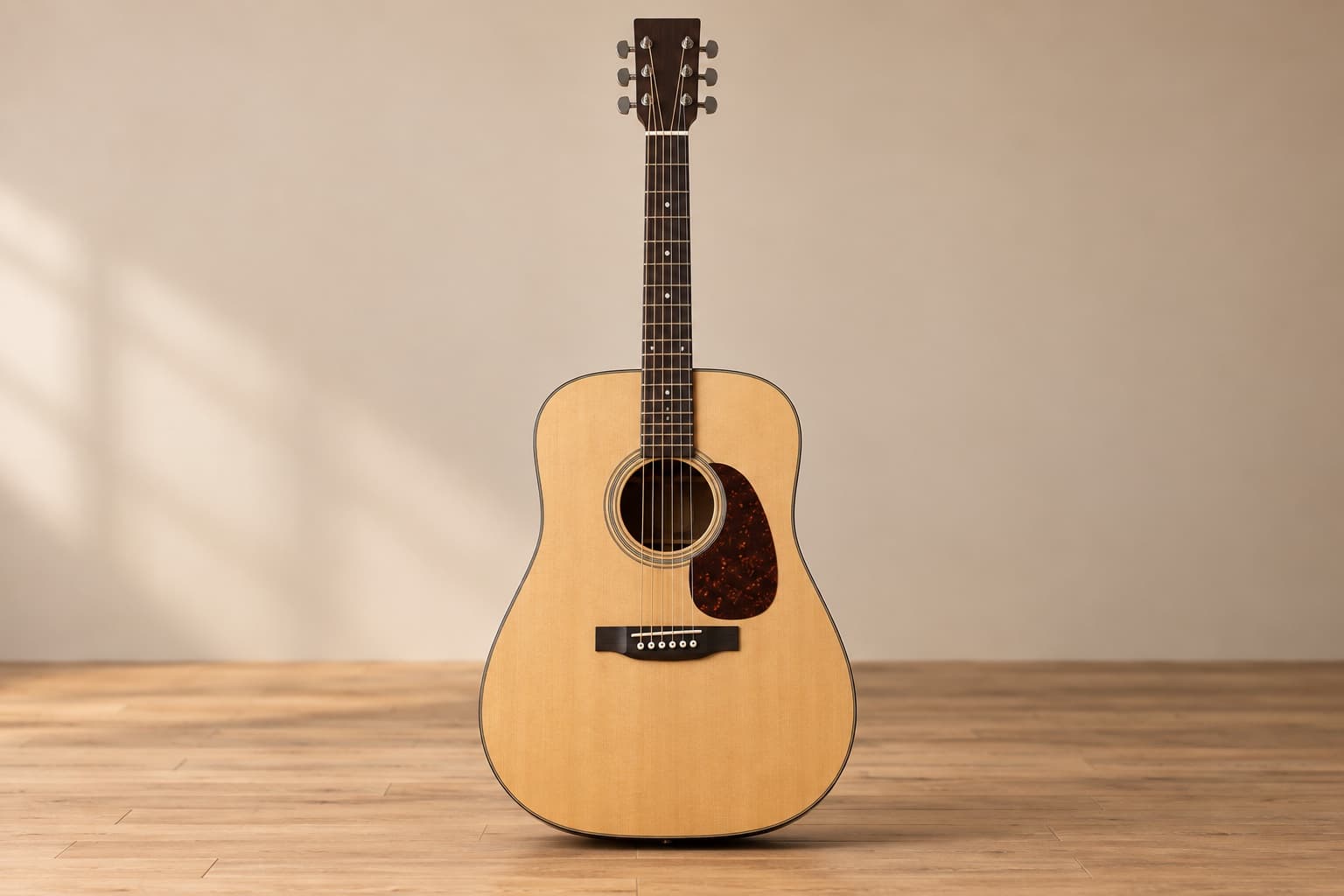
Use dreadnought, OM, auditorium, parlor and other names to find candidates, then compare their actual dimensions. Martin’s shape guide describes its own families; it does not establish dimensions shared by every maker. Record lower-bout width, depth, waist and scale separately. Our body-shape comparison expands that distinction.
Use your normal chair or strap position. Notice picking-arm reach, the body edge and the position of the neck. Try the same comfortable chords and position changes on each candidate. If the trial is uncomfortable, stop and reassess the fit. A brief trial cannot prove comfort over every future session; the fit guide provides a separate record for reach and grip.
Sources: Martin: body sizes and shapes (manufacturer guidance)
Separate top construction from the quality of the whole guitar
A solid top uses solid wood through its thickness; a laminate top uses bonded layers. Check top, back and sides separately in the exact model’s documentation. “Spruce” and visible grain do not establish whether a panel is solid. Yamaha’s guide explains the top distinction; Taylor’s construction account illustrates solid tops paired with layered back and sides.
Choose on the guitar’s current response and condition. Manufacturer descriptions of aging or greater resilience are not a guarantee of future sound or freedom from damage. In particular, a layered back does not establish a layered top. The construction comparison covers this question in more detail.
Sources: Yamaha: choosing an acoustic guitar (construction definitions); Taylor: solid, layered and laminate construction (manufacturer explanation)
Neck fit and setup decide whether the response is usable
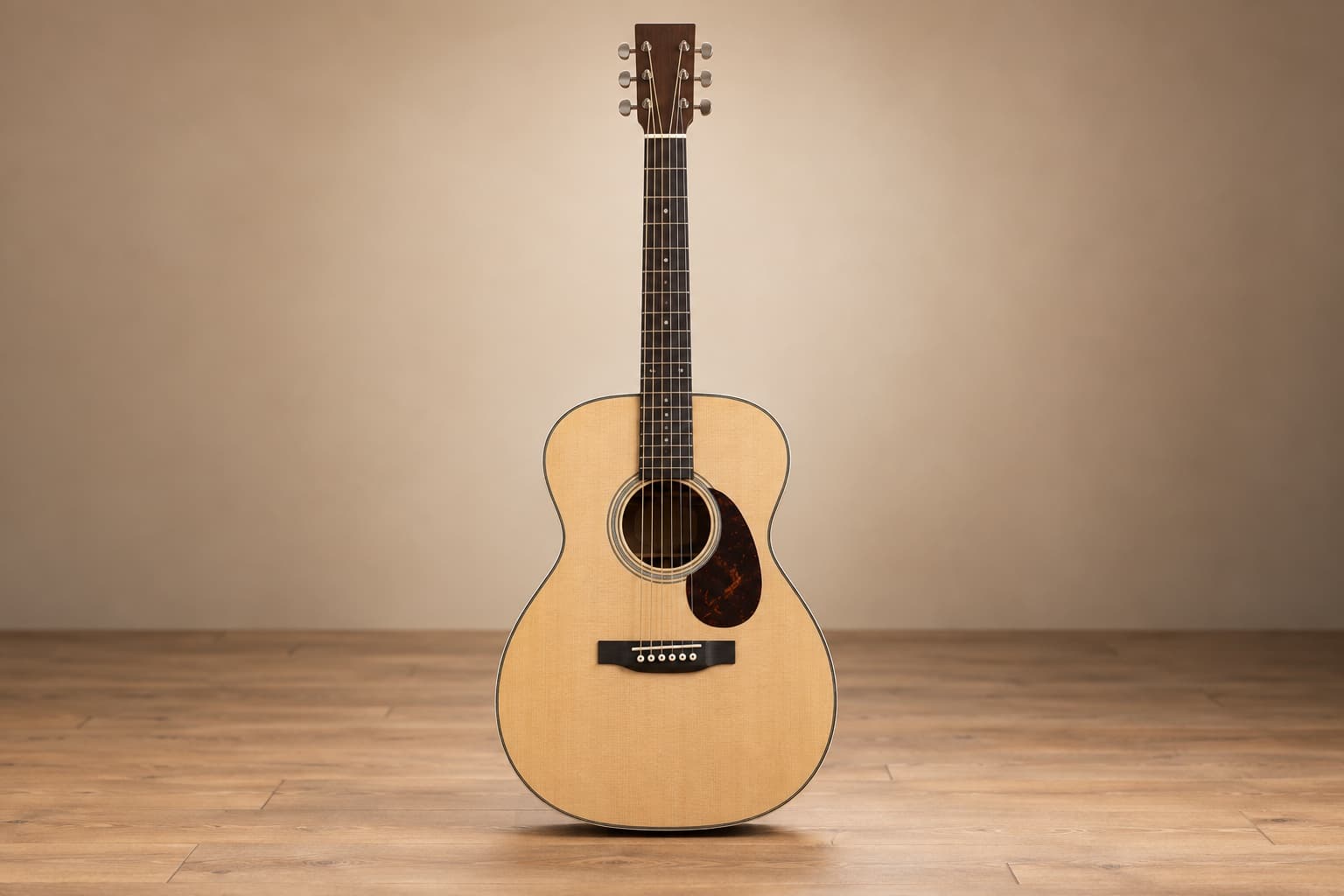
Try first-position chords, the stretches you normally use and relevant upper positions. Compare nut width, actual string spacing, neck depth/profile and scale; one label does not describe the whole grip. Note which notes require unusual pressure or produce persistent noise before assigning a cause.
Taylor distinguishes relief adjustment from changes to neck angle or saddle. Ask a suitable technician to assess the complete setup and available adjustment if needed. Do not assume difficult fretting can be fixed cheaply, or use a truss rod as a universal string-height control. If action is recorded, keep the string, fret, unit, tuning and measurement conditions with it; see the action guide. Preserve observations before requesting work.
Sources: Taylor: what a truss rod does (relief and setup limits)
Treat electronics and cutaways as application choices
If you need amplification, identify the installed pickup and preamp, then try them through the intended amplifier, PA or interface. Keep acoustic preference and amplified suitability as separate observations. Check controls, battery access where applicable, cable connection and any feedback or intermittent signal at a suitable demo level. An untested system remains untested.
A cutaway provides access to upper frets. Taylor’s explanation supports that function and gives its own view of the tonal trade-off; it does not quantify every guitar. Try the positions you actually need. Compare the complete versions and avoid predicting a universal audible loss or improvement from the cutaway alone.
Inspect the actual guitar, not only the specification
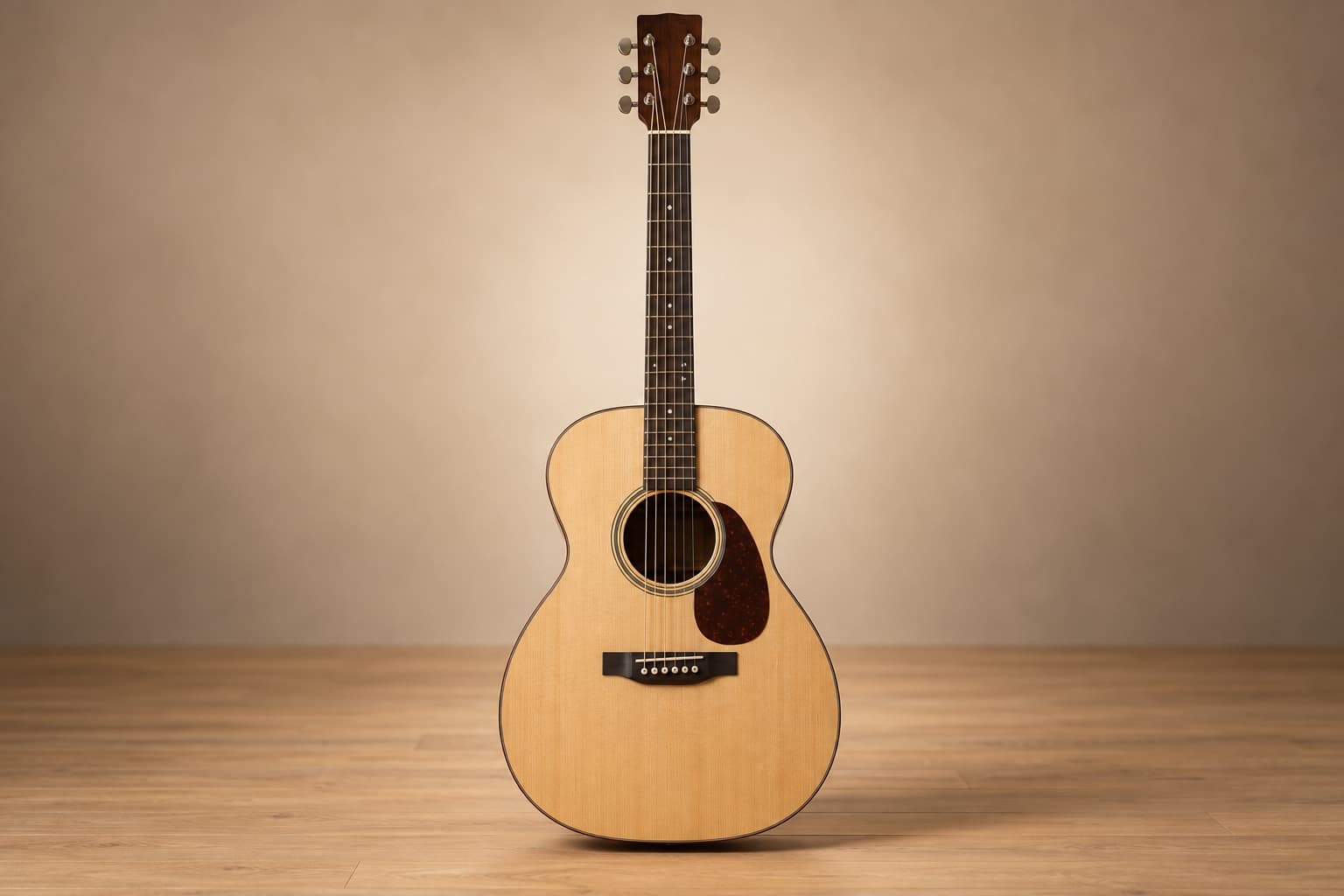
With permission, look in ordinary light for cracks, separated joints, a lifting bridge, unusual movement and worn or uneven frets. Play the notes you use across the neck, operate the tuners and check fitted electronics. Record a symptom and its location; a photograph or rattle alone does not identify the repair.
Some body curvature is intentional. Compare concerning changes with maker guidance and seek qualified inspection when condition or adjustment range is uncertain. Keep proposed repairs and costs in the buying record. Our used-guitar checklist expands the condition review; this trial is not a structural certification.
Run a controlled acoustic comparison
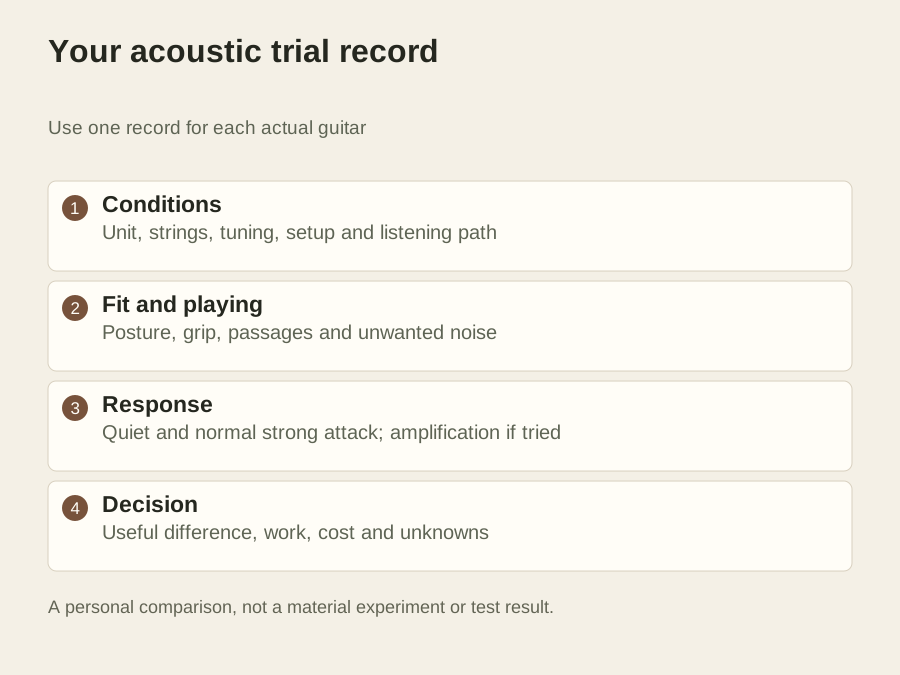
Use the following as a proposed personal trial. It reports no listening test performed by this site.
- Identify each actual guitar, strings, tuning and any recent setup. Mark unknown details as unknown.
- Use the same chair/support, pick or fingers and familiar passages.
- Try quiet playing and your normal strongest attack without forcing the technique.
- Keep your listening position consistent. If recording is permitted, keep distance and equipment settings consistent too.
- Try the amplified task separately when required.
- Revisit the shortlist and record the useful difference, compromise and next check.
| Record for each candidate | What to write |
|---|---|
| Identity and conditions | Unit/model, strings, tuning, setup, room and listening path |
| Fit and playing | Posture, grip, passages, pressure or persistent noise |
| Response | Your observations at quiet and ordinary strong attack; amplified result if tried |
| Decision and unknowns | Useful difference, required work, total cost and unfinished checks |
A phone recording can help memory, but automatic processing can change apparent level and balance. When several features differ, this is a preference between complete guitars; it cannot isolate the effect of top material, body shape or price.
Match the acoustic format to the main decision
| Main use | Personal comparison | Unfinished check to record |
|---|---|---|
| Voice accompaniment | Play and sing a familiar passage together | Whether guitar and voice remain useful together in your setting |
| Fingerstyle | Try your usual spacing, melody and alternating bass | Adjacent-string contact and response to your touch |
| Rhythm | Play the strongest attack your music needs | Comfort and persistent unwanted noise |
| Stage use | Try the actual pickup through the intended system | Controls, connections and behavior at a suitable level |
| Regular transport | Check fitted protection and care arrangements | Practical transport, storage and servicing |
These are comparison tasks, not rankings of body shapes or materials. Keep fit and acceptable condition as requirements. If both candidates meet them, choose the response and practical compromise you prefer. If neither does, compare another instrument rather than raising a score for appearance or reputation.
Plan for remote delivery, climate and the first month of ownership
Before ordering, confirm the exact version, construction, dimensions, installed strings, electronics and included protection. Ask whether photographs show the unit for sale. Read the actual seller’s delivery, return and setup terms; this guide confirms no universal return entitlement or current price.
Follow the actual maker’s arrival and environmental instructions. Taylor’s current humidity advice says its guitars still need care despite wood conditioning. Use your instrument’s guidance rather than treating a construction label as immunity or adding moisture blindly. Keep dated observations of condition, tuning, action and new noises. Photograph delivery damage before altering the guitar and obtain suitable assessment if its condition is uncertain.
Sources: Taylor: humidity care (guidance for its instruments)
Judge used condition and value separately from age or ornament
For a used guitar, ask about repairs, storage and known changes to strings, setup or electronics. Written history can help, but inspect the current unit and obtain technical advice for unresolved structural questions. A repaired crack is neither automatically acceptable nor automatically disqualifying without evaluating the work.
Compare purchase cost plus assessed work, strings, protection and care. Age, ornament or a country label does not establish personal fit or present condition. For a purchase involving attribution or vintage value, obtain suitable documentation and specialist assessment. Keep an unknown repair cost separate from a confirmed quotation.
Conclusion: choose the acoustic guitar that fits the player and room
Choose the guitar whose fit, condition and response support your music within an affordable ownership plan. Verify construction and judge the actual instrument at your normal technique. Test electronics when that use matters.
Keep the A/B record with the shortlist. Resolve essential fit, condition or setup questions before deciding, and preserve remaining limitations rather than presenting one shop trial as a universal result.
Still deciding between instrument families? Use the complete guitar buying guide to compare your musical task, physical fit and ownership needs before narrowing the shortlist.
Frequently asked questions
What acoustic guitar body shape is best for a beginner?
Choose by actual fit and comfortable playing, then musical use. A body name does not set universal dimensions or guarantee comfort. Try the instrument with your normal support and passages.
Is a solid-top acoustic guitar always better?
No. Confirm top, back and sides separately and compare the complete guitars now. A solid-top label does not guarantee preferred sound, easy fretting or future improvement.
Should I buy an acoustic-electric guitar?
Choose according to the amplified task you need. Test the installed system and applicable controls, connections and battery access through the intended equipment; otherwise keep amplified performance unverified.
How do I check acoustic-guitar action?
Keep any reading with its string, fret, units, tuning and method. Try the relevant notes and have unexplained effort, noise or limited adjustment assessed. A single reading does not diagnose the setup.
Does a cutaway reduce acoustic tone?
There is no universal audible result established here. The feature improves upper-fret access; compare exact guitars for the sound and positions you need rather than assuming a guaranteed loss or improvement.
How this guide was prepared
We checked Yamaha’s acoustic-selection PDF, Martin’s body guide updated September 2025, Taylor’s 2018 construction explanation, 2019 truss-rod discussion, cutaway page and humidity advice updated August 2026. Maker explanations support definitions and care context, not independent performance results. The A/B record is a proposed personal trial; we measured, played and repaired no guitars, verified no seller terms or prices, and conducted no clinical fit assessment. Existing images are illustrations and do not prove model dimensions or construction.
Documentation checked .
Clarified steel-string scope, removed implied guaranteed improvement with age and universal cutaway comparisons, added a personal A/B record and decision boundaries, linked evidence near claims, and corrected illustrative image descriptions.
Sources and further reading
- Martin: body sizes and shapes (manufacturer guidance)
- Yamaha: choosing an acoustic guitar (construction definitions)
- Taylor: solid, layered and laminate construction (manufacturer explanation)
- Taylor: what a truss rod does (relief and setup limits)
- Taylor: cutaways (access and manufacturer opinion)
- Taylor: humidity care (guidance for its instruments)