The decision in brief
Choose among solid-body, semi-hollow and hollow-body electrics by checking the documented internal structure, your physical fit and the behavior of the exact guitar through your intended rig. A center block is one approach to feedback control, while chambering and bracing vary by model. Neither f-holes nor a category name prove the internal layout, weight, sound or usable volume. Keep untested conditions and service questions in the decision record.
What matters most
- Verify interior structure instead of inferring it from f-holes.
- Compare body fit and amplified behavior separately on exact instruments.
- Record the room, rig, playing method and remaining unknowns.
What solid-body, semi-hollow and hollow-body mean
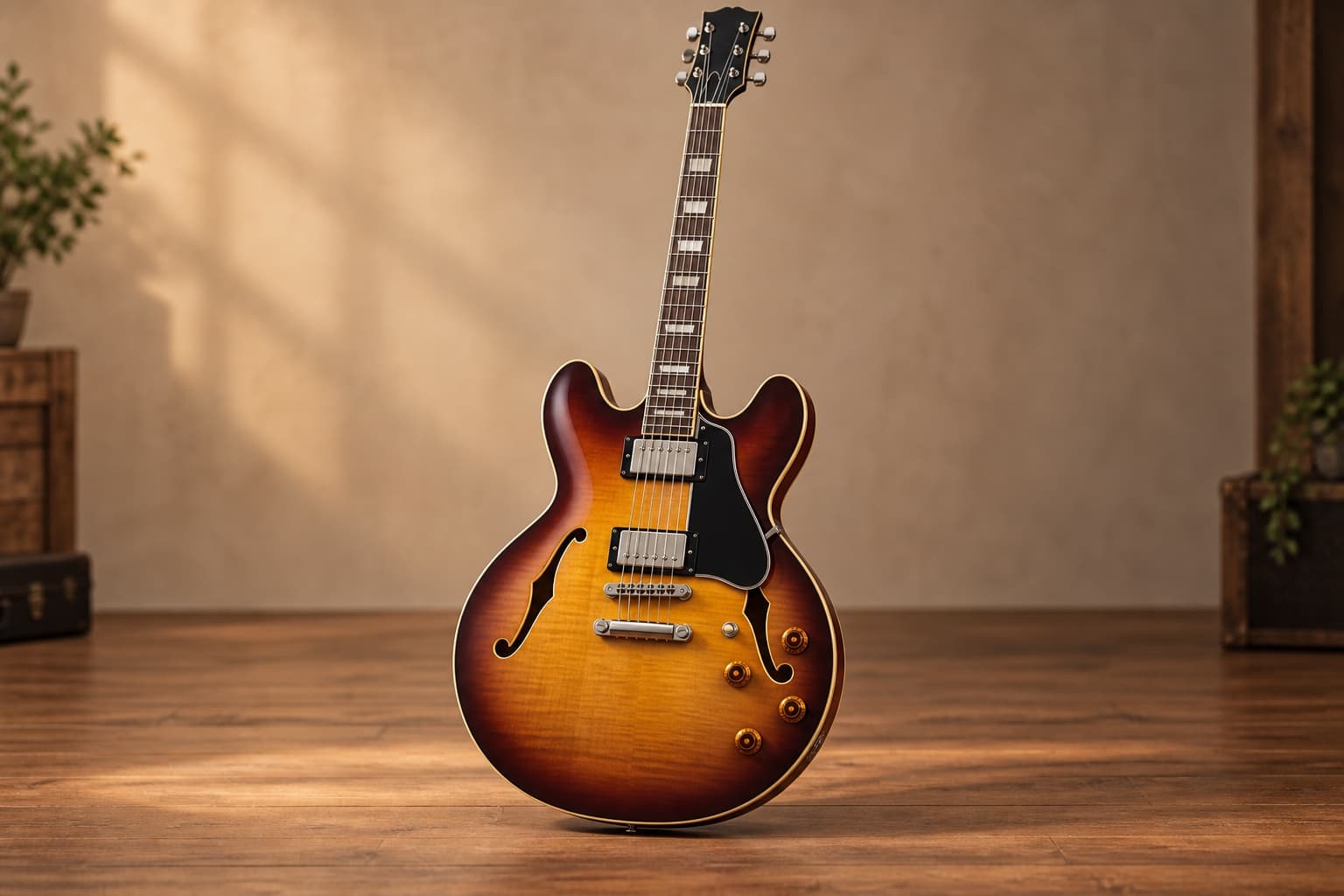
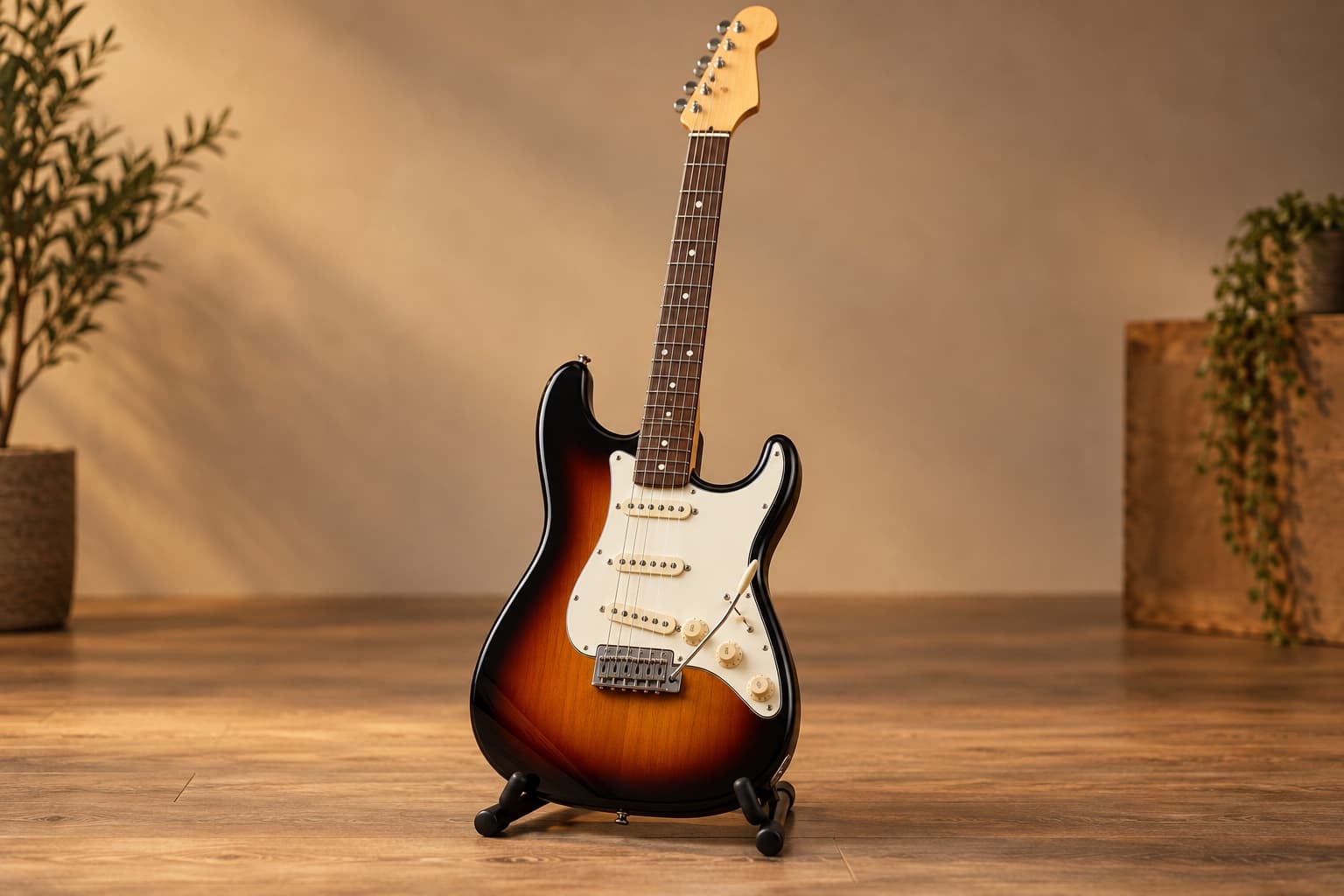
A solid-body electric has a predominantly solid body structure, with cavities for components and sometimes deliberate chambering. Semi-hollow commonly describes hollow sections with a center structure; hollow-body commonly describes a resonant cavity without the long center block of many semi-hollows. Yamaha’s overview provides these broad definitions. Verify the actual maker’s description rather than treating the names as one blueprint.
Gretsch’s build guide describes chambering in some guitars it calls solid body and also in center-block designs. A chambered solid-body and a semi-hollow therefore cannot be distinguished simply by asking whether any air space exists. Record the cavity arrangement, center support and bracing where documented.
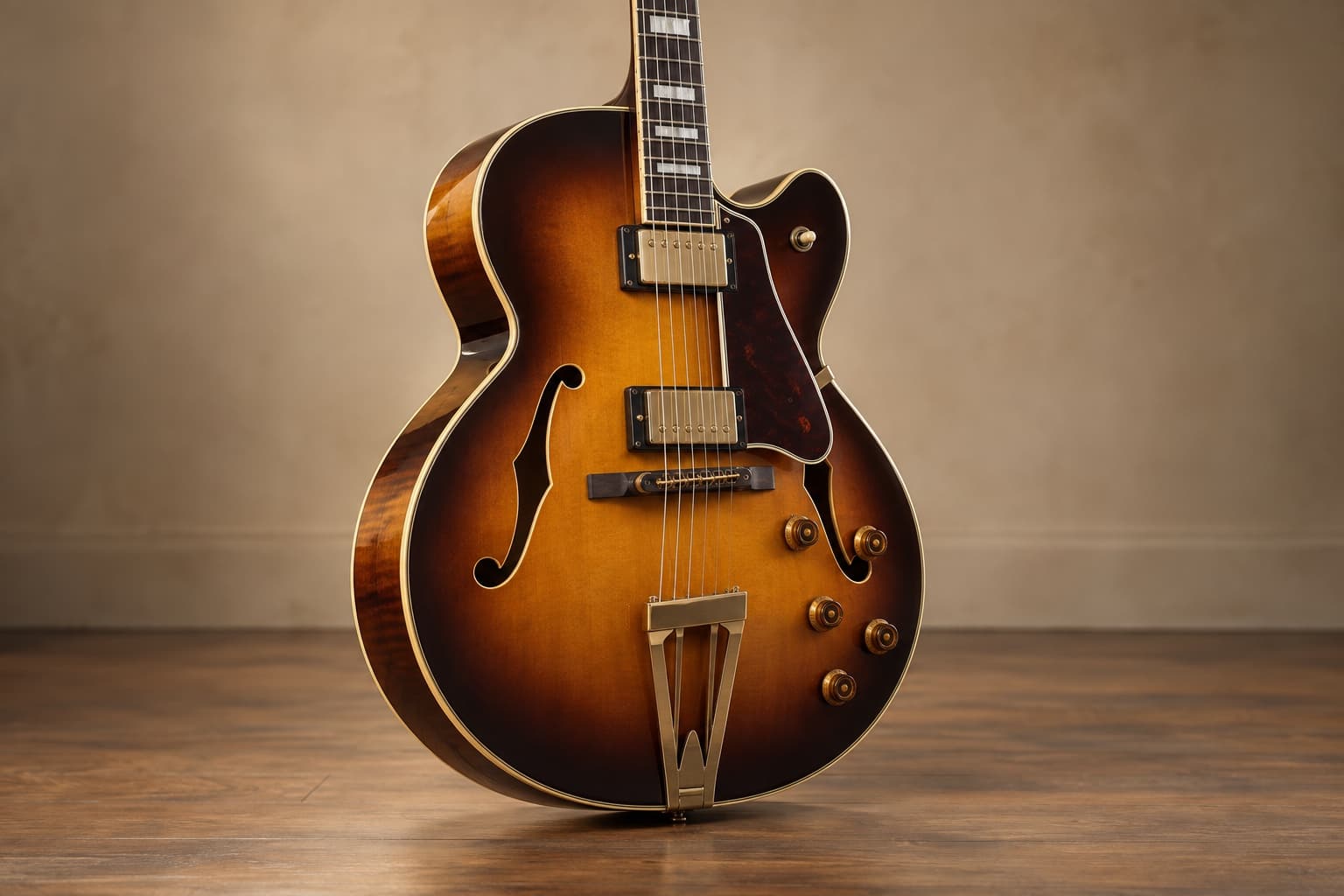
Visible f-holes do not show the complete interior. Gretsch’s account of a hollow-body design with closed f-holes and trestle bracing also illustrates that sound-hole appearance and internal support are different facts.
The practical differences at a glance
| Question | Solid body | Semi-hollow | Hollow body |
|---|---|---|---|
| What construction needs confirmation? | Main body and any chambering | Chambers and exact center structure | Cavity, bracing and local supports |
| What does appearance prove? | External shape only | External shape only | External shape only |
| What should be tried? | Fit, controls and intended rig | Fit, controls and intended rig | Fit, controls and intended rig |
| What remains model-specific? | Weight, response, service and feedback | Weight, response, service and feedback | Weight, response, service and feedback |
The table is a question map, not a ranking. Yamaha’s SA-series explanation identifies a center block beneath the bridge as a feedback-control feature. This maker description is not a measured guarantee for every semi-hollow or a comparative result from this site.
How the body changes physical response
Compare the vibration you feel and the sound you hear as separate observations. Try the same passages and record whether a body feels lively against you or produces mechanical noise. An unplugged impression does not establish the amplified response or a universal sustain advantage.
Strings, pickup height, electronics, bridge, scale, setup and amplifier also affect the comparison. If several differ, the result is a preference between complete guitars. It cannot isolate a body-construction effect.
Feedback behavior is a system, not a warning label
Amplified sound can return energy to the guitar and maintain vibration. Seymour Duncan’s explanation distinguishes string feedback from microphonic vibration in pickup components and discusses sound level and position. Those mechanisms should not be reduced to a body label or one diagnostic sound.
For a permitted trial, start at a comfortable clean level. Use the required gain at a suitable level and record the room, loudspeaker, guitar position/distance/direction, pickup selection and muting. Stop and reduce the level if an unwanted loop develops. Do not raise volume to find an extreme threshold. This proposed check reports no measured feedback limit.
Compare comfort before assigning a musical genre
Compare the actual body width, depth, edge, balance and neck reach in your normal sitting and standing positions. A construction label does not establish size or weight. A short comfortable trial does not prove comfort over a whole set.
Try useful upper-fret positions, controls and the picking-hand location. Keep neck, scale and setup observations separate from the cavity description. Choose by the music and operating conditions you need, without assigning one construction exclusively to a genre.
Service access and ownership needs
Ask how the actual electronics are reached for service: rear panel, pickup opening, sound hole or another route. Do not predict repair time or cost from the construction name. Record the answer from model documentation or a qualified repairer.
Check the bridge/tailpiece instructions, hardware security and fitted case without forcing adjustment. Photograph and describe unresolved movement, rattles or repairs. External illustrations and a brief trial cannot certify internal condition.
A repeatable way to compare three guitars
This is a proposed owner comparison, not a test performed by the site.
- Record each unit, maker construction description and any unknown interior details.
- Record strings, tuning, setup, pickups and controls. Keep the same support, cable, rig and musical passages where practical.
- Try physical fit first. Match listening levels for a clean comparison without claiming laboratory matching.
- Try only the gain and comfortable level required for your use. Record room and speaker position; stop if feedback becomes unwanted.
- Check service access, bridge instructions and case fit. Record useful differences and unresolved work.
Keep four fields for each candidate: verified construction; fit observations; rig and conditions; decision and unknowns. A different room or amplifier may change the result. Repeat relevant checks rather than carrying a shop observation into every venue.
Who should start with each construction?
Start with any candidate whose dimensions and documented construction meet your requirements. If compactness matters, compare measured bodies. If body vibration matters, try it. If feedback control matters, test the exact rig within acceptable levels.
A documented center block is relevant to the decision, but it does not make a semi-hollow automatically a compromise between two fixed performance extremes. Hollow designs can use different bracing and supports. All three families need individual assessment.
Work through realistic decision scenarios
For a player moving from home to rehearsal, record the required gain and speaker arrangement, then compare candidates under that setting. Leave rehearsal behavior unverified if the trial uses only a quiet shop amp.
For a recording player, compare familiar passages with the same signal path and practical listening level. Record physical preference and track suitability separately. For someone moving between rooms, include transport, fitted protection and repeatable controls. These are hypothetical tasks, not reported player results.
Questions to verify on the exact guitar
- What maker documentation identifies the actual structure and variant?
- Are the chambers, center support and bracing described, or still unknown?
- What dimensions, weight, bridge, pickups and controls apply to this unit?
- Which room, speaker placement, gain and playing method were actually tried?
- What remains untested, and which service or condition question needs assessment?
A useful record keeps verified specifications separate from personal observations. Do not fill an undocumented block or bracing detail from a photograph.
Conclusion: choose the complete instrument
Use the construction label to ask better questions about the actual guitar. Confirm interior details from documentation, try fit and compare through the intended rig at suitable levels.
Choose the complete instrument that meets your conditions. Keep the required work and untested settings visible; no category, center block or f-hole shape supplies a universal performance guarantee.
Frequently asked questions
Can f-holes identify a semi-hollow or its center block?
No. Visible openings do not show the complete internal structure. Check the maker’s description of the actual variant, including chambers, center support and bracing.
Is chambered the same as semi-hollow?
Not automatically. Makers may describe chambered designs as solid-body or center-block instruments. Confirm the layout rather than classifying from the presence of air space alone.
Does a center block guarantee freedom from feedback?
No guarantee is established here. Feedback also involves the guitar, pickups, loudspeaker, level, gain, position and playing method. A maker’s control feature is not a measured threshold for your rig.
How this guide was prepared
This documentation-based comparison reads Yamaha’s body definitions and SA center-block explanation, Gretsch’s build descriptions and named hollow-body example, and Seymour Duncan’s feedback account. Manufacturer performance language is treated as a maker explanation, not a site measurement or universal ranking. The comparison record is a proposed owner method; no guitar trial, teardown, weight measurement or feedback-threshold test was performed. Existing images show exterior illustrations and do not prove interior construction. AI assistance was used for source comparison and language checks.
Documentation checked .
Replaced categorical response and feedback rankings with model-level checks; clarified chambering, bracing and f-hole limits; added a repeatable decision record and corrected exterior-image claims.