The decision in brief
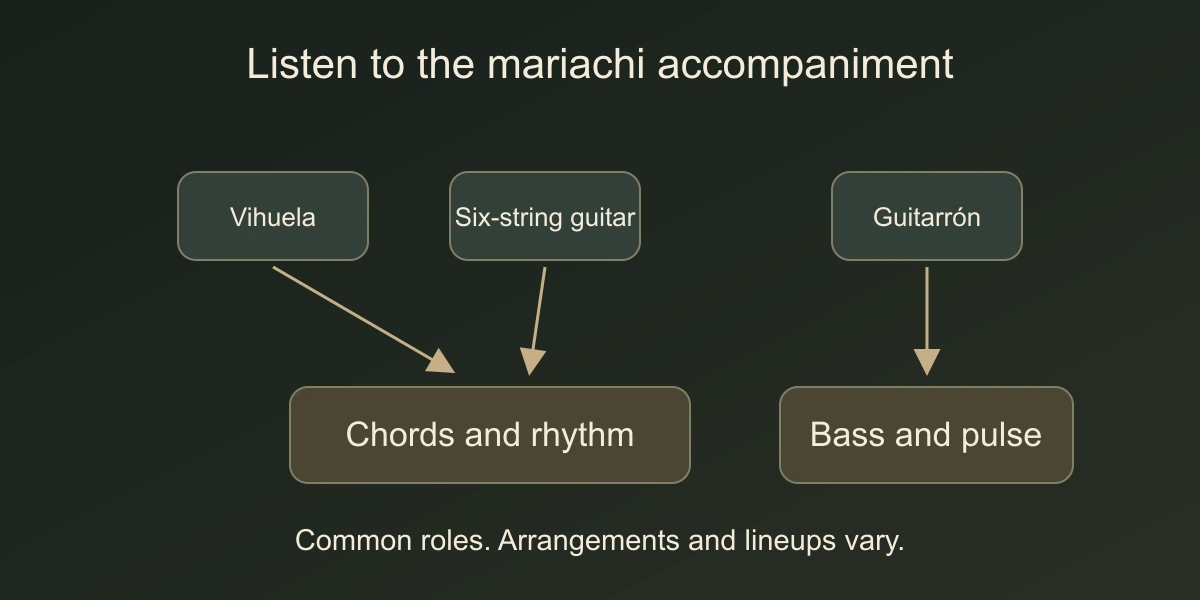
In mariachi, the guitarrón supplies the bass and the vihuela supplies much of the strummed rhythm. A six-string guitar can reinforce the chords and rhythm when it is part of the lineup. Start with the bass in Cuarteto Coculense’s El Periquito, then listen for the strummed chords. A recording by Mariachi Los Camperos lets you follow those same roles with all three instruments in the mix.
Follow the bass and the strum
In the accompanying group of instruments, known as the armonía, the guitarrón provides the bass and helps mark the rhythm. The Mexican vihuela commonly supplies a strummed rhythmic and chordal part. Sheehy describes how players combine strokes and mute the strings to shape the rhythm. He also describes the six-string guitar as another accompaniment voice that can reinforce the harmony and rhythm when the arrangement includes it.
On your first listen, follow the low notes. On the next, listen for the short chord attacks around those notes. Try tapping the bass rhythm and then the strum rhythm separately. Once you can follow both, listen for where the bass and strum land together and where they leave space for one another.
Sources: Daniel E. Sheehy, Mariachi Music in America, pp. 22–26
Start with the 1908 recording of El Periquito
Smithsonian Folkways identifies Cuarteto Coculense’s El Periquito as a 1908 session with vihuela, guitarrón and two violins. The 1998 date on the track page refers to the release that carries the recording. The quartet is a useful starting point for following the bass and strum in a small ensemble.
On the first pass, follow the low notes under the violins. On the second, listen for the chord attacks between and alongside those notes. Treat the violins as a separate layer and see if you can keep counting the accompaniment while they play. Use the documented lineup to give each sound a place in the ensemble.
Sources: Smithsonian Folkways on early mariachi and the 1908 Cuarteto Coculense recording; Cuarteto Coculense, El Periquito, Smithsonian Folkways catalog
Hear a group with all three parts
On the track Llegaron Los Camperos, released in 2005, Smithsonian Folkways credits Nati Cano on vihuela, Jimmy Cuéllar on acoustic guitar and Juan Jiménez on guitarrón. The arrangement also includes voices, violins, trumpet and harp. Folkways describes the opening as a huapango and explains that the track pairs it with El son de la negra.
Find the low pulse first. Then follow the combined chord attacks through the change in rhythm. The credits tell you who played in this mix. The overlapping strums can be hard to separate by ear, so begin by hearing what they do together. Try tapping where the accompaniment accents change as the track moves into the son.
Play the track from the Folkways recording page.
Sources: Mariachi Los Camperos, Llegaron Los Camperos, track notes and player credits
Try the bass and chord roles on a guitar
| Recording | First listening task | Second listening task |
|---|---|---|
| El Periquito, Cuarteto Coculense | Follow the low notes under the violins. | Listen for chord attacks around the bass. |
| Llegaron Los Camperos, Mariachi Los Camperos | Find the low pulse in the fuller arrangement. | Follow how the combined strums mark the rhythm change. |
Choose a chord you know. Play a simple bass pulse on a low string for one bar, then keep the pulse while adding a light chord stroke between some of the notes. With a partner, trade the bass and chord parts. This exercise lets you feel the division of labor using a familiar instrument. For another example of how a stringed instrument’s role can shape its layout, see our bajo sexto and bajo quinto comparison, which covers a different set of instruments and traditions.
How this guide was prepared
We read Sheehy’s account of the accompaniment on pp. 22–26 and checked the Smithsonian Folkways historical note, track catalog and performer credits. The listening prompts are based on the documented instrumentation and the label’s track notes.
Documentation checked .