The decision in brief
C, V and U are approximate names for the back contour of a guitar neck. Compare depth at named frets using the same reference method, then shoulders, taper, nut width, actual string spacing and setup. Play your own passages in low and high positions. A label or hand-size category cannot predict comfort for every player, and a thicker or thinner neck does not guarantee speed, sound or relief from discomfort.
Treat C, V and U as shape language, not standards
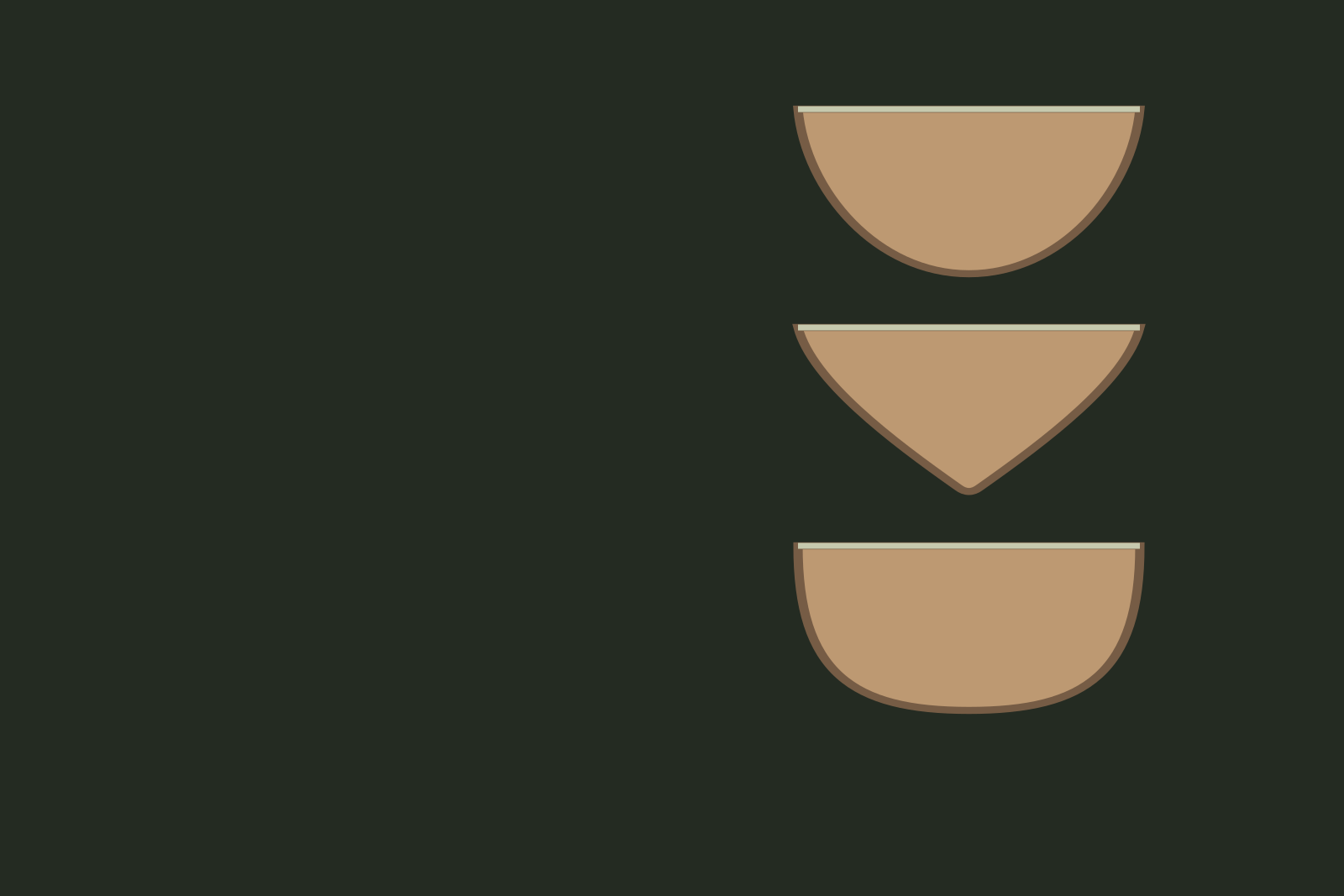
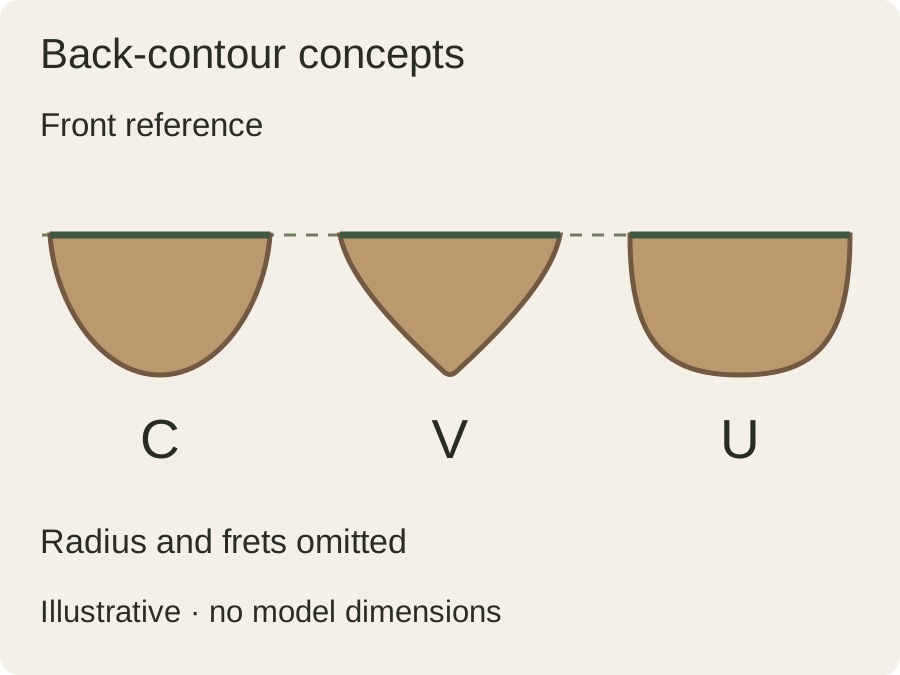
Fender uses C, V and U as approximate analogies for the back of its necks: a broadly rounded contour, a central ridge, or a rounded contour with fuller shoulders. Soft and hard V describe the prominence of the ridge. These names do not supply an industry-wide depth or width.
Record the exact maker, model, version and profile name. Oval, D, asymmetric and proprietary labels need their own description. A letter is a starting point for looking and playing; it does not make every C thin or every U the same size.
Sources: Fender Support: C, V and U as neck-back contour analogies
Understand depth, shoulders and taper
Depth is a front-to-back measurement at a stated location and with a stated reference. Shoulder describes the contour toward the sides; taper describes how dimensions change along the neck. A single centre-depth value cannot describe the whole back contour.
Warmoth’s current guitar-neck page measures from the fingerboard face to the back and publishes values at the first and 12th frets. It lists both Fatback and Boatneck at 0.965 inches at those locations while describing Boatneck as having smaller shoulders. This is one supplier’s documented example, not our measurement or a universal definition of C, V or U.
The drawings here are original contour concepts, not tracings of those models or fabrication specifications. The flat front reference in the diagram omits fingerboard radius and frets. Compare the real contour and its stated measurement method.
Sources: Warmoth: stated thickness references and Fatback/Boatneck shoulder example
Separate profile from width, radius, scale and fret size
| Specification | What to record | Keep separate |
|---|---|---|
| Back profile | Exact contour/name and shoulder description | Not fingerboard radius |
| Depth | Location, front reference and whether frets are excluded | Not a universal number attached to a letter |
| Nut width | Width at a defined location | Measure outer-string spacing separately |
| Fingerboard radius | The playing surface’s curvature | Not the neck-back contour |
| Scale | Nominal layout reference and special-layout method | Individual saddle compensation is separate |
| Frets and finish | Fret dimensions and surface condition | Neither “fast” nor “comfortable” is a dimension |
Use the scale-length guide for nominal length, compensation and layout limits. Width, profile, strings and setup all remain relevant when comparing how a guitar feels.
For a separate comparison of note range and upper-fret access, read 22 vs 24 frets. Keep that decision alongside, rather than inside, the neck-profile label.
Run a repeatable personal neck comparison
Use your usual posture and strap height, and comparable strings and setup where possible. Record any variables you cannot match. Begin with an easy passage; do not keep an uncomfortable grip simply to finish a timed routine.
- Play relaxed first-position chords and a suitable stretch.
- Try a barre or another passage that reflects your usual technique.
- Move between low and high positions and check heel access.
- Use bends or vibrato if they are part of your playing.
- Pause, then try the other guitar; reverse the order if useful.
- Record thumb position, unnecessary gripping, access and the task that felt different.
A ridge or fuller shoulder may suit one thumb position and feel intrusive in another. Hand size and genre alone do not choose a profile. The trial is a suggested observation, not a validated comfort score, a medical assessment or a test of every possible session length.
Record neck dimensions in a reproducible way
Compare published dimensions only when the location, reference, units and model/version are clear. State whether the fingerboard is included and fret height excluded. If taking measurements, use suitable non-damaging tools and follow the maker’s method rather than forcing a caliper past strings or over frets.
Keep the published value separate from an observation of one identified guitar. An illustration or “chunky” review is not a measurement. If buying remotely, compare with an instrument you know and check the actual return/setup arrangements before deciding.
| Personal record | Write down |
|---|---|
| Identity | Model/version, maker profile name and source date |
| Geometry | Depth references, shoulders, taper, nut width and actual string spacing |
| Other variables | Radius, scale, frets, strings, finish and known setup |
| Trial | Posture, passage, sequence, observed effort and access |
| Unknowns | Unavailable dimensions, unmatched conditions and next question |
Sources: Warmoth: stated thickness references and Fatback/Boatneck shoulder example
Do not diagnose setup problems as profile problems
Relief, action, nut clearance, string condition and fret condition may affect the same playing task. Inspect the complete guitar before assigning a difficult passage to the carved contour. A truss rod changes relief, not the shaped back of the neck.
Fender’s setup specifications are model- and factory-string-dependent. Follow the exact instrument’s instructions or seek a technician when the correction is uncertain. Do not reshape a neck, change its finish or force an adjustment to imitate a preferred profile from a brief trial. No tonal or health benefit is established by the thickness label here.
Sources: Fender Support: factory-string and model-dependent setup conditions
Use the label to start, then compare the complete guitar
Use the profile name to organise a comparison, and the stated dimensions to ask precise questions. Confirm the actual contour, setup and fit through the same useful passages. Keep an observed preference tied to the instrument and conditions rather than turning it into a rule for all players.
Frequently asked questions
What is a C-shape guitar neck?
A broadly rounded neck-back contour. Exact depth, shoulders and taper depend on the maker and model; the letter alone does not define dimensions.
Does hand size choose C, V or U?
No. Contour, width, actual string spacing, technique, posture and setup also matter. Compare your own passages and stop if the task is uncomfortable.
Is profile the same as fingerboard radius?
No. Profile describes the back contour; radius describes the playing surface. Nominal scale, nut width and fret dimensions are separate fields as well.
How should neck thickness be compared?
Use named locations and the same front/back reference, state whether the fingerboard is included and fret height excluded, and keep published dimensions separate from an identified unit’s measurements.
How this guide was prepared
We checked Fender’s contour terminology, Warmoth’s current guitar-neck measurement reference and equal listed depths/different shoulders for Fatback and Boatneck, and Fender’s conditional setup guidance. The named example is supplier documentation, not independent measurement. Our drawings and personal record illustrate questions to ask; they are not model tracings, templates, comfort scores or medical evidence. We did not measure necks, compare players, test tone or establish that a profile prevents discomfort. Nominal scale and actual string spacing remain separate specifications.
Documentation checked .
Corrected scale and width distinctions, added a documented same-depth/different-shoulder example, replaced unrelated images, removed retail and fixed-duration framing, and added a personal record and specific method.