The decision in brief
For a magnetic guitar pickup, measure clearance using the exact guitar or pickup maker’s method, record both outer-string sides, and use only identified height adjusters. Measuring from a pole piece to the underside of a string held at the last fret is common, but a reference height belongs to its stated pickup and conditions. Make a small reversible change, remeasure both sides, then check string clearance, switching balance and the same playing passage before deciding whether to keep it.
Identify what the height number measures
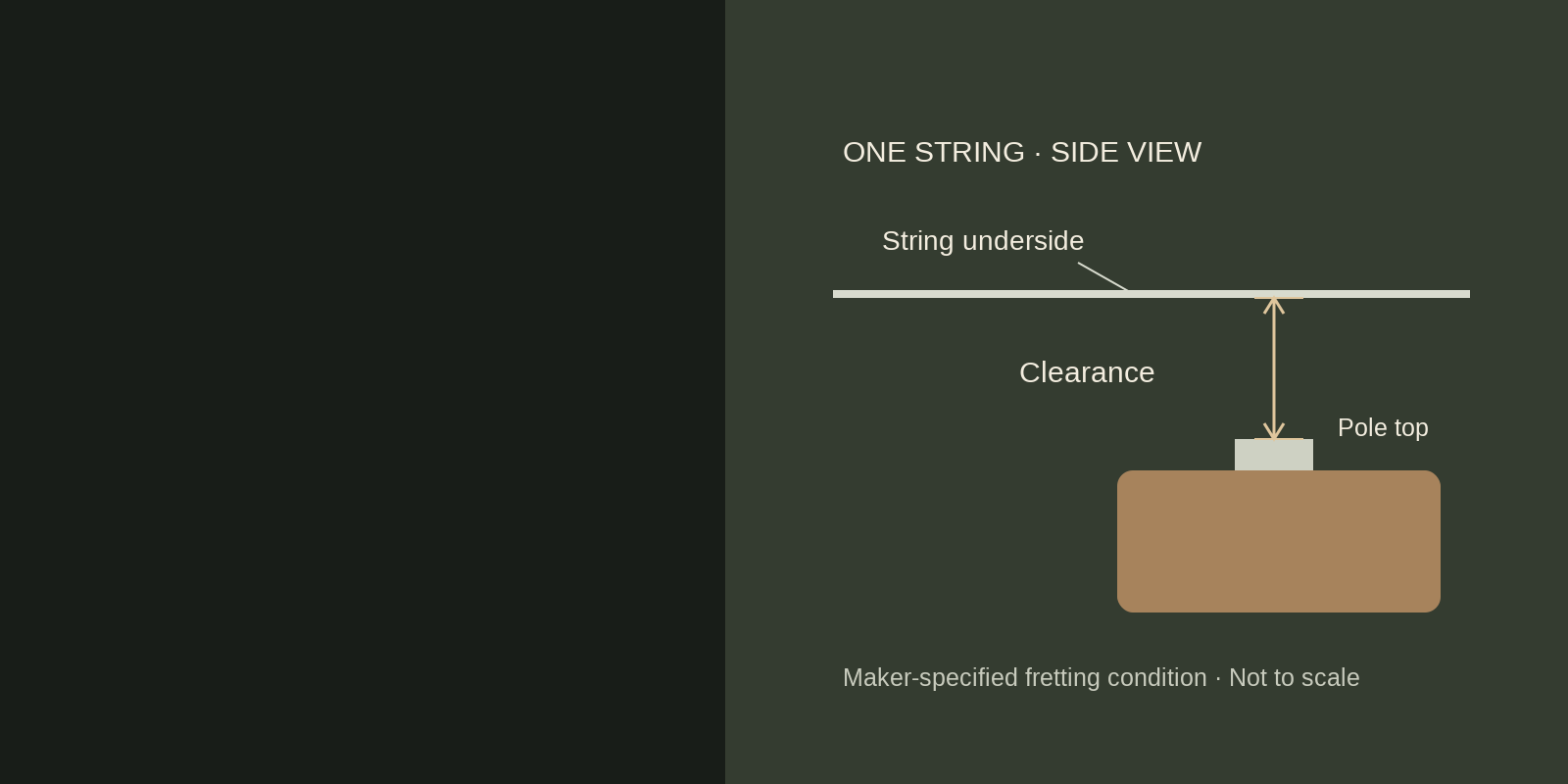
Pickup height normally describes a gap to the strings, so a smaller clearance means the pickup is closer. A number without its endpoints and fretting condition is incomplete. An open-string reading and a last-fret reading describe different conditions; keep them labelled rather than judging one against the other.
Fender’s electric-guitar procedure measures from the pole piece to the string’s underside on the bass and treble sides with the last fret depressed. Its setup specifications are guidance with stated string and playing conditions, and it directs owners to the relevant manual. This supports a measuring method, not a target for every magnetic pickup.
Identify the installed pickup before choosing instructions. A modified guitar may no longer have its factory model. Covers, rails and unusual pole layouts also require a clear reference surface. The pickup-system guide helps distinguish sensing method, coil construction and powered electronics.
Sources: Fender: setup conditions and pickup-height measurement
Record both sides before moving a screw
Choose one complaint, such as a neck position that overwhelms the bridge or a pickup that interferes with normal picking. If the guitar works well and no change is needed, documenting it may be enough. Review the setup guide first if string height or tuning is changing; the pickup gap should be recorded against a known setup.
- Note the guitar, pickup model if known, strings, tuning and useful selector modes.
- Locate the correct instructions and write down the required fret and measurement endpoints.
- Support the instrument securely, tune it and measure the bass-side outer string using that method. Record the unit.
- Repeat on the treble-side outer string. Note any deliberate tilt; do not assume the sides should match.
- Record the listening chain, guitar controls and starting complaint. A clear photograph can supplement measurements but cannot replace them.
Read a ruler straight on and keep it from pushing the string away from its resting position. If the gap cannot be read reliably, record that uncertainty. Extra decimal places will not improve an uncertain observation.
Check the mounting arrangement before turning anything
Confirm which screws move the whole pickup. A row of individual pole screws, a pickup-ring attachment screw and a height adjuster can sit close together while performing different jobs. Keep pole-piece adjustment outside this first height comparison.
Seymour Duncan describes ring-suspended humbuckers and body-mounted arrangements with different screw action. It also warns that backing a suspended pickup down too far can release it into the cavity. A familiar-looking screw therefore does not establish the direction or safe travel on an unfamiliar mount.
Use the correct tool and follow the actual mounting instructions. Do not remove screws to discover their function. If the adjuster is seized, stripped, unsupported or inaccessible without disassembly, leave the baseline intact and ask a repair technician. This procedure does not cover opening powered equipment or modifying wiring.
Sources: Seymour Duncan: pickup mounting and adjustment differences
Make one reversible change and compare two conditions
Keep the baseline record within reach. Change one pickup side by a small amount appropriate to its instructions, note the direction and movement, then remeasure both sides. Do not assume a screw turn produces a fixed distance. Check physical clearance through your usual playing, including upper-fret notes and bends, before judging the amplified sound.
Use the same short passage and keep amplifier input settings fixed for the first comparison. Record the guitar controls and selector mode. Listen for the complaint you named and any switching-level change. Repeat with your normal gain as a separate condition. A closer pickup can send a stronger signal, so changed amplifier drive is part of what this pass observes.
For tonal preference, compare the recordings at similar playback volume without altering the recorded amplifier-input conditions. Note any playback-level adjustment. A phone recording can support recall, but it is not a calibrated output or sustain measurement. Keep the guitar, string set, cable, effects and playing approach as consistent as practical.
Check every useful selector mode afterward. A change that helps one pickup alone may alter its balance in a combined setting. The neck and bridge comparison explains why position and installed pickup design remain separate variables.
Decide whether to keep, reverse or stop
DiMarzio explains that getting a magnetic pickup too close can disturb string vibration if the magnetic field is strong enough. Physical contact is another reason to stop. A warbling or buzzing note does not identify the pickup as the cause by itself.
| Observation | Useful next check | What it does not prove |
|---|---|---|
| The switch balance is more useful | Check all modes with clean and usual-gain settings; keep the recorded clearances if satisfied | That this height suits another guitar |
| The changed version only seems louder | Compare similar-volume playback and revisit the original complaint | A preferred frequency response or longer sustain |
| String contact or a new abnormal note appears | Stop the trial and restore the documented baseline if safe; seek help if the symptom remains | A complete diagnosis from one adjustment |
| No repeatable improvement is clear | Return to baseline and describe the unresolved symptom | That a replacement pickup is necessary |
If pitch problems remain, the intonation guide provides a separate comparison of fretted pitch. Avoid compensating for an unresolved problem by changing several setup variables together.
Sources: DiMarzio FAQ: excessive magnetic interaction and height limits
Keep a record that lets you return to baseline
Copy these fields into your own notes. They are a proposed record, with no site measurements filled in.
| Record | Baseline / trial / restored setting |
|---|---|
| Identity and method | Pickup, position, strings, tuning, fretting condition and reference endpoints |
| Clearance | Bass-side outer string and treble-side outer string, with units |
| Change | Identified adjuster, direction and amount; both sides remeasured |
| Observation | Passage, mode, fixed amp-input settings, clearance and switching balance |
| Preference and decision | Playback-level adjustment; keep, restore or refer; remaining uncertainty |
Use the record to explain what changed and whether the original complaint improved. Leave unknown pickup identity, uncertain measurements and untested settings marked as unknown.
How this guide was prepared
We checked Fender’s factory-setup guidance, Seymour Duncan’s pickup-height article and DiMarzio’s Orientation and Height Adjustments FAQ on November 5, 2026. They support the documented measuring method, mounting differences and limits of universal targets. We developed the baseline record and proposed comparison below as editorial methods for an owner; we adjusted no guitars, measured no output or sustain and report no preferred height. This guide concerns accessible, adjustable magnetic pickups. Model instructions take priority, and unfamiliar mounts, piezo systems and internal work need separate guidance.
Documentation checked .