The decision in brief
A truss rod controls neck relief, the lengthwise curvature checked under specified string and fretting conditions. It can affect action, but it does not correct every buzzing note, nut or saddle problem, or neck-angle fault. Identify the exact guitar and its maker’s measurement and service instructions before using a tool. Record relief in the intended tuning; adjust only if the maker permits it and the result supports that decision. If access, tool fit or neck response is uncertain, stop and use a qualified technician.
What the truss rod actually changes
Neck relief is curvature along the fretted playing area. A string held at the maker’s specified frets provides a straight reference above that area; the gap at a named intermediate fret describes that particular measurement. It is not the same as string height measured with a different fretting condition.
Relief adjustment changes the neck’s response to string load. Nut-slot height, saddle height, frets and neck-to-body angle remain separate setup questions. If relief is already appropriate but action is high toward the body, more rod adjustment is not a substitute for assessing those other factors. Start with the guitar action guide.
Rod design and owner access vary. Some instruments have no owner-adjustable rod. Martin’s care guide explicitly reserves relief adjustment for authorized service. Having an adjustment socket is not, by itself, permission to use it.
Sources: Martin: neck relief is an authorized-service adjustment (printed p. 7)
Which symptoms suggest a relief check?
| Observation to record | Why relief may enter the check | What remains unproven |
|---|---|---|
| Buzz across several low or middle frets | Relief may contribute to string clearance. | Attack, string condition and fret condition can also matter. |
| Difficult fretting around the middle of the neck | Excess relief is one possibility. | The string set, action and nut need separate checks. |
| One isolated buzzing note | Record its string and fret before changing anything. | The observation does not establish a rod problem. |
| High action toward the body | Compare relief with the complete setup. | Saddle range, neck angle or acoustic top movement may need assessment. |
Use this as an observation map, not a remote diagnosis. Record whether the sound occurs unplugged, through an amplifier, or both, and use your normal attack. The fret-buzz guide helps locate the pattern.
Measure relief using the maker's reference points
Use the method for the exact model. The examples below deliberately retain different spans; their readings or targets must not be mixed.
| Published maker example | Held reference points | Reading and important limit |
|---|---|---|
| Fender Stratocaster setup page | Tune first; capo at fret 1; hold the sixth string at the last fret. | Read between the underside of that string and the crown of fret 8. This is the cited Strat method, not a target for every Fender or other guitar. |
| Taylor truss-rod support page | Hold a string at frets 1 and 14. | Read the gap at fret 6. The measurement paragraph does not name a particular string; confirm that detail and the applicable specification for your model before treating a reading as actionable. |
Set up in the intended tuning and the posture specified by the maker. Record model and manual, string and set, tuning, held frets, reading fret, capo condition, instrument position, tool and units. Read to the fret crown, not the fingerboard wood. A feeler gauge must not lift the reference string; if you cannot read the gap reliably, ask for a demonstration.
Taylor’s general page uses a business-card comparison; card thickness is not a calibrated numerical target. Do not convert it into a universal relief value. Use the current model’s numerical range and method where supplied. The scale-length guide covers a different measurement, not a substitute for relief.
Sources: Fender: Stratocaster relief measurement; Taylor: its published relief reference points
A checklist before touching the adjuster
- Identify the exact model, rod type, official procedure and whether owner adjustment is permitted. If the maker specifies authorized service, stop at recording the symptoms.
- Compare a repeatable relief reading with the applicable guidance. Do not start from a photograph or a ruler reading taken under different fretting conditions.
- Identify access and the specified tool, including its size and engagement. Headstock, heel and soundhole access are not interchangeable; do not remove a neck or force obstructing parts from this general guide.
- Confirm the procedure’s string-tension condition for adjustment and its retuning or settling instructions. The condition for measuring is not automatically the condition for turning.
- Plan a separate before/after record and stop if fit, resistance or response is uncertain.
Do not borrow one maker’s wrench size or procedure for another guitar. A gauge or tuning change may alter the balance, but it does not prove that relief is the cause of a new symptom.
Why a universal turn direction is a bad instruction
Fender describes standard rods that counter forward curvature and Bi-Flex rods that act in both directions. Identify the mechanism: releasing a single-action rod does not actively drive the neck as a dual-action system can.
Read direction from the maker’s stated viewpoint of the adjuster. Access at the opposite end can make an instruction ambiguous when copied into a player’s-view photograph. This article therefore supplies no universal clockwise instruction, turn fraction, string-slackening rule or force allowance.
Where owner work is permitted, follow that model’s procedure and recheck in the required tuning and conditions. Taylor’s page describes adjustment at intended playing tension; it does not establish that rule for every instrument. After an authorized relief change, reassess action and buzzing before evaluating intonation.
Sources: Fender: standard and Bi-Flex rods; Taylor: tension condition in its support procedure
When to stop and use a technician
Fender’s Strat setup page directs readers to service for excessive resistance, a need for constant adjustment, no neck response, or discomfort with the procedure. Do not keep turning to chase a reading when the relationship between adjustment and response is unclear.
Stop as well if the specified tool cannot seat fully, the socket is damaged, an adjustment limit is suspected or access is uncertain. Extra leverage, heat or lubricant is not a solution supplied by this guide. A lifting bridge, opening joint, crack, local fret rise or suspected twist calls for assessment of the instrument, not repeated rod movement.
Give the technician the symptom map, string/tuning details and the conditions of any measurements you could make reliably. Request a before/after record. No reading in this article diagnoses the guitar you own.
Sources: Fender: resistance, repeated adjustment and no-response warnings
When this advice changes
Vintage, repaired, multi-rod and specialist instruments need their own documentation. A guitar without an adjustable rod cannot be assigned this procedure. On acoustics, body or top movement can change the geometry seen near the neck joint; Martin discusses this separately from relief.
Changing strings or tuning also changes the measurement context. Keep the new conditions in the record and obtain applicable guidance rather than reusing an unexplained old target. A rod that requires repeated attention or produces no clear response needs service.
The safe decision sequence
Follow this sequence: identify the instrument and service limits; locate the symptom; measure under a complete, applicable method; compare with the maker’s specification; then decide whether authorized relief work is justified. Keep nut, frets, saddle and structural questions separate.
For work that is permitted and performed, record the exact procedure used and recheck under the same stated measurement conditions. For a first attempt or an unresolved detail, a technician can demonstrate the method on your guitar. A repeatable observation is more useful than an unexplained claim that the neck was straightened.
Measurement and adjustment questions
Should I loosen the strings before a truss-rod adjustment?
Use the exact model’s procedure. Measurement should be made in the specified tuning and fretting conditions, while adjustment tension and any retuning steps must come from its maker. There is no all-guitar slackening rule here.
Can I use a relief target from one maker with another measurement method?
Do not combine a target with a different measurement span or condition. Use a complete method and specification that apply to the exact guitar, including the named string.
What if the gap is too small for me to read?
Do not guess from a photograph, use a thick card as a universal target, or turn the rod to make a gap visible. A technician can show the specified measurement with an appropriate tool.
How this guide was prepared
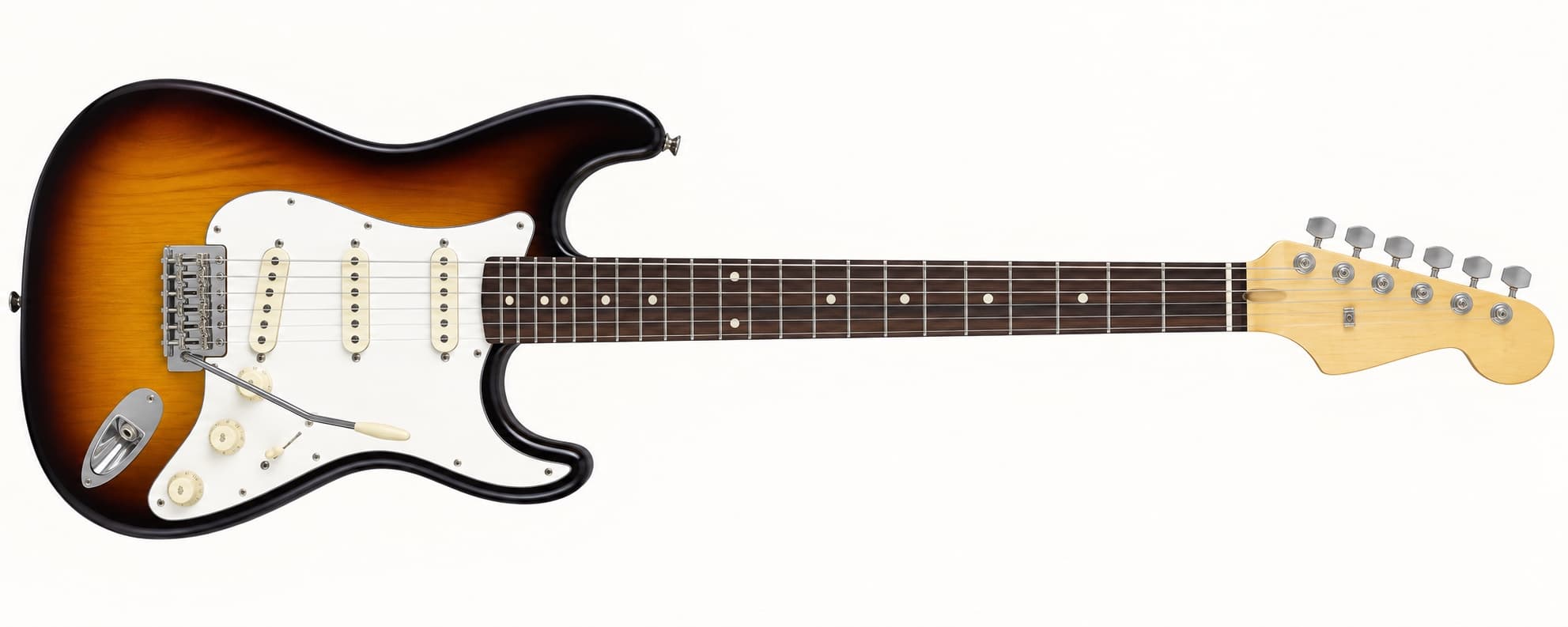
This documentation-based revision compared Fender’s Stratocaster setup instructions, Taylor’s truss-rod support page and Martin’s 2022 Care & Feeding guide. Their measurement spans, string details, tuning conditions and owner-service limits were kept separate; Taylor’s unnamed measurement string remains an explicit limit, not an inferred specification. The existing action, fret-buzz and string articles were read to separate adjacent questions. No guitar was measured, adjusted or diagnosed, and no wrench, torque or turn increment was tested. The observation record is an editorial proposal. The retained cover was visually checked as an instrument illustration; an inaccurate and unrelated scale-length diagram was removed. AI assisted research, drafting and editorial checks; no named human technical review is claimed.
Documentation checked .
Added exact, non-interchangeable Fender/Taylor measurement examples, an owner-service permission gate and complete measurement conditions; clarified relief versus action and rod mechanisms; removed an inaccurate scale-length graphic and corrected the cover’s illustration description.