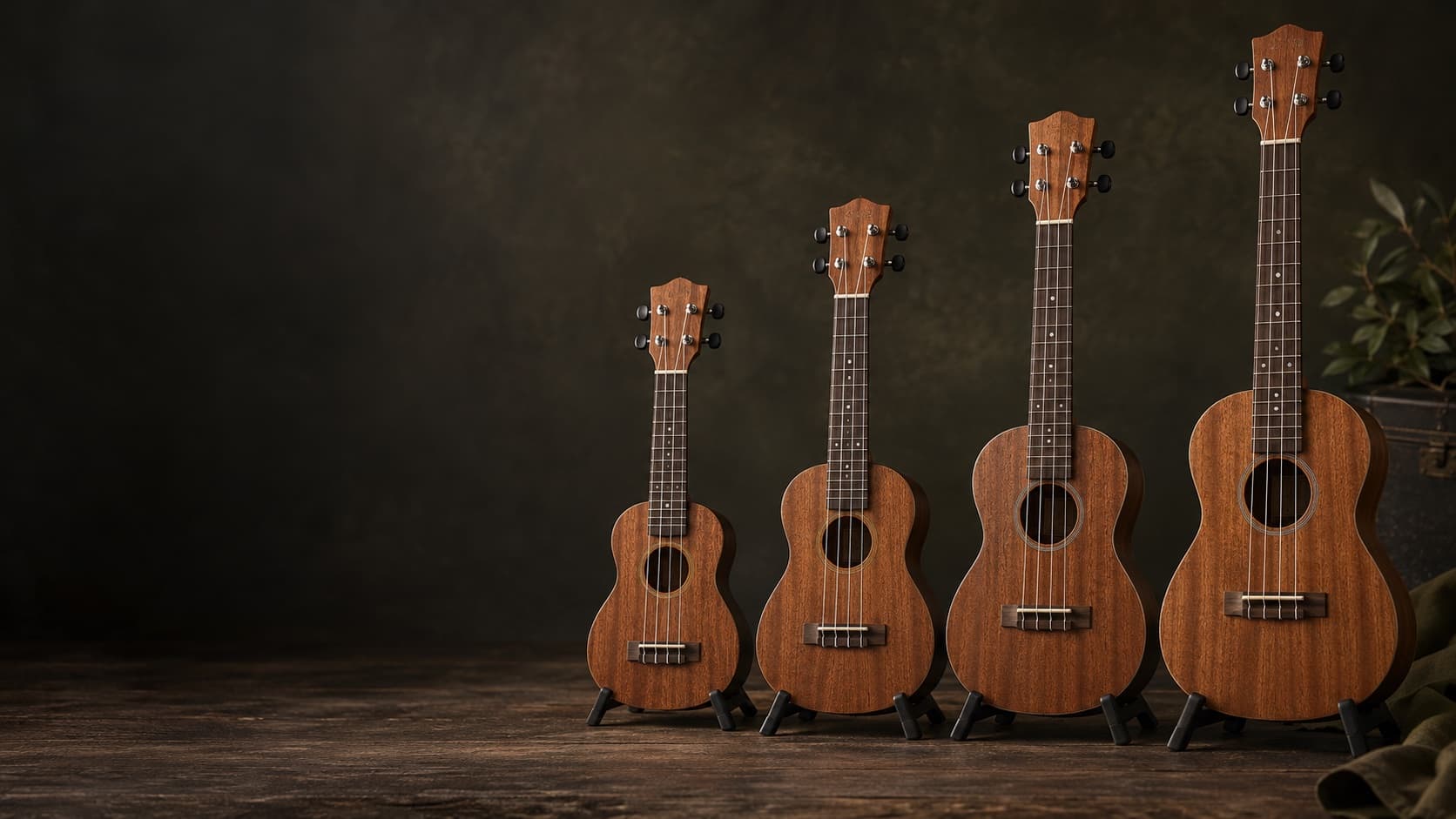
The decision in brief
The best beginner ukulele is one the player can hold comfortably, fret without excessive effort, tune reliably and use with the intended lessons. Compare a concert with a soprano as a practical first shortlist, and try a tenor if the smaller instruments feel cramped. Choose baritone deliberately: its common D G B E tuning differs from the G C E A used on soprano, concert and tenor. Prioritize the actual instrument's setup, clear notes, suitable learning support and purchase terms over decorative materials or the number of accessories in a bundle.
What matters most
- A concert is a useful starting comparison, not an automatic winner for every beginner.
- Common baritone tuning needs a different lesson and chord-chart check from G C E A.
- Playing comfort and usable setup should be verified on the actual instrument.
- Spend the budget on the instrument, suitable protection, tuning and learning support before optional extras.
What best means for a first ukulele
A beginner needs an instrument that supports repeatable practice. It should sit comfortably in the playing position, allow clear notes with reasonable effort and give a tuning reference the learner can understand. A photograph, tonewood name or long accessory list cannot establish those conditions. Start by describing the player and the intended learning route.
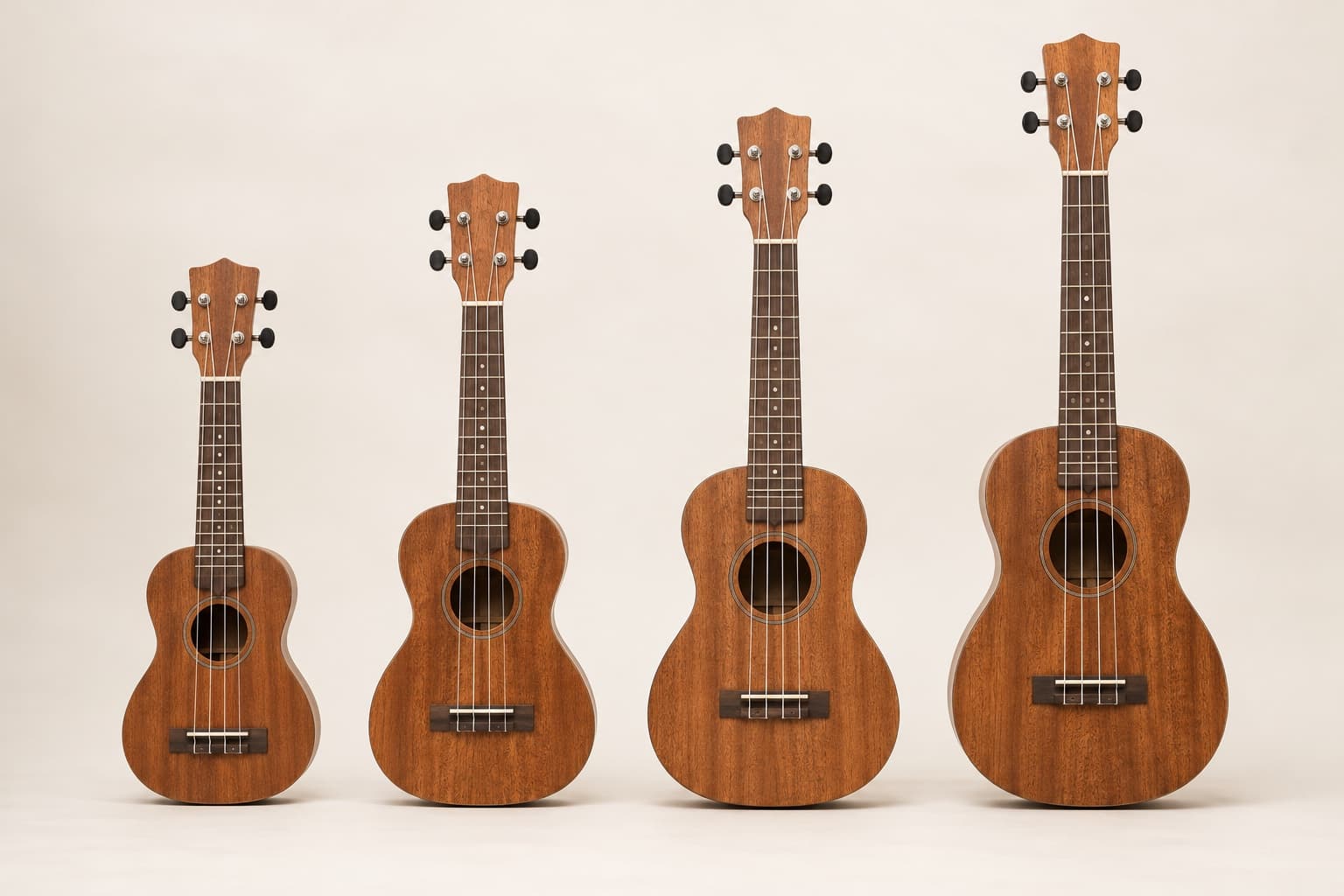
For a first shortlist, compare a soprano and a concert in person if possible. Add a tenor when the smaller neck or body feels cramped, and include a baritone when its tuning and character are an intentional choice. Concert is a useful middle comparison in the common size range, but it is not a universal prescription. Hand size alone does not determine the result.
This guide recommends a way to choose rather than naming an untested model the winner. The same model name can arrive with a different setup or condition, and purchase support differs by seller. If you already have a teacher or class, ask what tuning, orientation and materials it uses. Matching the instrument to that learning context can prevent more confusion than paying for an ornamental upgrade.
Compare the four common sizes before comparing brands
| Family | Common tuning, string 4 to 1 | Why try it | What to verify |
|---|---|---|---|
| Soprano | G C E A | Compact body and close fret spacing | Comfort and clear chord fingering |
| Concert | G C E A | A middle size to compare with soprano | Body support and usable finger space |
| Tenor | G C E A | More room in the common size progression | Reach and the exact high-G or low-G string setup |
| Baritone | D G B E | A larger family with guitar-related tuning | Lessons and chord charts for that tuning |
Kala and Córdoba describe the common progression from soprano through baritone. These family names help organize the shortlist, but exact scale, neck width, string spacing and body dimensions are model specifications. A long-neck soprano or another variation can cross the expectations created by a basic size chart.
Compare two instruments while keeping the task the same: hold each, fret the same simple pattern and listen to the same strum. Do not infer a child's fit from age alone or an adult's fit from a size label. If one instrument feels awkward, identify whether the difficulty is body support, finger crowding, reach or setup. That observation is what makes the next comparison useful.
Match the tuning to the lesson material
Soprano, concert and tenor commonly use G C E A, often with a high G. In that re-entrant arrangement, the fourth string is not the lowest-pitched string. A low-G setup uses a different fourth-string pitch and appropriate strings. Read the model or string-set specification instead of assuming every tenor uses one arrangement.
Baritone commonly uses D G B E, matching the note names of a standard guitar's highest four strings. Shapes familiar from guitar can therefore provide context, but they produce different chord names from the same finger pattern on a G C E A ukulele. A lesson that simply says ukulele may expect the latter tuning. Confirm that expectation before purchasing a baritone for a general beginner class.
Lanikai's care guide documents these common tuning families. Use a chromatic tuner or the correct instrument mode and identify the intended pitches before tightening unfamiliar strings. Do not attempt to convert an instrument by raising its existing strings to another tuning without suitable string and maker guidance. The guitar tuner guide explains tuner inputs and reading behavior, but the ukulele's own tuning reference governs its target notes.
Try the instrument in the actual playing position
Sit as you would for practice and let the instrument rest in a stable position. Check whether the picking arm can move naturally and the fretting hand can approach the neck without an uncomfortable bend. If you plan to stand, include that position and suitable support in the trial. An instrument that feels fine in a quick shop hold may behave differently through a whole lesson.
Ask the seller or teacher to show one simple chord and a short single-note pattern. Press close behind the fret with only the effort needed to sound the note. Notice whether the fingers crowd one another or whether the reach feels excessive. Compare another size before concluding that the beginner lacks the hand shape or strength to play.
For a child, have the actual learner try the instrument when possible. For a gift, agree a practical exchange arrangement if fit remains uncertain. A larger size is not automatically an advanced instrument, and a soprano is not automatically a toy. The useful question is whether this player can support this instrument and make repeatable clear notes. Our guitar fit guide uses the same whole-instrument principle, though its guitar dimensions do not transfer directly to ukulele.
Prioritize clear notes and manageable action
Action describes string height in the playing area. Lanikai's guide explains that excessive height can make playing harder while an overly low setting can create buzz, and recommends professional adjustment where needed. That is a more useful buying check than demanding the lowest strings on the shelf. The instrument should work for the learner's normal technique.
Tune before comparing. Play each open string and several fretted notes, then try a simple chord. Listen for a dead note, persistent rattle or an unusually difficult first-position press. A beginner may need a teacher or competent shop player to separate unfamiliar technique from an instrument problem. Ask for that help before accepting either explanation.
Have the seller clarify whether the actual unit is inspected or set up before delivery, and what happens if a playability problem appears. Do not assume an electric-guitar rod or saddle routine applies to every ukulele. Adjustable neck hardware and bridge designs vary; cutting a nut or saddle removes material. For a new purchase, resolve uncertain playability with the seller or repairer rather than treating immediate modification as a required beginner task.
Read materials as construction information
A specification should distinguish the top, back and sides rather than using a wood name as a complete construction claim. Ask which parts are solid wood, layered wood or another material, and which care instructions apply. A decorative surface or an attractive grain does not tell you how the instrument is built underneath.
For a beginner, use that information alongside condition, comfort and the sound of the actual instrument. Do not assume a more expensive material description guarantees easier fretting, better tuning or a preferred tone. When comparing sound, hold playing position, tuning and the short test passage as consistently as possible. Record a preference without turning it into a universal material rule.
The sensible shortlist can include different constructions. If the instrument will travel frequently, discuss care, case fit and the expected environment with the seller. If it will stay at home, establish a safe storage place and follow the maker's instructions. Avoid paying for a visual upgrade at the cost of unresolved playability. A beginner will use the frets, strings and tuning system at every practice session; an ornamental feature should earn its place after those functions are satisfactory.
Compare the total learning package, not the bundle count
Write the required items before comparing offers: a usable instrument, an appropriate tuning method, suitable protection for its transport and the lessons or materials you will use. A strap may be helpful where the instrument and playing position support it. Other accessories can wait until a real need appears.
Inspect each included item. Does the bag fit and offer the protection needed for the journey? Can the tuner read the intended tuning? Are the lessons accessible in a format and language the learner will use? Does a spare string set match the size and tuning? Several low-use extras should not compensate for an instrument that has not been inspected.
Compare current local prices on the same basis, including any shipping, setup or separate essentials. This guide does not assign a universal price bracket because market, currency and purchase terms vary. Ask who handles a defect or setup concern and whether an exchange is available for poor fit. The lowest advertised price can become less useful when support is unclear; a higher price still needs a concrete explanation of what the buyer receives.
When this advice changes: the learner's situation
For general G C E A lessons
Compare a comfortable soprano and concert, then add a tenor if the fit improves. Confirm the string setup and the teacher's expectations. Let the actual playing test decide between the sizes rather than buying from a claim that one is best for all beginners.
For a guitarist choosing a baritone
Try D G B E deliberately and select matching lesson material. Familiar note names can help the transition, but body fit, strings and tuning routines still need attention. Do not buy baritone merely because larger seems better value.
For a child or a gift
Prioritize the player's physical trial, teacher input and exchange terms. If a surprise purchase prevents a trial, reduce the uncertainty through a known learning requirement and a clear return arrangement.
For planned amplified use
Test the pickup, controls and intended listening path as well as the acoustic instrument. Clarify power requirements and required cables. Electronics are useful when the task needs them; they should not replace the basic playability check.
These are starting profiles, not rankings. A specific instrument belongs on the shortlist when its documented features and actual condition satisfy the profile, regardless of the brand name on the headstock.
Use this shop or delivery inspection checklist
- Confirm the model, size, orientation and stated tuning.
- Inspect the body, bridge, neck and hardware for visible damage or loose parts.
- Tune using the intended note reference.
- Play each open string and a selection of fretted notes.
- Try one chord and one short pattern in the normal playing position.
- Compare comfort with a second suitable size if available.
- Check tuning again after the short trial and ask about any repeated problem.
- Test electronics when included and needed.
- Confirm the case, learning materials and spare-string compatibility.
- Record service, exchange and return arrangements.
For delivery, document the received condition and contact the seller promptly about an unresolved concern. New strings can need repeated tuning as they settle, but that is not an explanation for every severe or persistent problem. Ask the seller to distinguish a normal settling routine from a slipping mechanism, poor string seating or another fault.
Keep the check practical and repeatable. You are establishing that the instrument is fit for the agreed purpose, not performing a laboratory assessment. An uncertain note should be demonstrated to a competent player or repairer before you make an irreversible change.
Choose an instrument you can keep using in the first week
Before leaving the shop or completing delivery checks, make sure you can identify the strings, select the tuning reference and hold the instrument for a short practice. Begin with the lesson's intended tuning and a small amount of material. Consistent practice will reveal more about fit than repeatedly changing strings or buying new accessories.
Follow the maker's storage and cleaning guidance. Keep the instrument away from avoidable heat and environmental extremes, use suitable protection when carrying it and ask about care for the actual construction. A small instrument still needs a considered storage routine. Retain the model, string information and purchase record so future replacements and service requests are unambiguous.
The best first ukulele is the one that clears four gates: comfortable fit, compatible tuning and lessons, usable playing condition, and support you understand. A concert is a useful starting comparison; soprano, tenor or baritone can be the better fit when the player's needs support that choice. Make the decision on the complete instrument and learning path, then spend the first week learning what it can do.
Frequently asked questions
Is soprano or concert better for a beginner?
Both can work. Compare body support, fret spacing and clear notes on the actual instruments. Concert is a useful middle-size starting point, but a comfortable soprano can be the better choice for a particular player.
Can a beginner start with a tenor ukulele?
Yes. Try one if the smaller sizes feel cramped. Check body comfort, reach, the exact string setup and compatibility with the intended lessons.
Is baritone tuned the same as other ukuleles?
Its common tuning is D G B E. Soprano, concert and tenor commonly use G C E A. Choose chord charts and lessons for the instrument's stated tuning.
Do I need a solid-wood ukulele to learn?
No construction label alone establishes beginner suitability. Prioritize comfort, clear notes, usable setup, care requirements and the actual sound and condition within the budget.
What should I check in a beginner ukulele bundle?
Check the instrument first, then case fit, tuner suitability, lesson access and string compatibility. Confirm service and return terms instead of judging the package by the number of accessories.
How this guide was prepared
This is a criteria-led buying guide, not a ranked hands-on model test. Kala and Córdoba documentation supplies size context; Lanikai's care guide supplies common tuning and maintenance boundaries. The tryout, shortlist and cost worksheets are editorial recommendations. No current product price, stock, measured sound comparison or undisclosed commercial relationship is asserted. The photographic-style images are AI-generated editorial illustrations, not photographs of reviewed products or model-specific measurements.