
The decision in brief
Choose a nylon-string guitar around the technique, posture and listening situation you need. Compare actual neck dimensions, string spacing, scale and body fit, then play the same short material with known strings and setup. Verify the model’s approved string family; metal-wound classical bass strings are not the same as steel-core acoustic strings. Inspect condition with the seller and test any electronics separately. Traditional, flamenco and crossover labels are useful starting questions; none proves comfort, sound, condition or quality.
Choose a nylon-string role and confirm compatible strings
Name the main use: classical study, flamenco, accompaniment or amplified performance. Ask a teacher what spacing and posture support the intended technique. A crossover or cutaway may suit a particular requirement, but a category label does not promise an easier instrument.
Yamaha describes conventional nylon trebles and metal-wound bass strings with a nylon-fibre core. A shiny wound bass is not evidence that a steel-core acoustic set is appropriate. Córdoba’s FAQ explicitly warns against fitting steel strings to its nylon instruments. Confirm the actual model’s string instructions and approved set before changing anything.
The nylon-family label also covers sets with other synthetic treble constructions. Record the exact set, material information, tension designation, intended tuning and attachment requirements. Do not infer approved load or compatibility from a normal/hard label alone. Use the string compatibility guide for the separate string-family decision.
Sources: Yamaha: nylon-family string construction and typical neck-width examples; Córdoba FAQ: nylon-string compatibility and stated humidity range
Compare dimensions in the posture you will use
Yamaha’s explanation gives 52 mm and 43 mm as typical classical and steel-string acoustic neck-width examples. They are maker examples, not universal nut specifications or a rule assigning sizes by age. Ask for the exact model’s nut width and actual string spacing rather than substituting the example.
Use your normal chair and permitted support. Compare body depth, the position of the lower bout, first-position reach, neck depth/profile and string spacing at both hands. Try comfortable chords, a short scale passage and an arpeggio; ask for a demonstration of a task you cannot yet play.
Nominal scale is one dimension. Body fit, setup and strings remain separate variables; a smaller size or narrower neck does not automatically suit a particular hand. Record what changed and what remained comparable. If a position is uncomfortable, stop and seek guidance on fit rather than treating it as a required training obstacle.
Sources: Yamaha: nylon-family string construction and typical neck-width examples
Read construction and style as questions to verify
Yamaha illustrates classical fan bracing and explains its support for string load and influence on the top. A bracing name is not a complete sound prediction. Identify the documented top, back and side construction, then compare the actual instrument’s response under stated conditions.
Yamaha’s classical/flamenco examples describe different setup and response priorities. Treat those as examples of an intended role, not compulsory dimensions, a wood-only explanation of tone or a quality ranking. Inspect any tap plate and its compatibility with the intended technique.
A solid or laminated top does not establish the condition of joints, fretwork or setup. Ask which construction claim is documented and which response was actually heard. Use the solid-top and laminate comparison when that material decision matters.
Sources: Yamaha: classical top bracing and string-load support; Yamaha: classical and flamenco design examples
Screen condition without turning the check into a repair
Ask the seller to tune the actual guitar and identify the fitted strings and setup. Play open strings and comfortable notes across the fingerboard at your normal attack. Record persistent buzz, dead notes, unusual effort or retuning needs; they identify questions to investigate, not a diagnosis of one component.
With permission, inspect visible bridge and tie-block condition, cracks, joints, fret wear, tuners and known repairs. Do not pry beneath a bridge, push on the top, reach inside to test braces or alter a saddle to complete this screen. A new gap, unexplained movement or structural concern calls for qualified inspection.
Have an appropriate technician explain any proposed setup work and whether the guitar can meet the required playing task. This guide supplies no universal action measurement, rod setting, string-settling period or promise that adjustment will resolve a structural fault. Preserve the actual observations and the seller’s answer.
Test amplified needs separately
Verify the actual neck, fingerboard shape, body, cutaway and electronics. Crossover is a broad description; it does not guarantee a particular width or radius. Use upper positions only if they matter to the music, and check the intended movements on the actual guitar.
For amplification, have the seller demonstrate the complete pickup-to-PA, amp or interface route. Record device/settings, cable, approved power or battery requirements, controls, output and the intended listening level. Battery behavior and bypass are model-specific questions. Obtain permission before opening compartments.
Judge unplugged response and amplified response separately. A thin body or a visible control panel does not prove stage performance, low feedback or room volume. If realistic performance conditions cannot be reproduced, retain that limitation instead of treating a quiet shop demonstration as a guarantee.
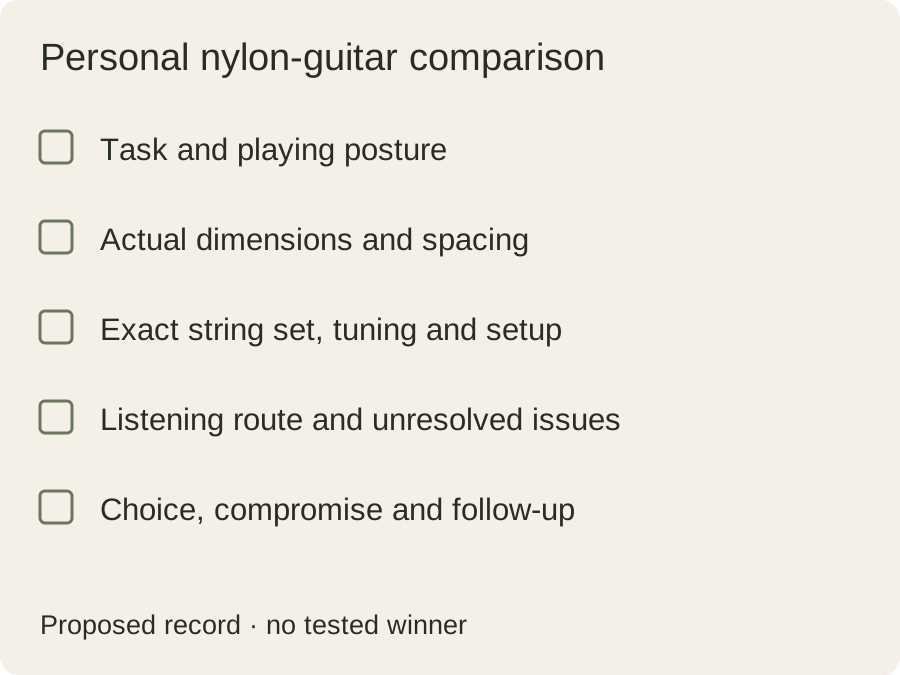
Write a personal comparison you can repeat
- Identify each actual unit and the primary technique/listening task.
- Use the same comfortable posture, support, short arpeggio, chord and melody.
- Record strings, tuning and setup; note differences that cannot be matched.
- Compare fit and response at your normal touch without changing multiple settings.
- Test electronics separately when needed, and record the complete route.
- List unresolved condition issues, proposed work, actual cost and the seller’s terms.
| Comparison record | Write down |
|---|---|
| Identity | Model/unit, date and intended task |
| Fit | Nut/bridge spacing, scale, body, profile and support |
| Condition | Strings, tuning, setup and unresolved observation |
| Listening | Unplugged task or exact amplified route/settings |
| Decision | Useful difference, compromise and question still open |
A personal comparison can establish your preference under those conditions. It does not isolate a wood, brace or neck feature as the cause. Listening from a different position also changes the observation; record the change instead of mixing it into a single score.
For a first purchase, include fitted protection, a tuner, approved replacement strings and any support or agreed service. For remote or used purchases, ask for model dimensions, exact-unit photographs, repair history and applicable return/service terms before changes. A label, country claim, age or ornament does not verify attribution or current condition. Obtain a specialist opinion when attribution or a major repair affects the decision.
Choose the instrument whose useful difference you can explain
Use the musical task to choose a starting family, confirmed specifications to narrow candidates and observations on the actual guitar to make the decision. Preserve the difference between an official specification, a seller’s statement, your preference and an unresolved question.
The preferred guitar should support the intended practice or performance at a cost and maintenance level you accept. This article offers a method; it does not report a played sample, expert inspection, current price comparison or winning model.
If you are still comparing instrument families, return to the complete guitar buying guide before committing to a nylon-string format.
Frequently asked questions
What size classical guitar should a beginner buy?
Choose size by reach, posture and teacher guidance rather than age alone. Test scale, body depth and first-position access with the player's normal support.
Can I put steel strings on a classical guitar?
Use the string family approved for the actual model. Córdoba explicitly warns against steel strings on its nylon guitars. Metal-wound classical bass strings can have a nylon-family core; their appearance does not make a steel-core acoustic set compatible.
Is a wider classical-guitar neck harder to play?
A wider neck changes reach and creates string separation. It can support classical technique but may feel unfamiliar. Nut width, spacing, depth and profile should be tested together.
What is a crossover classical guitar?
A crossover is a nylon-string guitar with features intended to feel familiar or practical outside strict traditional design, such as a narrower or radiused neck, cutaway, thinner body or electronics.
Should a beginner choose high-tension nylon strings?
Start with the actual model’s approved set and intended tuning. A normal/hard designation alone does not establish compatibility or predict comfort. Have a teacher or technician assess the playing task and proposed change.
How this guide was prepared
We checked Yamaha’s nylon-string, neck-width, classical/flamenco and bracing explanations, and Córdoba’s explicit steel-string compatibility warning. Dimensions and design tendencies remain manufacturer examples, not universal specifications or measured candidates. The personal comparison card and observation sequence are proposed editorial methods. We did not play or inspect a guitar, measure dimensions, verify prices, establish string-settling times or test electronics. Actual model/string instructions and qualified assessment govern unresolved condition and setup questions.
Documentation checked .
Added nearby compatibility and construction sources, clarified manufacturer size examples and metal-wound nylon basses, qualified condition screening and amplified claims, replaced a cropped hero and added a personal comparison record.