
The decision in brief
Identify the guitar’s exact string system, count, tuning, length and attachment before choosing a replacement set. Use the instrument maker’s guidance for type and permitted gauge or tension, then compare winding, wrap material and protection for a specific need. “Acoustic-electric”, “nickel” and “light” do not settle those questions. Replace damaged strings and investigate recurring tuning or breakage symptoms; a new set cannot repair every fault.
What matters most
- Identify the instrument system before choosing material or gauge.
- Core, wrap, winding and protection are separate specifications.
- Recurring symptoms need investigation, not automatic restringing.
Start with three different guitar-string systems
| Instrument system | Common set family | Verify before replacement |
|---|---|---|
| Conventional magnetic-pickup electric | Electric set with suitable magnetic response | Exact product, tuning, bridge and approved gauge |
| Steel-string acoustic | Steel-string acoustic set, often bronze-family wrap | Maker’s type/load guidance and attachment |
| Classical or specialist nylon-family | Specified classical nylon/composite set | Tension category, length and required end |
These families are not interchangeable packets. Martin’s care guide explicitly warns against steel strings on a classical instrument because of its lighter construction. Follow the exact maker for any hybrid or unusual design. “Acoustic-electric” describes an amplified acoustic instrument; an output jack alone cannot identify its string system. The acoustic-versus-electric guide explains the wider instrument distinction.
Sources: Martin care guide (2022), printed pp. 5–7: care and classical-string warning
Read a string package in the right order
Identify instrument model, string count, intended tuning, attachment, required length and permitted gauge or tension. Headless, multiscale, baritone and extended-range instruments can need specific lengths or tapered sections. Do not choose from the word “guitar” alone. Confirm the exact model instructions if a previous owner’s set is unknown.
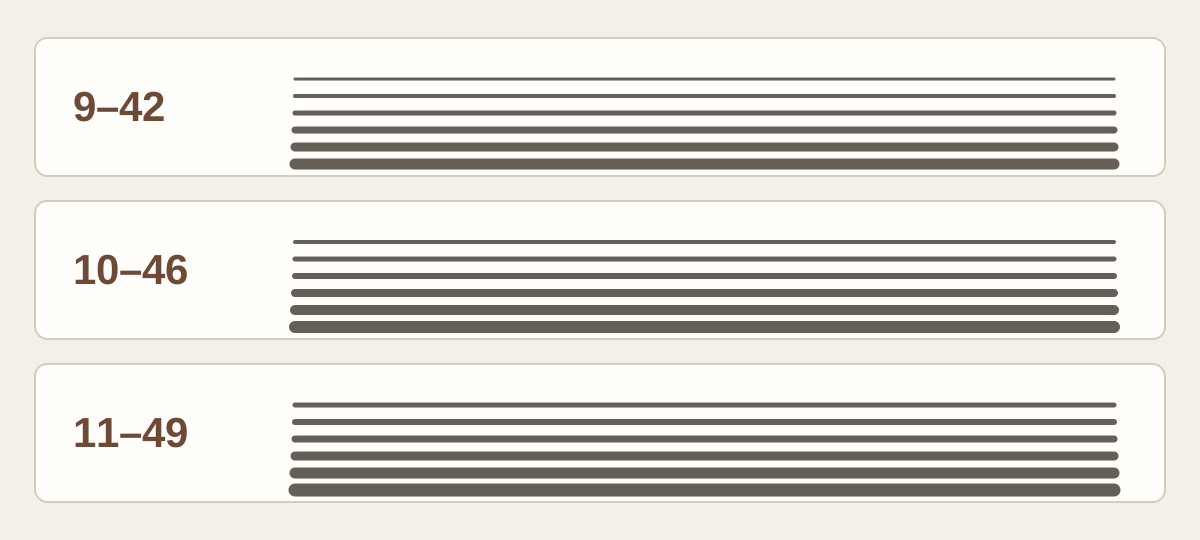
A .010–.046 label gives outer diameters in inches, not all intermediate strings or construction. Read the complete sequence, including a plain or wound third where relevant. “Light” is a maker’s product label. The gauge guide covers diameter, tuning, vibrating length and unit weight in more detail.
Sources: Taylor string FAQ (June 2023): different model families and strings
Core, wrap, winding and coating are separate choices
Distinguish plain strings from wound strings. A wound string has a core and wrap; attachment, core geometry, wrap profile and surface protection are separate details. D’Addario’s construction article describes round, flat and partly flattened wrap designs. It does not establish that one construction is universally better, louder or longer lived.
A wrap-alloy label does not describe every component of every string in the pack. “Uncoated” does not mean unplated or untreated in all respects. In its dated XT/XS support answer, D’Addario distinguishes treated wrap wire from a film-coating method. Check the exact set’s protected components rather than reading the conceptual diagram as a universal cross section. The coating comparison treats maintenance and feel separately.
Sources: D’Addario (January 2026): core, wrap and winding construction descriptions; D’Addario Support (October 2021): XT and XS protection methods

What acoustic alloy names mean
D’Addario’s acoustic-alloy guide separates core from wrap and names 80/20 bronze, phosphor bronze and other wrap families. These names are specifications to identify, not measured sound or service-life rankings. Do not assume a plain treble string has the same construction as a wound bass because one alloy appears on the pack.
Compare similarly fresh, compatible sets at the same complete gauges where possible. Keep coating, tuning, pick, passage and acoustic or recorded position comparable. Record unmatched construction. A preference for one complete set remains useful, but changing several features cannot isolate the cause. Classical-family sets need their own product and instrument instructions; do not convert a “high tension” label into a universal steel-string gauge.
Sources: D’Addario: acoustic core and wrap-alloy descriptions
How electric-string choices reach the amplifier
For a conventional magnetic pickup, use strings specified for that instrument and pickup system. Core and wrap together affect the signal; a material name alone cannot predict output, frequency response or feel. A piezo or unusual hybrid system needs its own instructions. The nickel-plated versus stainless guide separates alloy from the complete set.
To observe input drive, document pickup selection, controls and the same amplifier/interface input settings. For a recorded listening preference, compare playback at similar volume without changing the guitar controls or input gain to conceal a difference. Keep string age, gauges and playing task in the record. This is a proposed comparison, not an output or tone test we performed.
Sources: D’Addario (January 2026): core, wrap and winding construction descriptions
When should guitar strings be changed?
Inspect the set rather than relying on a fixed calendar. Replace a damaged, kinked, rough or seriously corroded string. A player may also change a complete set when its feel or response no longer serves the task. Harmless discoloration alone is different from damage. Keep installed date and approximate playing use with the eventual reason for replacement.
Tuning drift, buzzing or a recurring break can involve installation, contact points, nut, frets or bridge. Record the location and conditions; a new set cannot diagnose or repair every cause. For care, Martin recommends a soft dry cloth to remove skin oils before storage. Follow the exact finish and string instructions and avoid an unverified cleaner reaching wood or hardware.
Sources: Martin care guide (2022), printed pp. 5–7: care and classical-string warning
A practical string-buying sequence
- Identify the exact instrument and approved string family.
- Confirm count, tuning, end, required length and gauge/tension guidance.
- Record the known current set or mark it unknown.
- Choose one goal: fit, feel, response or upkeep.
- Compare compatible complete products and note unmatched variables.
- Follow installation instructions and record any setup work.
Taylor’s June 2023 FAQ gives different factory examples for different model families, including a specifically required GS Mini Bass set. This dated example demonstrates why a generic “acoustic” label is insufficient. It does not authorize a gauge on another maker’s instrument or replace current model guidance.
Sources: Taylor string FAQ (June 2023): different model families and strings
Install and evaluate the set safely
Follow the maker’s procedure for the actual bridge and tuners. Photograph an unfamiliar route before removal. Do not force a thick string through a binding nut, bridge or tuner opening. On a locking, floating or unusual system, ask a qualified technician if the method is uncertain.
Tune gradually to the approved pitch and recheck after ordinary playing. Record a changed gauge, tuning or authorized setup as another variable. Persistent slipping, abnormal movement or repeated breakage needs assessment before another string experiment. Martin’s guidance refers action and neck adjustments to authorized service; it is not an instruction to turn the truss rod to cure every symptom.
Sources: Martin care guide (2022), printed pp. 5–7: care and classical-string warning
Diagnose common string complaints before buying again
| Symptom | Record before changing again | Next useful check |
|---|---|---|
| Break at the same place | String and exact contact point | Have the contact/installation assessed |
| Open tuning is stable, chords sound wrong | Fret, pressure, current set and setup | Compare intonation and setup conditions |
| Only amplified sound seems wrong | Pickup/mic, controls, input and listening path | Check signal path separately from acoustic response |
| New buzzing after a change | Old/new gauges, tuning and any work | Ask about fit, relief, action and fret condition |
These are questions for investigation, not diagnoses. Keep the package and exact product code. If structural condition, safe string choice or required repair remains uncertain, pause the change and ask the maker or a competent technician.
When this advice changes
A twelve-string adds paired positions and an approved complete set; a baritone, headless or multiscale adds register, length or attachment questions. A vintage or repaired instrument needs its actual condition assessed. Follow the exact instrument and string makers for unusual designs.
If a player has persistent discomfort, stop and seek appropriate guidance. If material sensitivity is the concern, obtain the actual composition and suitable health advice; a “nickel-free” assumption or coating label cannot establish universal safety. A pack description does not diagnose the instrument or the player.
The bottom line on guitar strings
Keep a personal replacement record: guitar, date, exact set and full gauges, tuning, length/attachment requirements, installation and setup changes, the playing task, observations and replacement reason. A comparison is most informative when one feature changes and the others stay as similar as practical.
For a hypothetical example, a player who likes the current feel but dislikes slide noise could compare a compatible protection option while preserving gauge and alloy. Record any remaining construction differences. This proposes a way to investigate the complaint; it reports no string test or guaranteed noise reduction.
Frequently asked questions
Does an acoustic-electric guitar need electric strings?
The output jack does not determine the string system. Follow the exact instrument and pickup maker: a conventional steel-string acoustic-electric usually remains a steel-string acoustic system, while hybrids can differ.
Can I put steel strings on a classical guitar?
Do not put ordinary steel strings on a conventional classical instrument. Use the exact maker’s approved nylon or composite system; its lighter construction may be damaged by steel-string load.
Does “light” identify the complete set?
No. Read the full gauges, construction, instrument family, tuning and attachment. Classical tension categories and steel-string gauge labels are not universal equivalents.
How often should I change strings?
Inspect condition and record use. Replace damaged strings and change the set when its response or feel no longer works for you. Investigate persistent tuning or breakage faults rather than assuming a calendar or new set will solve them.
How this guide was prepared
This AI-assisted documentation review checked Martin’s 2022 care and classical-string warning, Taylor’s dated model-specific string guidance, and D’Addario’s construction, acoustic-wrap and XT/XS method descriptions. We distinguish package specifications from manufacturer sound/life claims and personal preference. We do not adopt universal alloy-output, fret-wear or lifespan rankings. The symptom table and replacement example are proposed aids. No strings were installed, measured, recorded or followed through a service period, and no coating or material is verified by the illustrative images.
Documentation checked .
Added nearby support for compatibility and construction, separated protection methods and signal comparisons, corrected three-row image text and unverified photography claims, and replaced general repetition with a symptom table and personal replacement record.
Sources and further reading
- Martin care guide (2022), printed pp. 5–7: care and classical-string warning
- Taylor string FAQ (June 2023): different model families and strings
- D’Addario (January 2026): core, wrap and winding construction descriptions
- D’Addario Support (October 2021): XT and XS protection methods
- D’Addario: acoustic core and wrap-alloy descriptions