The decision in brief
Choose a guitar by defining the musical task and setting, selecting a suitable family, checking the actual instrument’s fit and condition, and comparing its usable sound and full ownership cost. Keep verified specifications separate from observations and unknowns. Use the specialist guide for the detail that decides your purchase. If an essential question remains unresolved, seek evidence or defer the decision rather than choosing by the longest feature list.
1. Define what this guitar must do
Write a short brief: the music, player, tuning, practice or performance setting and equipment already available. State any essential condition, such as a workable headphone route or a body you can hold comfortably. Keep preferences such as finish separate, so they cannot cancel a failed essential.
This page organizes the purchase process. Use the first-guitar guide when the main question is starting lessons and evaluating an instrument without experience. For other purchases, identify what the existing instrument cannot do, or why you need a second one, before searching for features.
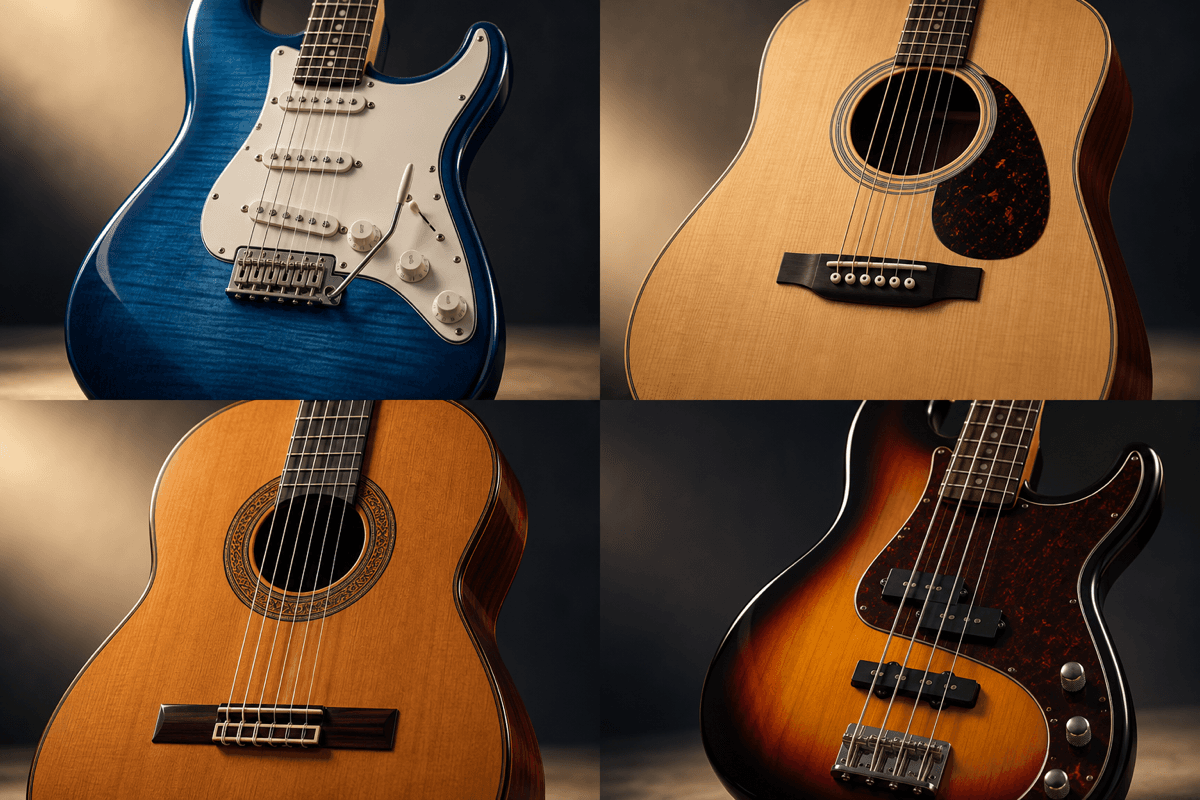
2. Choose the instrument family before the model
| Family or decision | Use this starting question | Continue here |
|---|---|---|
| Electric guitar | What sounds, controls and listening route are required? | Electric guitar selection |
| Steel-string acoustic | What body fit, acoustic response and care suit the use? | Acoustic guitar selection |
| Steel versus nylon | Which string system and playing context are intended? | String-family comparison |
| Bass | Is the intended part a bass role? | Bass family overview |
Fender’s beginner guidance presents acoustic, electric and bass options around personal needs and equipment. Yamaha cautions that steel and nylon systems are not interchangeable. Treat these as different instruments to select for a task, rather than a sequence you must progress through. Confirm the actual strings and model when narrowing the family.
Sources: Fender: personal beginner needs and equipment (manufacturer guidance); Yamaha: acoustic guitar selection and string-family limits
3. Test physical fit while seated and standing
Compare the actual instrument in your usual position. Check body depth, edges, neck position and balance with the support or strap you will use. Try the musical movement you need at a comfortable range; stop and reassess if the trial is uncomfortable.
Taylor’s comfort explanation distinguishes holding the body from playing the neck. It does not establish a universal fit by hand size, age or profile label. Record body fit and grip separately, then consult the fit guide if reach or spacing determines the choice. A brief trial is personal evidence under those conditions, not a prediction of every session.
Sources: Taylor: body comfort and neck playability (manufacturer explanation)
4. Translate specifications into player consequences
| Feature | Decision question | Focused guide |
|---|---|---|
| Acoustic top | What is verified about each panel, and which complete guitar do I prefer? | Solid top and laminate |
| Pickup arrangement | Which positions and control functions do I need? | Pickup construction and comparison |
| Neck spacing | Which dimension affects my actual playing task? | Nut width and string spacing |
| Bridge | Do I need pitch movement, and can I manage the chosen system? | Fixed bridge and vibrato comparison |
For every decisive feature, record the exact model, document or drawing and the question it answers. A feature name does not certify performance or rank the whole instrument. If the information is missing, ask for it. If the feature does not serve the brief, its presence need not decide the purchase.
5. Separate design from current setup condition
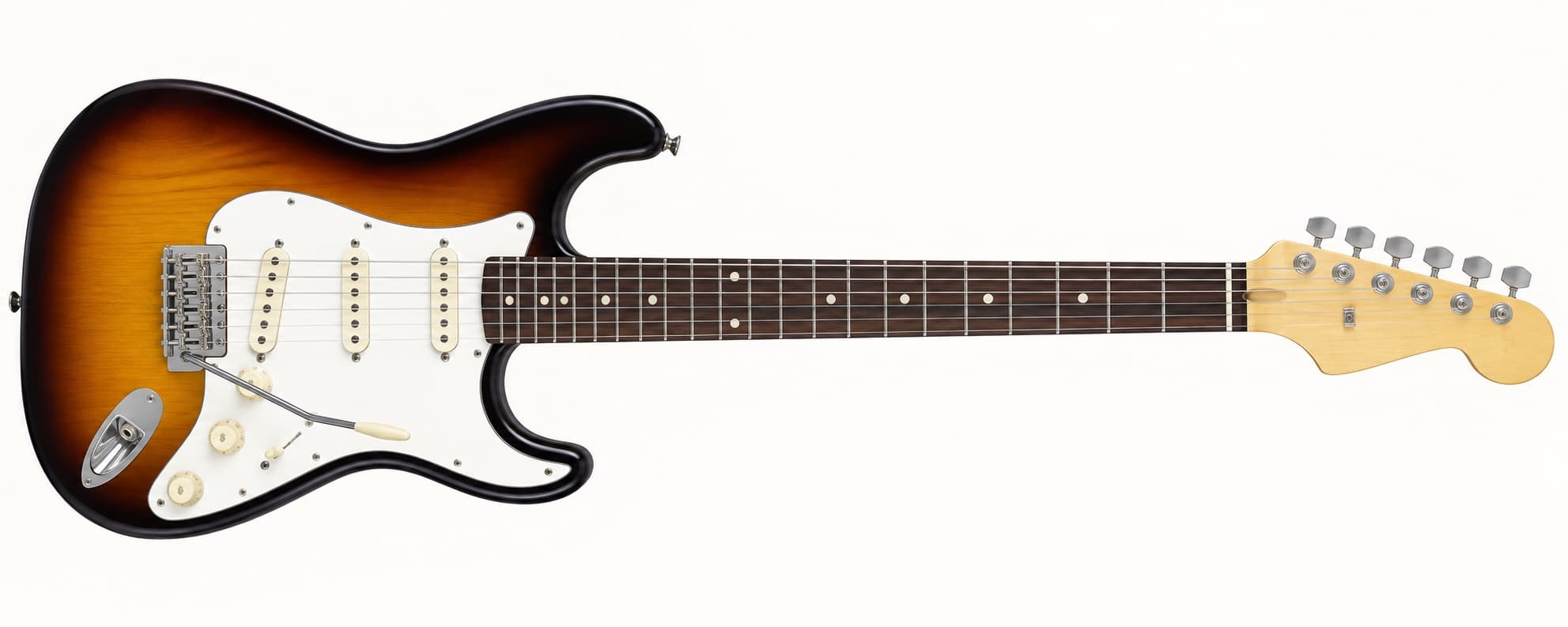
Keep design, present condition and possible work separate. A setup cannot change the basic body dimensions. Conversely, an uncomfortable or noisy sample needs assessment before you infer that the design itself is wrong. Record the symptom, position, strings and circumstances before requesting an adjustment.
Fender’s factory specifications explicitly depend on its fitted strings and specified model/method conditions. Do not treat them as universal purchase thresholds. Use the action guide for measurements and the unit-inspection guide for condition questions. Obtain a suitable assessment of unexplained structural issues or limited adjustment; an assumed inexpensive setup is not a confirmed solution.
Sources: Fender Support: factory-string and model conditions for setup references
6. Compare measurements on the same basis
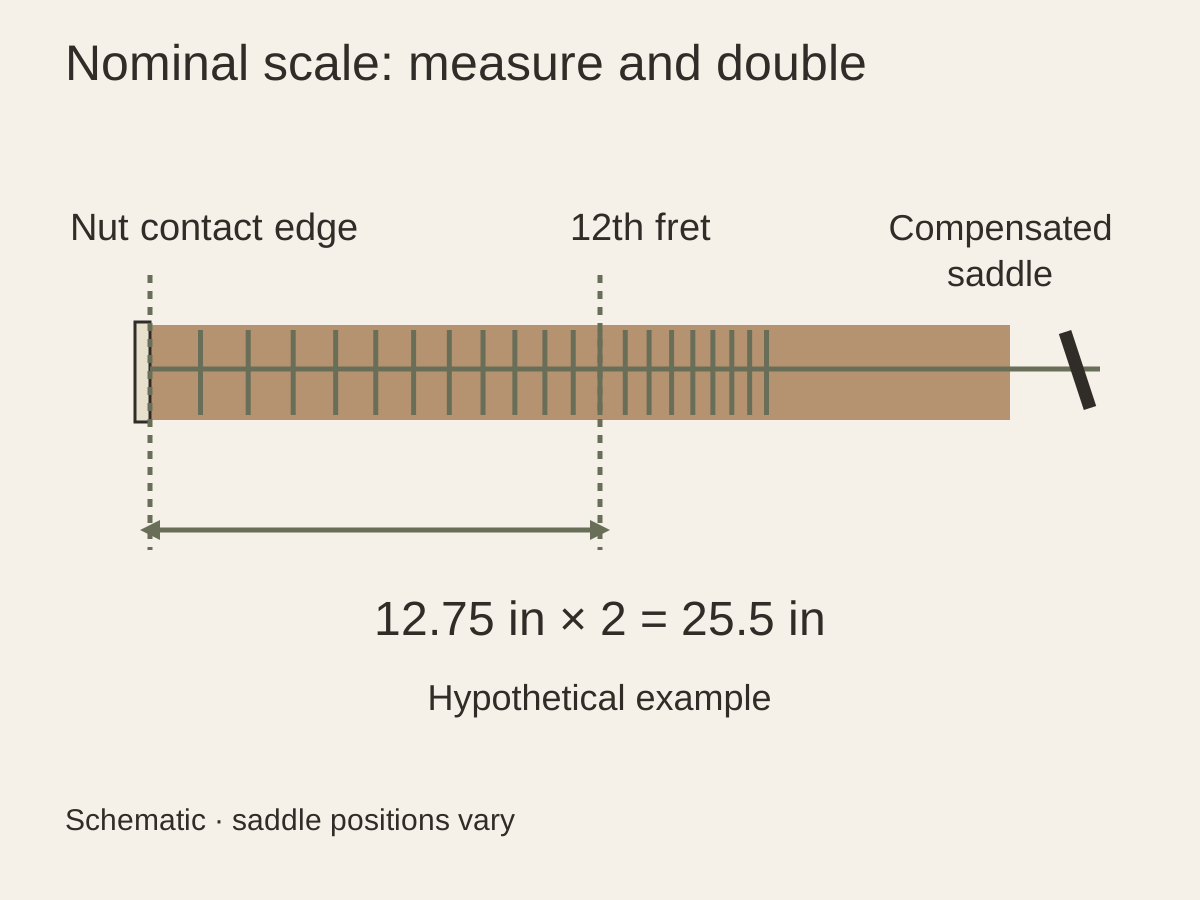
Keep nominal dimensions separate from unit observations. For a conventional twelve-tone equal-tempered layout with an uncompensated nut, the nominal scale reference is twice the distance from the nut contact edge to the 12th-fret crown along the string path. StewMac’s example separates that reference from compensated saddle positions. Special nuts, zero frets and unusual layouts require the maker’s method.
The schematic’s 12.75 in × 2 = 25.5 in is a hypothetical calculation, not a measured guitar or recommended size. The scale guide explains the reference and limits. Do not substitute total instrument length, one saddle distance or fret count for nominal scale.
Use matching definitions and units in the comparison. Nut width and outer-string spacing are different fields. Keep the original figure, source, unit and measurement method; mark a missing dimension as unknown, not zero. A number that matters but cannot be verified remains a question before purchase.
Sources: StewMac: nominal scale and separate compensated saddle positions
7. Test the complete sound system
For electric candidates, keep the cable, amplifier channel and input settings fixed for a first pass with the same familiar passages. This shows how each complete guitar drives that rig. Then compare short recordings at similar playback volume if possible, so a louder take does not decide preference. Changing guitar volume before a driven amp changes the drive too; record it as a different condition.
Use the pickup listening routine for the details and limits. Different guitars do not isolate one pickup feature. For an acoustic, keep room, listening position and passages consistent, record strings and setup differences, and test any required pickup through its own planned signal path. Acoustic and amplified preference remain separate decisions.
Operate the controls you actually need with permission. Note unwanted noise, intermittent output and unfinished tests without diagnosing a part from the symptom alone. Keep the conditions with the observation.
8. Price the complete ownership decision
Add the instrument, required listening equipment, protection, strings, assessed service and other necessary items. Distinguish known prices or quotations from allowances and unresolved costs. This guide verifies no market price, warranty or universal return right; check the actual seller’s written agreement.
For a used purchase, connect disclosed repairs and condition to the inspection record. For a remote purchase, confirm exact version, photographs of the offered unit where possible, included items, delivery and the available evaluation/return process. Images or a seller’s “plays great” statement do not establish your fit or hidden condition. Keep the documents on which the decision depends.
9. Use a repeatable short-list test
This is a proposed personal comparison, not a completed test or a fixed-duration inspection.
- Retain candidates that can meet the essential musical use and complete budget.
- Identify each unit, strings, tuning, present setup and listening conditions.
- Try fit and the required passages using comfortable movements.
- Compare the sound with the appropriate acoustic or electric procedure above.
- Check relevant controls and normal functions with permission.
- List the useful difference, compromise, required work and unknown for each candidate.
- Resolve essential unknowns and verify the actual purchase terms before deciding.
| Decision field | Keep as evidence |
|---|---|
| Requirement | Musical task and essential fit/function |
| Verified fact | Exact-model document or unit record and its conditions |
| Observation | What you heard or felt on this guitar, under the named conditions |
| Unknown and next action | Missing information, suitable inspection or another comparison |
| Choice | Accepted compromise, full cost and agreed terms; or defer |
If strings, bodies and electronics also differ, the trial compares complete instruments. It does not establish a universal cause or a family ranking. Essential condition and fit questions cannot be cancelled by a high score elsewhere.
Three common decisions worked through
These are hypothetical decision examples, not guitars we tested.
A first-time player choosing acoustic or electric
If lessons and practice require amplified sounds and quiet monitoring, verify the electric listening route and the learner’s fit. If unplugged accompaniment is the task, try suitable acoustic candidates. Use the first-guitar page for the learning-specific checks.
A performer comparing two acoustics
If the amplified path is essential, an untested pickup leaves that requirement unresolved even when the unplugged sound is preferred. Test the actual system or obtain suitable evidence before letting a construction label decide.
A player choosing between two electrics
If both meet the needed sounds, fit and condition, personal preference may choose the compromise. More switching options do not supply value when the positions are not useful. If one has an unexplained function problem, resolve it rather than guessing a cheap repair.
Conclusion: write the reason for your choice
Write the musical task, why this particular instrument fits, the conditions of comparison, accepted compromises and confirmed ownership requirements. That explanation should show which facts are verified and which observations are personal.
When an essential remains uncertain, obtain evidence or defer. Continue through the specialist pages for the question that changes your decision. A general framework organizes those checks; it does not certify a guitar, seller or future result.
Frequently asked questions
What should I decide before comparing guitar specifications?
Define the music, player, tuning, setting, essential equipment and complete budget. Then choose a family and use the focused guide for the feature that determines your purchase.
Is a more expensive guitar always easier to play?
No price establishes comfortable fit or present condition. Try the actual instrument and assess unresolved setup questions before relying on a price or material label.
Which guitar specification matters most?
Prioritize the fields tied to your essential musical task. Fit, setup, usable sound and ownership requirements interact; keep each with its source or observation rather than selecting one universal winner.
Should I trust factory setup measurements?
Treat them as conditional maker references. Record model, fitted strings, tuning, string/fret and procedure, then check the actual instrument. They are not universal pass/fail limits.
Can I choose a guitar online without playing it?
Exact specifications, unit evidence, assessed condition and workable seller terms can reduce uncertainty. They do not prove personal feel or every hidden issue. Unresolved essentials need further evidence or a deferred decision.
How this guide was prepared
We read the site’s first-guitar, electric, acoustic, used-inspection and scale guides to define this page’s navigation role. We checked Fender’s beginner and conditional factory-setup guidance, Yamaha’s acoustic-selection PDF, Taylor’s 2017 comfort explanation and StewMac’s 2013 nominal-scale/compensation example. Manufacturer and repair-source descriptions support specific definitions, not universal model rankings. The brief, proposed comparison and decision record are editorial suggestions; hypothetical scenarios and diagram arithmetic are not test results. We played, measured and repaired no instruments, verified no current price or seller terms, and performed no human expert or clinical review. AI assistance was used for source comparison and language checks.
Documentation checked .
Recast the page as a full purchase-process navigator with specialist links, corrected nominal scale versus compensated string length, separated amplifier drive from playback volume, added evidence/unknown and buy/defer boundaries, and replaced a misleading legacy scale image with a labelled existing schematic.
Sources and further reading
- Fender: personal beginner needs and equipment (manufacturer guidance)
- Yamaha: acoustic guitar selection and string-family limits
- Taylor: body comfort and neck playability (manufacturer explanation)
- Fender Support: factory-string and model conditions for setup references
- StewMac: nominal scale and separate compensated saddle positions