The decision in brief
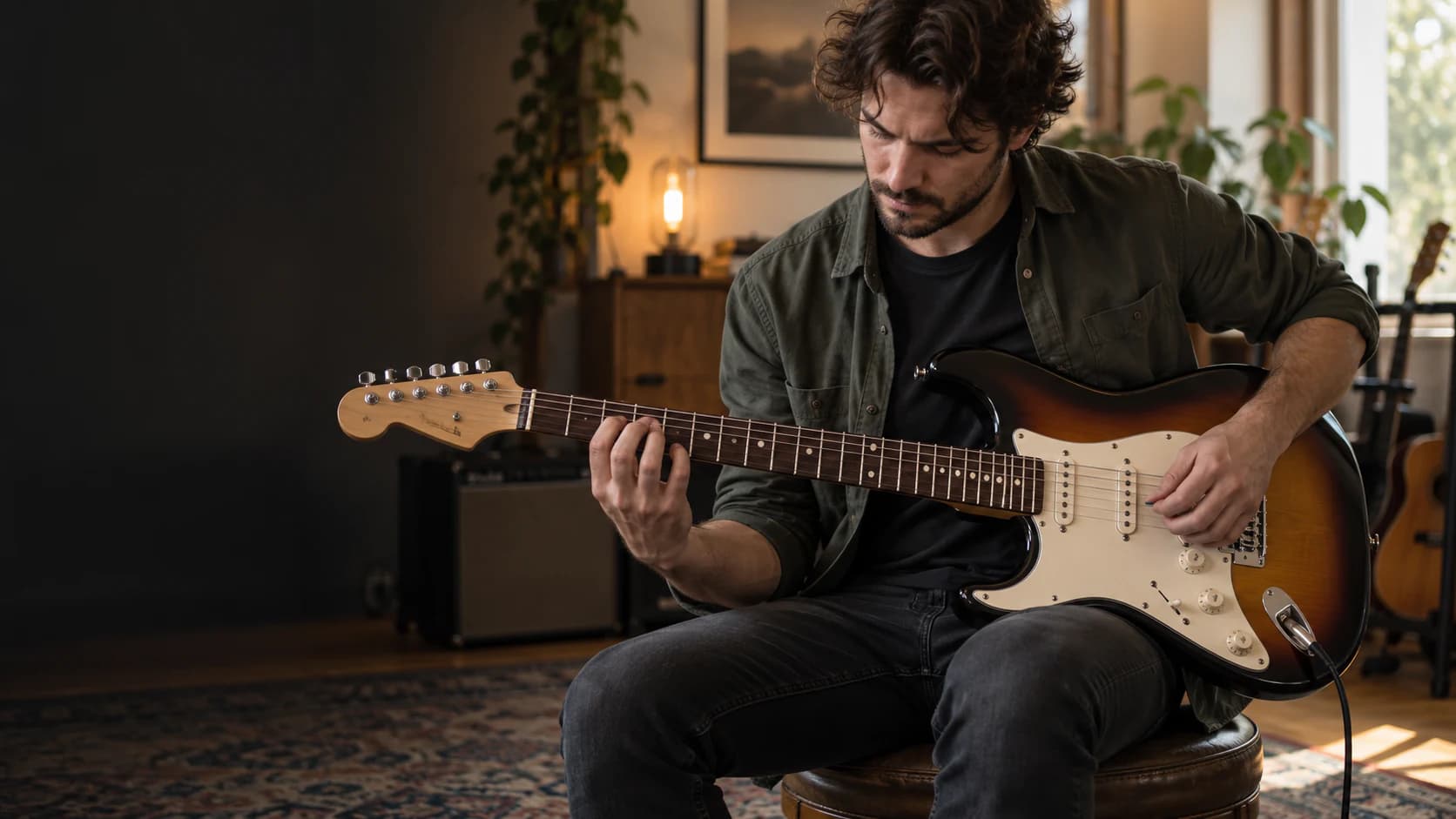
A conventional left-handed setup uses the right hand to fret and the left hand to pick, with the low string on the upper edge in the normal playing position. Choose an orientation through a supported trial and your existing playing habits, then verify the actual instrument’s nut, compensation, controls and fit. Reversing strings alone does not confirm a complete conversion. A brief trial cannot predict learning speed or establish a medical or handedness rule.
What matters most
- Record hand roles and actual string order separately.
- Assess nut, compensation and directional parts before treating reversed strings as a conversion.
- Use a suitable trial for observations, without predicting learning or medical outcomes.
What makes a guitar left-handed
In a conventional left-handed playing position, the neck extends toward the player’s right, the right hand frets and the left hand picks or strums. For conventional six-string standard tuning, the string pitches remain E–A–D–G–B–E from low to high. In the usual holding position, the low string is on the upper edge nearest the player’s face.
Fender’s left-handed guide describes these hand roles and directional controls. Hand roles, string order and the instrument’s build are separate facts. A photograph can be mirrored, so verify the actual guitar instead of identifying its orientation from an image alone.
Choose the picking-hand orientation before shopping deeply
If you are beginning and uncertain, try suitable instruments in both orientations with a teacher or helper when available. Use the same easy rhythm and fretting task, similar support and an acceptable setup. Record ease of picking, fretting reach, control access and discomfort. Stop if the trial is uncomfortable.
This is an editorial observation method, not a validated aptitude test. Writing hand and a few minutes of novelty do not establish which orientation will produce faster learning. If the comparison is unclear, revisit it with suitable instruments rather than force a conclusion from one difficult sample. An established comfortable orientation is relevant to the decision.
Why a purpose-built left-handed guitar is more than reversed strings
| Part or relationship | Check on the actual model | Question to resolve |
|---|---|---|
| String order and nut | Intended string gauges, slots and order | Can strings seat and move appropriately? |
| Bridge or saddle | Compensation and adjustment range | Can fretted notes be set up appropriately? |
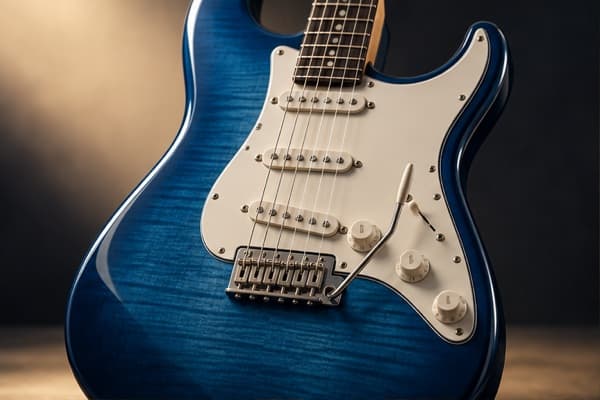
| Controls, jack and vibrato arm | Location and access in the playing position | Can you operate them without obstruction? |
| Body, heel and pickguard | Access, balance and protection | Do the actual features suit your hand roles? |
| Internal construction | Maker’s specification for this variant | Is an orientation-dependent detail documented? |
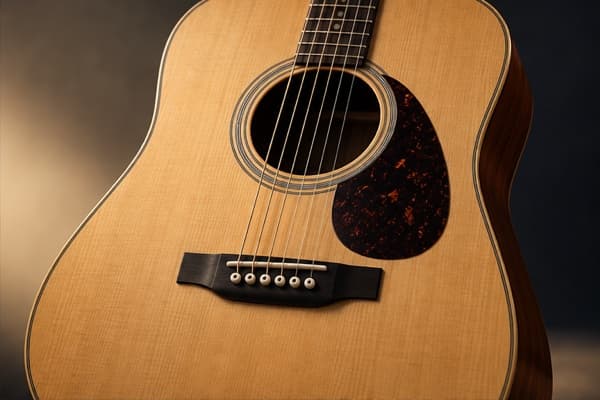
A left-handed listing does not guarantee that every detail is an exact mirror of a right-handed version. Confirm the version and current specification. Martin’s D-28 left-hand listing is one documented availability example, not evidence of stock, price or identical specifications across all handed variants.
Plan for availability without letting it dictate the hand choice
Check the models you can actually try or order; this guide confirms no market-wide inventory or price premium. Start with required instrument family, fit, controls, bridge, essential electronics and total ownership budget. Mark preferences separately.
For an untried purchase, ask the seller to confirm handedness, exact unit, string order, condition and included items. Read that seller’s current delivery, setup and return terms before deciding. A listing or demonstration of the right-handed version does not verify the left-handed unit’s fit or condition.
Can a right-handed guitar be converted to left-handed?
A conversion needs assessment of the actual guitar. Gauge-specific nut slots may not suit the reversed string order. Bridge or saddle compensation may face the wrong way or have insufficient adjustment. Controls, jack, cutaway, pickguard and balance may remain directional.
Taylor’s Fall 2016 service answer, printed page 11 discusses intonation and internal bracing when a right-handed acoustic is restrung left-handed. It is an example from that maker’s designs, not a rule that every acoustic uses the same bracing or conversion procedure. Do not transfer its historical repair-price example to a current quote.
Ask a qualified technician for the required parts, adjustment range, reversible steps and total cost before buying a donor instrument. A symmetric outline or adjustable bridge alone does not establish a complete conversion. Do not cut a nut, alter a saddle, drill or route before that assessment.
Evaluate fit and setup like any other guitar
Yamaha’s fit guidance emphasizes holding comfort and neck reach. Apply those questions to the left-handed instrument you will use. Compare body support, neck reach, actual string spacing, neck depth and control access; handedness alone establishes none of them.
Try familiar notes, chords and relevant upper positions without unusual force. Note persistent noise or effort and have uncertain setup or structural questions assessed. Do not treat difficult playing as an unavoidable left-handed issue or promise that routine adjustment fixes every problem.
Make lessons and diagrams work with a left-handed instrument
Fender’s tablature explanation identifies tab lines as strings and numbers as frets. For conventional six-string standard tuning, the top line represents high E and the bottom low E. That representation is unchanged when the same string-and-fret map is played on a correctly strung left-handed guitar; do not reverse tab rows solely because of handedness.
For photographs or chord boxes, identify the viewpoint and the string labels before adapting the visual. Use picking hand, fretting hand, string name and fret number in lessons. Playing a right-handed guitar upside down without reversing the strings creates a different physical string order; describe that arrangement accurately to a teacher or repairer.
Inspect a used left-handed guitar carefully
Ask whether the instrument was built left-handed, converted or simply restrung. Compare the actual nut, string order, saddle or bridge, controls and repair history with its documentation. Keep invoices or information about replaced parts when available.
A tuner reading of open strings does not certify intonation or conversion work. Use the intonation guide to understand the separate check, and seek assessment for unresolved structural or adjustment questions. Confirm case fit on the actual body. No rarity, resale or condition premium is established here.
When this handedness advice changes
An established upside-down string order is a different playing arrangement. Record the actual low-to-high order and required tuning rather than relabeling it as a conventional mirror setup. Lessons, compensation and service need that information.
For pain, injury, limited movement or valuable instruments, seek appropriate individualized teaching, health or instrument advice. This article does not assess medical suitability or prescribe a change of orientation. Avoid permanent modifications as a trial.
Left-handed guitar buying checklist
- Record current hand roles and playing experience.
- If uncertain, try suitable orientations with the same easy task and note the instrument/setup differences.
- Confirm the actual string order, nut and compensation, plus access to directional parts.
- Record fit, function, required work and unresolved checks on the exact unit.
- Compare total cost and actual seller terms. Keep conversion scope separate from a purpose-built listing.
The record distinguishes an observation from a conclusion: “This instrument felt easier for this task” does not prove innate ability or long-term learning speed. Keep an unclear orientation decision open for a further suitable trial.
Conclusion: settle orientation, then buy the complete guitar
Choose the hand roles and string arrangement that support your playing, using a suitable trial and existing habits where relevant. Then verify the actual guitar’s fit, compensation, controls and condition.
A correctly documented left-handed instrument or an assessed conversion can be evaluated on its own terms. Reversed strings, a mirrored photograph and a category label cannot replace those checks.
Frequently asked questions
Does writing left-handed determine guitar orientation?
This guide establishes no such rule. Compare suitable instruments and both hand tasks when uncertain, and consider your established playing habits. A short trial cannot predict learning speed.
Is reversing the strings a complete conversion?
Not by itself. The nut, compensation, controls, body access and any orientation-dependent construction need assessment on the actual instrument before alteration.
Do left-handed players reverse tablature rows?
For a correctly strung conventional six-string guitar in standard tuning, tab still identifies strings and frets: high E is the top line and low E the bottom. Check the actual string order if playing an upside-down arrangement.
How this guide was prepared
We checked Fender’s hand-role and tablature descriptions, Taylor’s Fall 2016 conversion answer on printed page 11, Yamaha’s fit guidance and Martin’s current left-hand listing. Manufacturer instructions are used within their stated scope; historical repair prices and learning-performance claims are not adopted. The orientation record is an editorial trial proposal, not a validated aptitude or clinical test. We played, converted and inspected no guitars and verified no local inventory, seller terms or prices. Existing images are illustrations and do not establish an actual model’s handedness or conversion condition. AI assistance was used for source comparison and language checks.
Documentation checked .
Separated hand roles, string order and model construction; removed implied short-trial aptitude and availability guarantees; clarified conversion, tablature and evidence limits; added a recorded orientation check and corrected illustrative image claims.