The decision in brief
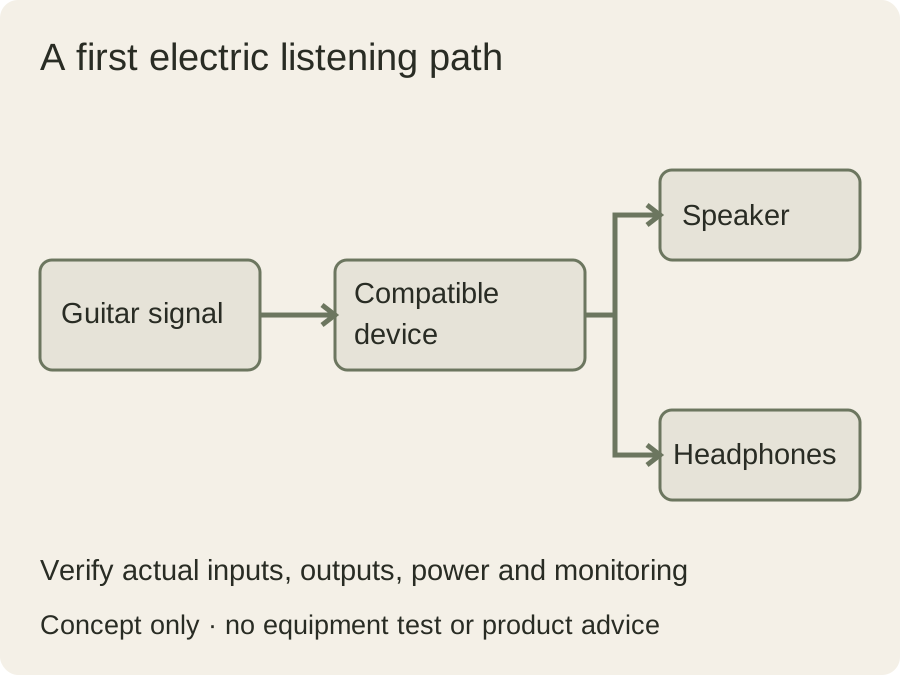
Choose a first electric guitar and a working listening path together. Compare fit and basic function on the exact guitar, then demonstrate the sound through the amp or instrument-capable interface you will use at home. Headphones connect to a device designed to drive them, not directly to a normal passive guitar output. Include connections, power, any required software, protection and setup in the budget. Pickup count, a beginner badge or price alone does not establish suitability.
Begin with the music and practice room
List three songs you want to play during the first month. A clean chord part, a distorted riff and a melodic line point to different sounds, but none requires a specific body silhouette to start learning. Then name the room and the volume at which you can practise. An electric guitar is quieter than a resonant acoustic when unplugged, but it is not silent, and its intended amplified sound requires an amp, interface or another suitable monitoring path.
If you are still deciding between acoustic and electric, use our acoustic vs electric comparison first. This article assumes the electric direction has been chosen and narrows the first working setup. The broader electric-guitar buying guide covers the detailed specification decisions that become useful later.
A beginner's ideal first instrument is not necessarily the least expensive model or the one with the most switching options. It should make the first weeks of tuning, holding a comfortable position, hearing notes and practising predictable. These are observable tasks you can test in a shop.
Price a complete playable kit
| Part | Confirm before paying | Record |
|---|---|---|
| Guitar | Exact model/unit, handedness, strings and condition | Work still required |
| Listening device | Instrument input; usable speaker or headphone output | Model, settings and intended room |
| Connections and power | Correct cable, approved supply, any host/driver requirements | All included and missing parts |
| Software if used | Compatibility, routing and any recurring cost | Can the required sound be heard? |
| Care and service | Tuner, fitted protection, strap/support and setup | Actual quotes and seller terms |
A guitar cable, amplifier, headphone device or audio interface may be sold separately. Demonstrate the complete chain before buying a bundle. A headphone-shaped socket is not enough information: read its label and the model instructions. A normal passive electric-guitar output does not drive headphones directly. Use the device’s designated headphone output and start its level low; do not substitute a speaker output.
For a documented example, Focusrite’s Solo 4th Gen guide connects a guitar to its instrument input, headphones to its headphone output and a computer by USB. This is a connection example, not a product recommendation or a wiring rule for every interface. Check the actual device’s input mode, connectors, power and supported host or standalone operation.
Compare the total you will actually pay, including necessary setup, accessories and any software charges. No current prices or universal amplifier-wattage target were checked for this guide. A bundle is useful only if each part serves the intended practice task.
Sources: Focusrite Solo 4th Gen: instrument input, headphone output and connection examples
Test body and neck fit before pickup labels
Sit the way you will practise at home. Can the guitar rest securely without your fretting hand supporting its weight? Reach the first fret and then the middle of the neck without twisting your wrist or raising your shoulder. Stand with a strap if standing performance is part of the plan. Notice balance, edge pressure, control placement and whether the body shifts as you play.
Neck width, back profile, scale length, fret size and string action interact. A narrow neck is not automatically best for small hands, and a short scale is not automatically easier when the guitar has high strings or poor fretwork. Try a first-position chord, a single-note passage and a simple bend on the same two or three candidates. Our scale-length guide explains one important variable without treating it as a verdict.
Try only comfortable movements. Stop if the position produces pain or numbness, and ask a teacher to review fit and technique before continuing. This guide does not diagnose a physical condition or require a beginner to endure discomfort to prove the guitar is suitable.
Keep the first controls understandable
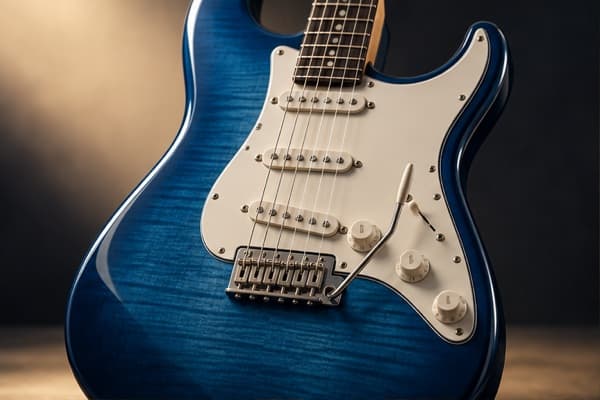
A solid-body six-string guitar with understandable controls is one practical starting point. It is an editorial filter, not a requirement for every learner or genre. Ask the seller to demonstrate each pickup position with a clean sound, then try the sound needed by your songs. Yamaha describes conventional single-coil and two-coil humbucking designs and hum cancellation; that does not establish silence from every noise source or the performance of an individual model.
Pickup placement, switching, guitar volume and the listening device all belong in the observation. Compare the actual controls using the HSS vs SSS guide when that layout difference matters. One good, understood sound can be more useful at first than switching positions you cannot yet explain.
A fixed bridge can be a practical option when simple string changes and retuning matter. If vibrato is central to the music, ask for a demonstration of normal use and string replacement. Yamaha’s first-electric guidance identifies tuning and restringing complexity in locking systems. We do not adopt its universal solid-body choice, automatic vibrato purchase or wattage and bundle recommendation. Choose around the actual technique, instrument instructions and maintenance you can manage.
Sources: Yamaha: pickup construction and hum cancellation; Yamaha: first electric guitar and locking-vibrato maintenance
Inspect the exact guitar you will take home
- Ask permission to use the controls and agree a suitable demo level; identify the actual unit.
- Have it tuned to the intended pitch. Record strings and any setup just performed.
- Play open strings and comfortable notes across each string; ask a teacher or seller to demonstrate positions you cannot play.
- Test usable pickup positions and controls through a clean listening path; then try the required sound.
- Check for intermittent sound during normal cable use without forcing the jack.
- Record unresolved buzz, tuning or control issues and the seller’s proposed remedy before choosing.
A shop screen is not a structural inspection or a guarantee of future tuning. The action guide and fret-buzz guide distinguish possible causes. Do not turn a rod, move saddles or open electronics merely to finish this list. An unresolved structural or electrical concern needs an appropriate technician.
For remote purchases, confirm model code, handedness, exact-unit or representative photographs, fitted strings, accessories and the seller’s applicable return and service terms. Preserve delivery evidence before changes. No particular seller’s policy or warranty region has been verified here.
Make the first practice session easy to repeat
Have the seller demonstrate the intended home setup, including headphones when required. With software, confirm that you hear the sound after the relevant amp/effect processing, rather than accidentally hearing an untreated input or two routes at once. Ask how to repeat the working settings, power and routing.
Focusrite defines direct monitoring as routing an input to headphone or line outputs with very little delay; the signal can also reach recording software. Direct monitoring of the input does not itself add the computer’s amp plugin. The actual device and software determine the available routes. A delayed or doubled sound is a setup question to resolve before judging the guitar.
Keep an initial practice record: exact unit, tuning and strings; seated/standing support; listening device and settings; connections; demonstrated sound; unresolved issue and who will check it. Repeat the same short chord and melody after any agreed change. This is a proposed personal comparison, not a listening test performed by our team.
Store the instrument according to the maker’s guidance and use fitted protection. Start with a repeatable practice sound, then explore other controls one at a time. The broader electric buying guide is the next step when a specific feature matters.
Common first-purchase mistakes
Do not buy only by appearance, pickup count or a “beginner” badge. Do not compare a well-set-up guitar with a neglected one and attribute all differences to price or body shape. Do not omit the amplifier or headphones from the budget. Do not assume that a more complex bridge or extra electronics must be better for learning. And do not treat one online demonstration as a controlled comparison: player, strings, amp, microphone and processing may all differ.
For the first month, write down any genuine obstacle: reach, finger pressure, tuning, room volume or a sound missing from the current setup. Solve the observed problem before purchasing another accessory. A clear reason for a later upgrade is more useful than a feature list assembled before you have played the first instrument.
When this advice changes
A player who specifically needs jazz hollow-body feedback and feel, an extended-range metal part or a left-handed instrument may reasonably start outside the common solid-body baseline. A child or a player with a mobility limitation should prioritize individual ergonomics and appropriate guidance. Shared housing may make headphone compatibility decisive, while ensemble rehearsals may make a more capable amplifier necessary.
These situations change the specification filter, not the basic method: play the actual instrument, test the intended sound path and confirm the complete setup. For handedness construction checks, see the left-handed guitar guide.
A first electric guitar decision in one pass
Choose an electric because its musical role and practice volume suit you. Select two or three guitars that fit the complete budget. Play the same short material through the same clean listening setup, check comfort and basic function, then compare the exact parts of the sound you need. Write down the trade-off and choose the instrument you will be willing to tune and play tomorrow.
If two candidates meet the essentials, personal preference is a legitimate tie-breaker. Neither brand reputation nor an isolated specification can replace fit, condition and a usable signal chain. After some playing experience, return to the general electric-guitar guide to understand which feature would materially improve your next decision.
Frequently asked questions
What is a good first electric guitar?
A comfortable, correctly set-up guitar that stays in tune and works through your actual practice amp or headphone path. No one model is best for everyone.
Do beginners need an amplifier?
Use a device that accepts the guitar signal and provides usable sound: an amp, a suitable headphone device, or an instrument-capable interface with the required monitoring route. A normal passive guitar output is not a headphone output. Demonstrate the complete chain.
Is a fixed bridge better for a beginner?
It is often simpler to restring and retune, but a vibrato can make sense when its technique is important and the player accepts the setup work.
Should a beginner choose single coils or humbuckers?
Start with the music and evaluate usable sounds and noise through the intended amp. Either pickup family can work; layout alone is not the decision.
How much should a first electric guitar cost?
There is no universal figure. Budget for the complete usable kit, inspect condition and setup, and compare instruments you can comfortably afford to use and maintain.
How this guide was prepared
We checked Yamaha’s first-electric and pickup explanations, and Focusrite’s dated input/output and direct-monitoring documentation. These are manufacturer examples, not recommendations or tests of a starter kit. We do not adopt a universal wattage, automatic vibrato purchase or solid-body requirement. The practice record and shop sequence are editorial suggestions. We did not play a guitar, verify current prices, diagnose discomfort, measure noise or test interface compatibility. Actual model instructions, demonstrated routing and the seller’s terms govern the purchase.
Documentation checked .
Added input/output and software-monitoring distinctions, a repeatable personal practice record and nearby sources; qualified the shop screen and replaced unverified real-photo wording with an accurate illustration description.