
The decision in brief
Choose between a Telecaster and a Stratocaster by comparing the actual models’ pickup switching, bridge operation, control access and physical fit. A conventional SS Tele and SSS Strat offer different switching choices, but the family names cover many configurations. Neither name alone establishes the better guitar for a genre or for your hands.
Start with the model and configuration
Write down the full model name, pickup layout and bridge before comparing two guitars. SS means two single-coil pickups; SSS means three. Those labels help identify the layout, but they do not fully describe wiring, output or the available switching.
For a concrete reference, the table below uses Fender’s Player II SS Telecaster and Player II SSS Stratocaster. These are configuration examples, not recommendations to buy either model. Specifications can vary across versions and modified instruments; confirm the actual guitar and its documents.
If one candidate has a bridge humbucker, this comparison is no longer SS against SSS. Use HSS vs SSS to address that configuration difference before attributing it to the body shape.
Sources: Fender Player II Telecaster: SS specifications; Fender Player II Stratocaster: SSS specifications
Compare switching and bridge operation first
| Documented feature | Player II SS Telecaster | Player II SSS Stratocaster |
|---|---|---|
| Pickup selection | Three positions: bridge, bridge plus neck, neck | Five positions: bridge, bridge plus middle, middle, middle plus neck, neck |
| Bridge | Six-saddle string-through-body Tele bridge with block steel saddles | Two-point synchronized tremolo with bent steel saddles |
| Useful tryout question | Do the available pickup combinations and fixed bridge meet the parts you play? | Will you use the additional pickup combinations and the pitch-changing bridge? |
The first two rows summarize the named models’ official specifications. The last row is an editorial decision prompt. More selector positions provide more listed combinations; they do not prove that a player will prefer those sounds. A tremolo-equipped guitar also needs to be assessed in its actual setup.
Sources: Fender Player II Telecaster: SS specifications; Fender Player II Stratocaster: SSS specifications
Compare usable sounds through a common rig
Use the same amp or monitoring path and a short passage you know. Begin with a relatively clean sound if it helps you hear the differences, then check your intended driven sound as well. Keep the guitar controls and rig input settings fixed for the first pass, and note level differences. For a separate tonal-preference check, use short recordings with matched playback volume where practical. Changing the signal feeding a driven amp is a different condition. Keep every pass at a comfortable listening level.
First compare bridge alone on each guitar, then neck alone. Next try each guitar’s available combined positions. Note whether a setting suits your accompaniment, single-note line or chord voicing. Do not assume that similarly numbered switch positions select the same pickups.
Two complete guitars differ in several ways at once. This tryout can tell you which guitar and setting you prefer for a task; it cannot prove that one body outline or wood species caused the difference. The pickup description guide explains why layout, sensing method and switching are separate questions.
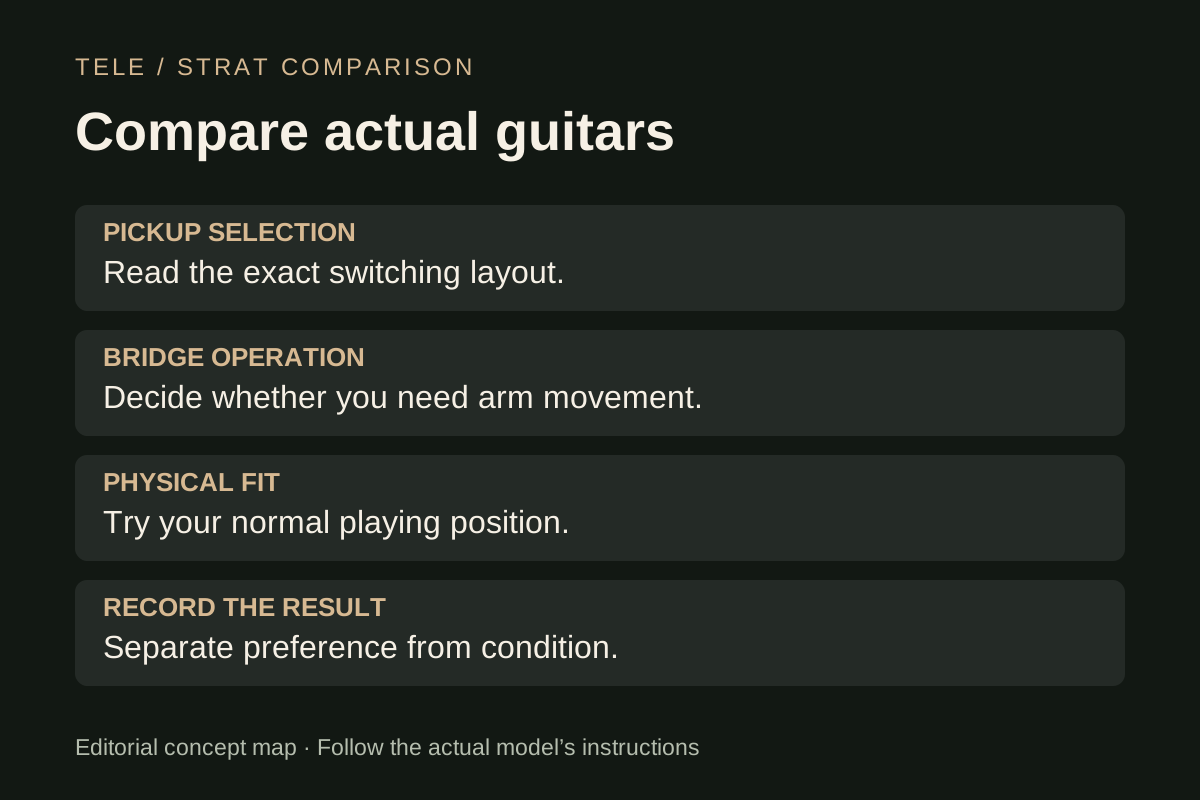
Try the bridge and the playing position you will use
Decide whether pitch movement from a tremolo arm is part of your playing. If so, try the actual guitar’s arm action and check its return with a tuner after a modest movement that the shop or owner permits. Follow the instrument’s instructions. A successful short tryout is an observation of that instrument, not a guarantee for all examples.
If you prefer a fixed bridge, assess the actual bridge’s feel under your picking hand and whether the guitar stays in tune for the parts you play. Neither bridge category removes the need for a sound setup. The fixed bridge vs tremolo guide explains the wider setup tradeoffs.
Try each guitar seated and, if relevant, standing with a suitable strap. Check the forearm contact, picking-hand position, neck reach and access to the controls. Body contours and familiar silhouettes do not establish comfort for every player. Make a note of any awkward reach before deciding that it is something you should tolerate.
Separate preference from a condition problem
| Task | Record for each actual guitar | How to use the result |
|---|---|---|
| Same phrase, neck and bridge pickups | Selected pickup, amp settings and what you hear | Identify sounds useful to your music, without assigning a genre restriction |
| Seated or standing passage | Body contact, reach and control access | Distinguish a preferred shape from discomfort |
| Bends or permitted tremolo movement | Tuning before and after; strings and setup if known | Ask about a repeatable problem instead of blaming an entire family |
| Full model and condition check | Configuration, modifications and issues needing attention | Compare the instrument offered, not the logo or a generic specification |
Buzz, an intermittent output or a persistent tuning fault should be understood before judging the model. Ask the owner or shop to explain the condition and any proposed setup work. Do not treat an unconfirmed repair as already completed. For a second-hand candidate, use the used guitar inspection checklist.
Choose the guitar that completes your actual tasks
If the SS guitar gives you the combinations you use, the fixed bridge suits your approach and the instrument fits, extra switching is not a requirement. If the SSS guitar’s additional positions and tremolo contribute to your playing and you prefer its fit, those are concrete reasons to choose it.
When neither feels right, compare another neck or another example before deciding that a whole family is unsuitable. Avoid universal claims that a Tele is only for one genre or that a Strat is automatically more versatile for every player. Your useful sounds and physical experience are the relevant criteria.
Before buying, confirm the exact configuration, included items, condition and any setup arrangements with the seller. Keep your comparison notes so the decision still makes sense away from the demonstration amp. For the broader personal buying process, continue with how to choose an electric guitar.
Frequently asked questions
Is a Stratocaster always more versatile than a Telecaster?
More pickup combinations do not automatically make a guitar more useful to every player. Compare the actual switching, bridge and usable sounds for the parts you play, and check the exact model rather than relying on its family name.
Is either guitar easier for a beginner?
The family name alone does not establish ease of playing. Try the actual neck, setup, reach, body contact and controls. A comfortable instrument with a suitable setup is a more useful starting point than a genre stereotype.
How this guide was prepared
We compared Fender’s Player II SS Telecaster and SSS Stratocaster specifications for switching and bridge design. Those named models illustrate the comparison; we did not inspect or play-test sample guitars. The tryout and decision record are editorial suggestions. Manufacturer descriptions establish listed configuration, not measured tone, comfort, tuning performance or a ranking of either family.
Documentation checked .