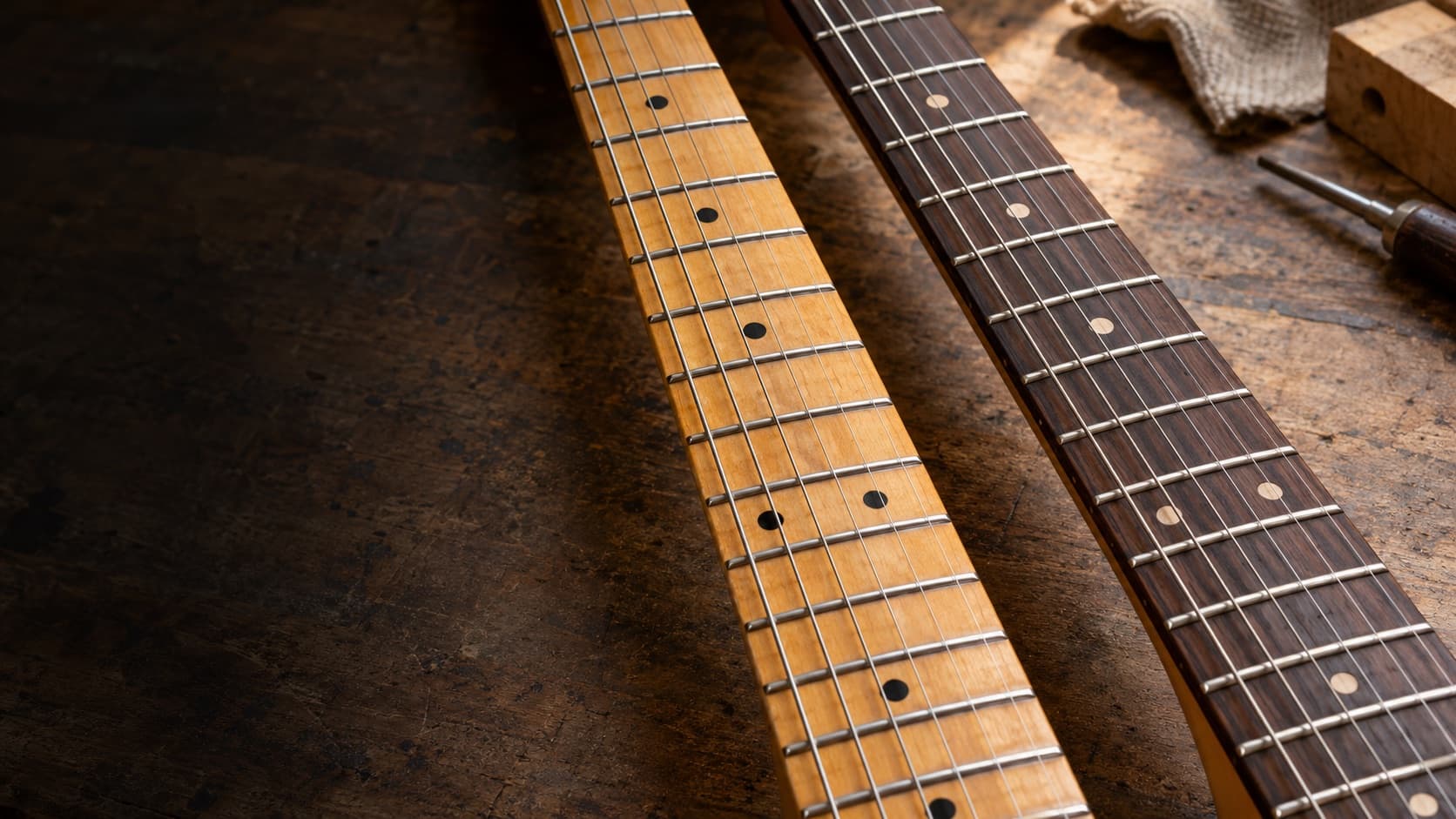
The decision in brief
Compare maple- and rosewood-board guitars by the actual surface treatment, neck fit, fretwork and condition. Many familiar maple boards are coated, while rosewood can be supplied unfinished, but verify the exact model rather than deciding from colour. The care method follows the documented surface and instrument instructions. Try the complete guitars under stated playing and listening conditions; board labels cannot establish a universal brighter, warmer or easier-playing result.
What matters most
- Verify the actual material and surface treatment.
- Record complete-guitar preferences without assigning their whole cause to board wood.
- Use care instructions for the exact instrument and surface.
Material is not the same thing as surface feel
Fender’s fingerboard description distinguishes its commonly lacquered maple feel from rosewood’s unfinished use. That manufacturer context does not define every maple or rosewood board. The actual coating and preparation belong in the specification record.
The board surface, neck-back finish, frets and strings are different parts of the contact you notice. Gloss, satin, wear and fret dimensions can differ within one material. Read the radius guide and neck-profile guide for geometry rather than inferring it from colour.
Sources: Fender: maker context for lacquered maple and unfinished rosewood
A comparison grounded in observable differences
| Question | Maple candidate | Rosewood candidate |
|---|---|---|
| Material | Verify exact model/version | Verify exact model/version |
| Surface | Identify coating and preparation | Identify coating and preparation |
| Appearance | Record colour/figure preference | Record colour/figure preference |
| Care | Follow the actual finish instructions | Follow the actual finish/unfinished instructions |
| Playing decision | Try complete neck and setup | Try complete neck and setup |
The columns are checks for two candidates, not a finish rule or a tone ranking. A dark stain, worn coating or substituted board can make appearance a poor guide to the actual material and treatment.
How to test playing feel without fooling yourself
Try the same useful chord, bend, slide and position shift. Note strings, fret dimensions, action, back contour and surface condition. If the candidates differ in those fields, describe a complete-neck preference rather than an isolated wood effect.
Record what changed: a fret end caught, a grip required more effort, or a shift felt comfortable in a stated posture. Do not predict learning speed or diagnose discomfort from the species. Use the nut-width guide and scale explanation when the issue is spacing or reach.
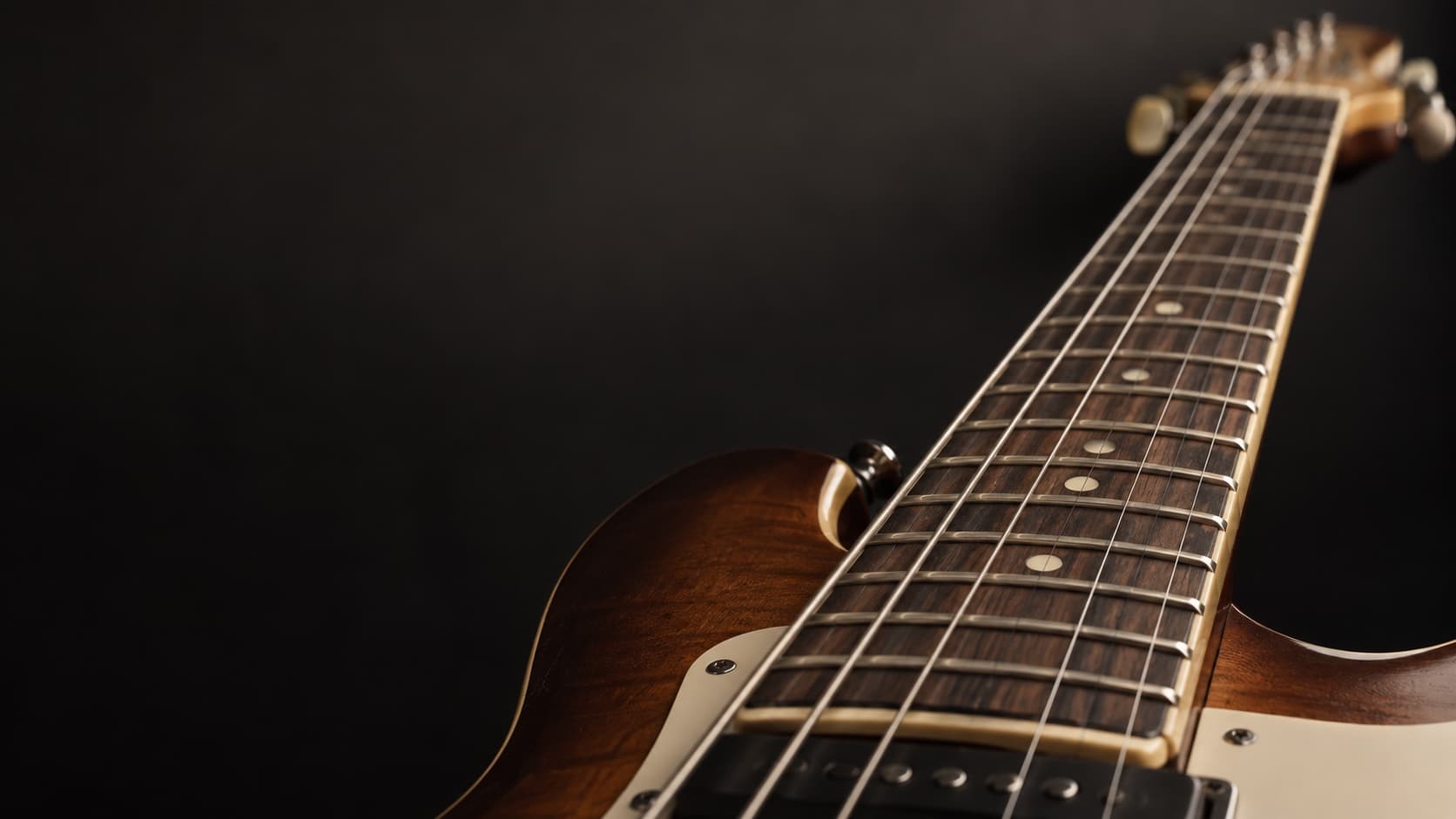
Can you hear maple versus rosewood?
Fender’s material page contains tone adjectives, but it supplies no controlled listening method or result isolating maple versus rosewood fingerboards. Those maker descriptions do not establish that every recording can be identified by wood or that one material always wins. This article supplies no isolated-material experiment either.
Use the same phrase and signal path. Leave amplifier input settings unchanged to compare drive, then compare sound preference at similar listening or recorded playback volume. Changing guitar volume before a driven amplifier also changes drive. Keep different pickups, strings and setup in the record; choose the sound you prefer without assigning its whole cause to the board.
Sources: Fender: manufacturer descriptions, not an isolated listening test
Care depends on finish, not a color label
Fender’s routine cleaning guidance calls for appropriate cloth wiping and care of the finish. Its finished-surface directions are not a species-identification method. Its Magic Fretboard Oil scope is unfinished fingerboards, including rosewood and ebony; the material list does not make it suitable for a coated board.
Find the exact instrument’s current directions before applying a product. Neither “maple” nor a dark colour says what is on the surface. Do not infer a fixed conditioning calendar, use an unfamiliar abrasive to change feel, or treat cracks and failing finish as dirt. Where condition or treatment is uncertain, ask the maker or a qualified technician.
Sources: Fender: routine finish care; Fender: unfinished-board oil scope
Appearance, sourcing and specification checks
Separate a documented material description from aesthetic preference. Fender’s material account describes colour variation; lighting, tint and stain further limit what a photograph can prove. Ask whether the neck is original and whether repair or refinishing altered its surface.
Keep model/version and any material or sourcing record together. A generic sustainability claim does not identify this unit or establish a transaction’s legal status. This guide issues no provenance certificate or international-transport determination; obtain current authoritative advice when the actual transaction requires it.
Sources: Fender: material/appearance context, not unit identification
A five-step same-room comparison
- Record the exact material claim and surface treatment, with source and model/version.
- Tune as intended and note string set, fretwork and current setup; do not alter either instrument to force a comparison.
- Play the same useful passage in the relevant posture, including the movement you want to compare.
- Keep amplifier input settings fixed for drive; use comparable listening or recorded playback volume for preference.
- Record documented facts, your observations, unmatched variables and the decision or open question.
This is a proposed personal routine, not a controlled species test or a completed site trial. A comparison cannot make different fretwork, pickups or setup disappear. A preference for the actual instrument remains useful when its cause is uncertain.
When this advice changes
Roasted or stained maple, coated rosewood, synthetic boards, vintage finishes and repaired surfaces may not follow a familiar appearance pattern. Check their actual construction and instructions. A fretless instrument also needs its own relevant care guidance.
Address suspected damage or persistent discomfort through an appropriate individual assessment. A material name neither diagnoses a problem nor predicts a health benefit. For two dark-board materials, the ebony-versus-rosewood guide covers natural variation and documentation as a separate comparison.
The practical verdict
Choose the complete guitar whose neck and surface suit your tasks, whose condition is understood and whose care method is confirmed. If both candidates work, your preferred appearance is a valid deciding factor.
Retain four fields: documented material/treatment; observed playing and condition; unmatched variables; decision and unresolved questions. No universal tone or comfort ranking is required to make that choice.
Frequently asked questions
Are maple fingerboards always coated?
No universal treatment follows from the name. Fender describes commonly lacquered maple in its range; check the actual model and surface before selecting a care method.
Should I oil a rosewood fingerboard?
Follow the exact instrument and product instructions after verifying its surface. A product intended for unfinished boards is not authorization to oil every rosewood board or use a fixed schedule.
Can the wood label settle a sound comparison?
No universal audible ranking is established here. Compare complete guitars with unchanged amplifier input settings for drive, then similar listening or recorded playback volume for preference.
How this guide was prepared
AI-assisted review of Fender’s material/finish descriptions, routine cleaning directions and the unfinished-board scope of one care product. The five-step personal comparison is proposed editorial guidance. No guitar was played, measured, cleaned or species-identified; no controlled wood-isolation study or human expert review was performed. Manufacturer tone adjectives are not treated as measured universal results; finish and unit condition need direct confirmation.
Documentation checked .
Rechecked surface/care scope, added near-claim references and four record fields, clarified amplifier-input versus playback-volume comparisons, removed an inaccessible paper’s unsupported generic research endorsement and corrected generated/detail image descriptions.